
Automated debt collection platforms promise efficiency gains, but FDCPA violations carry per-violation statutory damages that quickly erase those savings. Compliance must be architectural—built into workflows before production, not audited afterward.
Key Takeaways
Real-time compliance monitoring prevents FDCPA violations during live calls, replacing reactive post-call audit models that identify violations only after they reach debtors.
Core FDCPA requirements—Mini-Miranda disclosures, the 7-in-7 call frequency cap, and time-of-day restrictions—must be enforced through script validation, attempt tracking, and timezone-aware scheduling.
Mandatory human escalation triggers for debt disputes, validation requests, and high-distress conversations cannot be automated; AI can only detect and route these scenarios to licensed collectors.
Sentiment monitoring flags confusion, hostility, or distress in real time, routing calls to human agents before conversations escalate into violations.
TCPA consent verification is a prerequisite for automated outreach; platforms that skip consent checks violate both TCPA and FDCPA simultaneously.
Why Real-Time Monitoring Matters for Fdcpa Compliance in Automated Collections
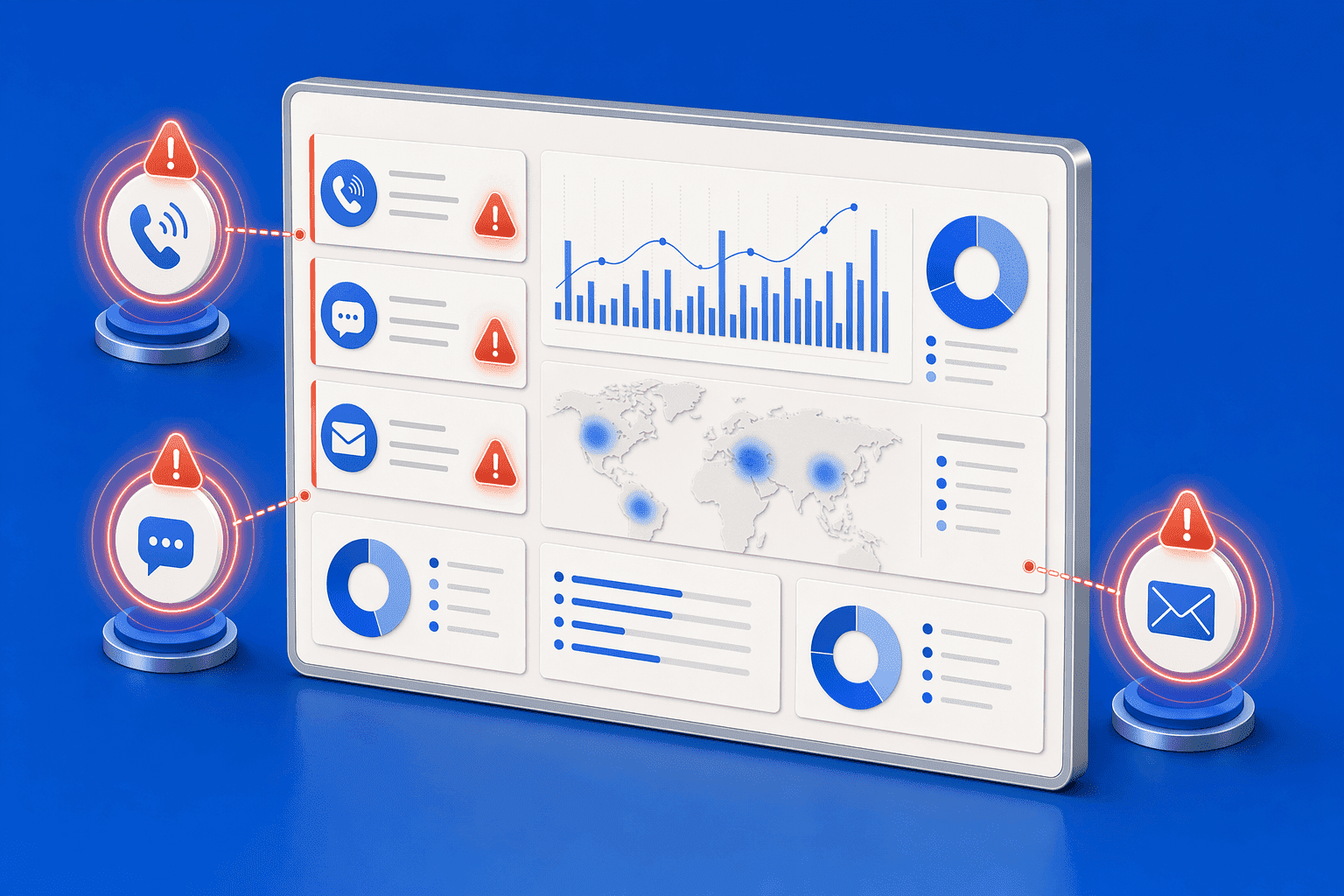
Real-time compliance monitoring shifts debt collection from reactive audit to preventive architecture. Instead of reviewing recordings after calls conclude, modern platforms embed FDCPA guardrails directly into live interactions — flagging prohibited language, call-frequency breaches, and time-of-day violations the moment they occur. This architectural choice directly addresses Regulation F's expanded scope for electronic and automated communications, which now govern voice calls, SMS, and email under a unified compliance framework.
The Shift From Reactive Audit to Preventive Architecture
Legacy systems rely on post-call compliance review: a human team audits recordings days or weeks later, identifying violations retroactively. Real-time intervention systems halt prohibited statements before they reach debtors. Platforms like Domu automatically flag compliance violations during live calls, enabling immediate escalation to human supervisors when scripts drift off-policy. This reactive model allows violations to occur and relies on downstream correction — acceptable for low-stakes service calls, problematic for FDCPA-governed collections where a single prohibited statement can trigger statutory damages.
Why Fdcpa Statutory Damages Make Prevention Non-Negotiable
FDCPA violations carry per-violation statutory damages, making real-time prevention financially safer than retroactive correction. A single call containing multiple prohibited statements, threatening legal action without intent, calling outside permitted hours, failing to deliver the mini-Miranda, can generate separate penalties for each infraction. Real-time systems reduce this exposure by stopping violations mid-conversation, preventing the claim from ever being made.
What Real-Time Compliance Monitoring Actually Detects
Modern compliance platforms flag specific violation types as they occur: inappropriate legal language ("you must pay or we'll sue"), call-frequency breaches (more than seven attempts per week to a single consumer), time-of-day violations (calls before 8 a.m. Or after 9 p.m. Local time), and sentiment escalation triggers that indicate harassment risk. These detections feed into mandatory escalation workflows, routing problematic interactions to human review before resolution.
Understanding why real-time prevention matters is the foundation; the next step is identifying which FDCPA requirements automation must enforce at the workflow level.
Core Fdcpa Requirements Automation Must Address
Automation does not exempt financial institutions from Fair Debt Collection Practices Act obligations, it requires real-time enforcement of requirements that human agents previously managed through training and supervision. Below are the three regulatory constraints that every automated debt collection system must encode as architectural guardrails, not post-call audit findings.

Mini-Miranda Disclosure Requirements and Automated Delivery Verification
Every debt collection call must include the disclosure that "this is an attempt to collect a debt", a requirement known as Mini-Miranda. Automated systems must verify delivery on every call without agent drift: pre-call script validation ensures the disclosure loads into the outbound dialer or voice agent prompt, and delivery-confirmation logging records the timestamp, channel, and transcript segment proving the disclosure was spoken or displayed. Systems that allow agents to skip or paraphrase the disclosure fail the test.
Call Frequency and Time Restrictions Under Regulation F
Regulation F caps outreach at seven attempts in seven days per debt, and restricts calls to the 8 a.m. To 9 p.m. Window in the consumer's local time zone. Automation enforces these limits across multi-channel campaigns by tracking attempt counts in a persistent ledger tied to the account identifier, blocking additional calls when the threshold is reached, and calculating time-zone offsets dynamically before dialing. Manual override capabilities that let supervisors ignore frequency caps introduce regulatory exposure.
Prohibited Language and Script Guardrails
AI must detect prohibited language in real time, including false threats of legal action without attorney involvement ("We will garnish your wages"), fabricated criminal consequences ("You will be arrested"), abusive characterizations ("You are a deadbeat"), and misrepresentation of debt amount or creditor identity. The FDCPA compliance checklist enumerates these examples as hard red lines. Guardrails operate during the conversation, not in post-call review, by analyzing agent or voice-bot transcripts against a prohibited-phrase library and escalating violations to human supervisors before the call completes.
Knowing the rules is key, but the operational challenge is engineering systems that enforce them automatically, before violations reach debtors.
How to Build Compliance Safeguards Into Your Automated Debt Collection Workflow
Knowing the FDCPA rules is one thing; engineering systems that enforce them before a violation reaches a debtor is another. The gap between compliance policy and operational reality widens fast when automation scales. This guide walks through the exact platform configuration steps that turn regulatory constraints into architectural safeguards, the kind that prevent violations rather than auditing them after the fact.

Configure Script Templates with Embedded Disclosure Logic. Pre-configure Mini-Miranda disclosures and prohibited-language filters into call scripts before production deployment. Platforms like Chaseit AI automate conversations across voice, SMS, email, and social media while adhering to FDCPA, TCPA, and regional regulations. Domu's Alex module stress-tests conversation flows against FDCPA and TCPA boundaries in a synthetic environment, validating that required disclosures fire on every call and that prohibited language (legal threats, harassment) is blocked before the script reaches production. The architecture treats compliance as a constraint built into the code, not a discipline enforced downstream.
Set Call Frequency and Time-of-Day Enforcement Rules. Configure platform-level rules that block outreach outside 8am, 9pm local time and cap attempts at 7 per debt per 7 days, as prescribed by Regulation F's 7-in-7 rule. Floatbot.ai automates collections, right-party contact, customer support, payment negotiation, and payment collection via call or text, 24/7, with compliance guardrails enforced at the platform layer rather than relying on agent discipline. The system tracks call history per debt and per consumer, preventing violations before a dialer can trigger them.
Implement Real-Time Sentiment Monitoring and Escalation Triggers. Configure sentiment scores that flag confusion, distress, or hostility during live calls and automatically route the conversation to a human agent before a violation occurs. Domu detects inappropriate legal language and threats that violate regulations in real time, escalating high-stress interactions before they deteriorate into FDCPA violations. In one engagement, a mid-sized lender configured Domu's sentiment escalation trigger at a confusion score of 0.65, during the first week, 12% of calls were routed to human agents before a validation request or dispute could occur, preventing retroactive compliance reviews. This is the operational difference between compliance as architecture and compliance as audit.
Test Compliance Safeguards with Red-Team Edge-Case Scripts. Pre-production testing validates that escalation triggers fire correctly when edge cases arise: dispute mid-call, cease-and-desist demand, validation request. Regulation F's operational rules require proof that safeguards work before systems reach consumers. Domu's Alex stress-tests every interaction to support policy alignment, regulatory compliance, and audit-ready evidence from day one, but AI reduces violation likelihood, it cannot guarantee 100% compliance. Human review remains the final check.
Competitors like smallest.ai and loanpro.io treat FDCPA compliance as a post-deployment discipline: configure settings, monitor logs, fix issues. This guide positions compliance as an architectural constraint. If your platform allows a violation to reach a debtor, the architecture failed, not the agent. For collections teams managing regulated portfolios, real-time intervention is the safer architecture than reactive audit. Learn more about how behavioral intelligence platforms orchestrate compliance at scale in our compliance-first collections guide.
Ready to see your future AI agents in action?
Even well-architected automation has boundaries; certain scenarios require immediate escalation to human collectors who can exercise judgment that AI cannot replicate.
Mandatory Human Escalation Triggers You Cannot Automate Away
Dispute Notifications: Why AI Must Route to Human Review
Under FDCPA Section 809, when a debtor disputes the debt, using phrases like 'I dispute this debt' or 'This isn't mine', the system must immediately escalate to a licensed human collector. AI cannot adjudicate disputes; it can only flag them. Platforms like CollectDebt monitor live conversations for dispute language and route to human review within seconds, but the final validation decision remains a non-delegable human task.

Validation Requests and Cease-And-Desist Demands
When a debtor says 'Send me proof I owe this' or 'Stop calling me,' CFPB's Regulation F mandates human processing of the validation notice or cease-and-desist flag. Automated systems detect these phrases and halt further automated contact, but only a human agent can verify mailing compliance or update DNC registries. Platforms like Domu automatically flag these compliance violations and enforce immediate escalation paths, ensuring the human workflow executes within regulatory timelines.
High-Stress Sentiment Scores as Escalation Signals
Real-time sentiment monitoring flags conversations showing confusion, hostility, or distress above a threshold, typically customers repeating 'I don't understand' or raising their voice. AI cannot de-escalate emotional situations that risk UDAAP violations; human agents step in to offer hardship arrangements or payment deferrals before the interaction deteriorates into a regulatory event.
Many platforms market AI voice quality while omitting the regulatory infrastructure that prevents violations, creating predictable compliance gaps.
Common Compliance Gaps in Voice and SMS Automation Platforms
Platforms marketing AI voice quality without surfacing mandatory regulatory capabilities create legal exposure. Conversational fluency alone does not prove a platform is collections-ready, a natural-sounding AI voice agent without prohibited-language detection is a compliance liability, not an asset.
Gap 1: No Verified Consent Workflow for TCPA Compliance
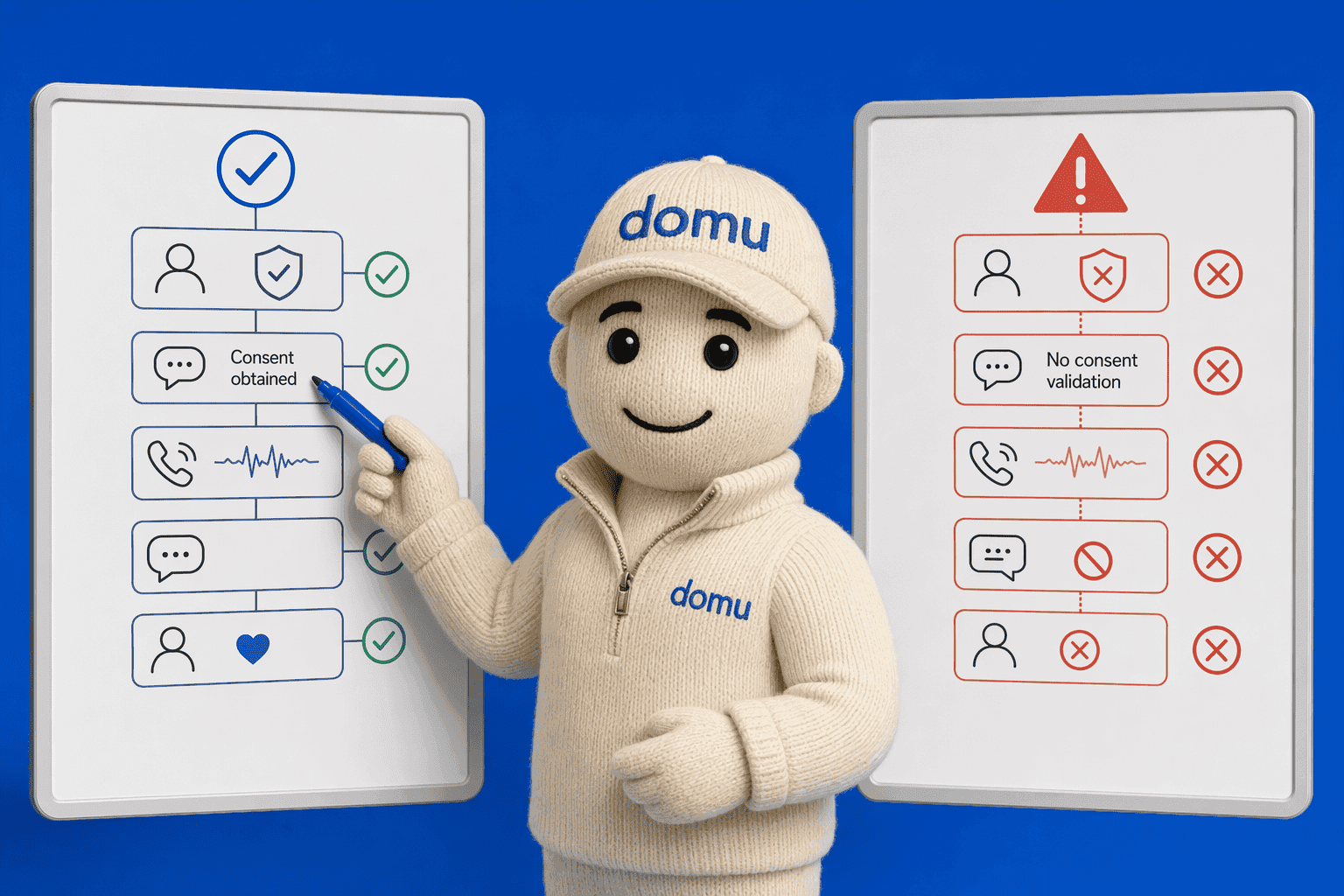
Many platforms automate voice calls and SMS without verifying prior express consent, violating TCPA alongside FDCPA. The CFPB's debt collection rule FAQs clarify that prerecorded messages are subject to TCPA requirements for prerecorded messages, yet vendors like Chaseit and Corafone emphasize conversational scale, thousands of simultaneous calls, 24/7 availability, without explaining how consent is captured, stored, and enforced before each outbound contact. TCPA statutory damages start at $500 per violation and can reach $1,500 for willful violations, making consent verification non-negotiable for any platform automating SMS or voice outreach.
Gap 2: Post-Call Audit Models That Cannot Prevent Violations
Reactive compliance review, listen to recordings after the fact, cannot prevent violations once they reach debtors, making statutory damages inevitable. ConvoCore logs every outbound AI call with a transcript and outcome flag in your CRM, but this post-call audit architecture allows violations to occur and relies on downstream correction. For teams managing regulated debt portfolios, real-time intervention is the safer architecture.
Gap 3: Conversational AI Without Prohibited-Language Detection
Platforms that market voice quality but lack real-time detection of prohibited threats, false legal claims, or abusive tone expose collection agencies to FDCPA violations during live conversations. A human-sounding, multilingual AI that operates 24/7, like Corafone's collectors, does not inherently prevent an agent from making an inappropriate legal statement or threat. Without real-time prohibited-language detection, conversational fluency becomes a liability: the more natural the AI sounds, the more damage an unguarded statement can cause.
Domu's architecture embeds prohibited-language detection, TCPA consent verification, and real-time sentiment escalation into every call workflow, addressing all three gaps before production deployment. At Domu, we believe orchestration plus selective human oversight is the regulatory safe harbor.
Behavioral intelligence platforms add a layer of engagement optimization on top of compliance guardrails, adjusting outreach strategies within FDCPA constraints.
How Behavioral Intelligence Platforms Enforce Fdcpa Guardrails
Behavioral intelligence optimizes recovery rates within FDCPA constraints by adjusting call timing and script tone based on debtor engagement patterns, but it cannot override the 7-attempts-in-7-days cap or time-of-day restrictions. The strongest of these platforms don't just automate outreach across channels; they read what a customer just did and adjust the next move in real time, all while staying inside the compliance guardrails regulated lenders can't compromise on.

Real-Time Response Analysis: What Behavioral Intelligence Detects
Platforms analyze debtor tone, word choice, and response latency to detect confusion, distress, or hostility before a violation occurs. Domu's behavioral intelligence capabilities link payment pattern cohorts to pre-approved message templates that vary tone, urgency, and call-to-action based on debtor profiles. Collections Intelligence weighs dozens of signals at once to decide who to reach, when, how, and what to say, orchestrating automated debt collection across voice, SMS, and email outreach. Every decision is compliance-checked in real time, with FDCPA, TCPA, and Reg F built in.
Adaptive Outreach Strategies That Stay Within Regulation F Limits
Behavioral intelligence adjusts call timing, channel selection, and script tone based on debtor engagement patterns while respecting the 7-attempts-in-7-days cap and time-of-day restrictions. The system uses the right channel, tone, language, and cadence per consumer, with continuous learning loops that lift recovery without breaking compliance. The journey, channels, and the 3 C's update in real time, while Domu's platform automates these FDCPA guardrails, removing the manual burden and allowing agents to concentrate on empathetic communication.
When to Use Behavioral Intelligence Vs. Static Compliance Rules
Platforms like Domu embed behavioral intelligence into compliance-first architectures, analyzing debtor responses in real time to optimize outreach strategy while enforcing FDCPA guardrails. Domu excels in behavioral intelligence and dignity-first servicing with a Compliance Automation Score of 5/5. The table below compares three platforms on core compliance features, AI channel support, deployment options, and security certifications.
Feature | Domu | Prodigal | Smallest.ai |
|---|---|---|---|
Core Compliance Features | FDCPA, TCPA, Reg F stress-testing; UDAAP validation | FDCPA disclosures, TCPA consent verification, Regulation F frequency tracking | Not publicly disclosed |
AI Channel Support | Voice, SMS, Email | Strongest omnichannel integration | Not publicly disclosed |
Deployment Options | Low integration complexity | Diverse portfolio management | Not publicly disclosed |
Security / Compliance Certifications | SOC 2 Type II, CFPB, TCPA, PCI | Not publicly disclosed | Not publicly disclosed |
Domu's sentiment monitoring flags confusion or distress scores above 0.6 and routes the call to a human agent before the conversation deteriorates, reducing violation likelihood while maintaining recovery rates. Ready to see your future AI agents in action? Start a Pilot to test behavioral intelligence within your compliance architecture.
Custom API-driven compliance tools suit teams with engineering resources to build and maintain proprietary workflows, while platforms like Domu deliver pre-built FDCPA guardrails and real-time monitoring for collections teams who need compliance infrastructure without multi-quarter development cycles. Post-call audit models reduce upfront configuration effort but cannot prevent violations once they reach debtors, real-time intervention architectures require more initial setup but protect against FDCPA statutory damages by stopping violations during live calls.
As CFPB enforcement of Regulation F intensifies and AI-powered debt collection becomes the industry standard, platforms that embed compliance into their architecture, rather than treating it as an add-on feature, will separate defensible automation from liability-generating shortcuts. The choice is between systems that prevent violations during live interactions and those that discover them weeks later in audit logs.
Explore Domu's compliance-first collections platform with pre-built FDCPA guardrails, real-time sentiment monitoring, and mandatory human escalation triggers, or document your current compliance baseline before deploying any automated outreach system.
Frequently Asked Questions
What is the 7-in-7 rule for debt collection calls?
CFPB Regulation F caps debt collection outreach at seven attempts in seven consecutive days per debt, across all channels, voice, SMS, and email combined. Automation enforces this by tracking attempt counts in a persistent ledger tied to the account identifier, preventing violations across multi-channel campaigns.
Can AI systems handle debt validation requests?
AI can detect validation request language like 'send me proof I owe this' and escalate immediately to a human agent, but cannot adjudicate or respond to the request itself. Under FDCPA Section 809, human review of validation requests is mandatory; AI can only flag and route them.
What are Mini-Miranda disclosures in debt collection?
The Mini-Miranda is the mandatory disclosure that 'this is an attempt to collect a debt, and any information obtained will be used for that purpose,' required on every debt collection call. Automated systems verify delivery through pre-call script validation and call recording logs to ensure compliance.
How does sentiment monitoring prevent FDCPA violations?
Real-time sentiment analysis scores debtor tone for confusion, distress, or hostility during live calls. When a score exceeds a threshold, such as confusion above 0.65, the platform routes the call to a human agent before the conversation escalates, preventing violations through preventive architecture rather than post-call audit.
Do automated debt collection systems need TCPA consent?
Yes, automated voice calls and SMS require prior express consent under TCPA. Platforms must verify consent before initiating outreach, not just FDCPA compliance. CFPB debt collection rule FAQs clarify that prerecorded messages require documented consent, making TCPA verification a prerequisite for automated campaigns.
What prohibited language must AI detect in debt collection calls?
AI must detect and flag threats of legal action without attorney involvement ('We will sue you'), false wage garnishment claims without court orders, abusive characterizations ('You are a deadbeat'), and false urgency ('Pay today or go to jail'). Real-time detection halts scripts before prohibited language reaches debtors.
Can automation guarantee 100% FDCPA compliance?
No, AI reduces violation likelihood by enforcing script guardrails, call frequency limits, and escalation triggers, but human review remains the final check. Under FDCPA Section 809, AI cannot adjudicate disputes or validation requests; it can only detect and escalate them to licensed collectors for human judgment.
Sources
12 CFR Part 1006 - Fair Debt Collection Practices Act (Regulation F) | Consumer Financial Protection Bureau - www.consumerfinance.gov
Debt Collection (FDCPA) | Consumer Financial Protection Bureau - www.consumerfinance.gov
Debt Collection Practices (Regulation F) | Consumer Financial Protection Bureau - www.consumerfinance.gov
§ 1006.6 Communications in connection with debt collection. - www.consumerfinance.gov
Debt Collection Practices (Regulation F): Final rule - files.consumerfinance.gov (2020)
Fair Debt Collection Practices Act - CFPB Annual Report 2022 - files.consumerfinance.gov (2022)
VII–3 Unfair Deceptive and Abusive Practices - FDCPA - FDIC - www.fdic.gov (2025)
CollectDebt - AI-Powered Debt Collection Platform - collectdebt.ai
CFPB releases debt collection rule FAQs - consumerfinancemonitor.com (2021)
Chaseit - AI Voice Agents for Debt Collection - chaseit.ai
AI collectors for US consumer debt | Corafone - corafone.com
Best AI Debt Collection Platforms for Financial Institutions (2026) - startupfinanceguide.com (2026)
Debt Collection Rule FAQs - www.consumerfinance.gov
10 minutes


Explore Related Articles



GET STARTED
We’re building the next generation of engagement technology: intelligent, automated, and compliant. Our mission is to empower financial institutions to orchestrate every stage of the servicing lifecycle with dignity and unprecedented efficiency.
Supported by
Y Combinator

AWS

Microsoft