Community banks face a paradox: conversational AI promises to automate customer interactions and compliance workflows, yet most platforms demand IT resources few regional institutions can spare.
This guide filters platform options through the lens of deployment readiness—orchestration architecture, managed service availability, and pre-built compliance templates—before feature breadth.
Key Takeaways
Community banks should filter conversational AI platforms first by deployment readiness—orchestration architecture, managed service tiers, and pre-built compliance templates—not feature lists
Ongoing maintenance (QA, compliance monitoring, human escalation) consumes more FTE hours than initial deployment across all platform types
Orchestration platforms unify voice, SMS, and email from a single system, requiring one API integration versus three separate integrations for point solutions
Managed agency models eliminate internal IT burden but strip customization and oversight—suitable only for banks with zero FTE allocation to AI operations
No platform eliminates human escalation for disputes, validation requests, or cease-and-desist demands due to regulatory requirements
Why IT Resource Constraints Should Drive Your Conversational AI Platform Decision
Community banks evaluating conversational AI platforms for limited IT resources should filter first by orchestration architecture, managed service tiers, and pre-built compliance templates, not feature breadth. With typically limited resources and specific guard rails related to privacy and security, institutions must focus on foundational readiness before any feature comparison begins. Platforms advertising extensive capabilities often require proportionally extensive integration and maintenance work that under-resourced teams cannot sustain.
The Hidden Cost of Feature-Rich Platforms
Big banks have been pouring billions into AI for years while carrying the weight of decades of stitched-together legacy systems. Community banks are smaller, closer to their customers, and faster to act when they decide to move, but that advantage is fragile when vendors pitch feature lists that assume dedicated AI teams. A platform requiring custom integrations across CRM, data warehouse, issue tracker, and 30+ internal tools may deliver strong capabilities but demands staffing most community banks do not have. Every AI-touching decision must trace back to a person and a record; institutions without the FTE capacity to maintain that audit trail face compliance exposure, not efficiency gains.
Deployment Effort Vs. Ongoing Maintenance: the Two-Axis Resource Model
Banks must distinguish initial FTE hours (deployment) from recurring FTE hours (maintenance and QA) before evaluating any feature list. Enterprise deployments typically take three to six months for regulated financial institutions managing diverse portfolios. After launch, ongoing governance, auditing live AI behavior after deployment, stress-testing conversation flows, and maintaining oversight, escalation paths, and controls that keep teams in command, consumes additional staff time. At Domu, we believe orchestration-first platforms reduce both axes: centralized reasoning engines like the one Domu built on Claude Opus consolidate integration points, while pre-certified compliance templates shift QA burden from the institution to the vendor. Institutions should map their own FTE availability to these two axes before shortlisting any platform.
Before comparing vendor features, community banks must establish a deployment readiness baseline that aligns platform requirements with available internal capacity.
Deployment Readiness Framework: What Community Banks Should Evaluate Before Vendor Selection
Most vendor evaluations emphasize NLP accuracy or channel coverage before assessing whether the institution has the capacity to deploy and maintain the platform, a sequence that breaks in resource-constrained contexts. The framework below reorders the decision: apply three go/no-go filters sequentially, treating each tier as a pre-qualification gate before engaging sales teams. Federal guidance on third-party risk management establishes that institutions remain responsible for ensuring third-party activities are conducted in a safe-and-sound manner, vendor evaluation is a regulatory discipline, not just a procurement checklist.
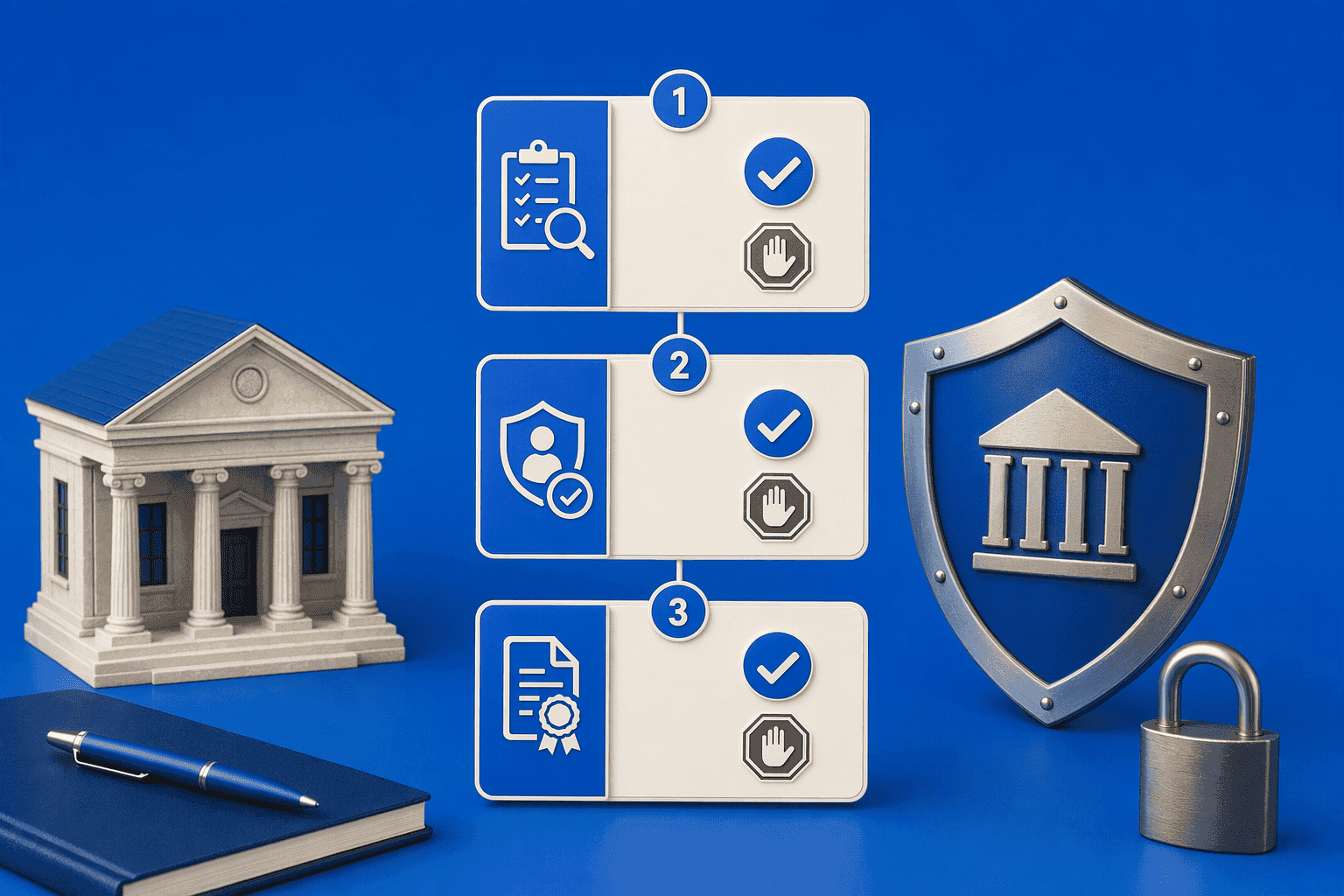
Tier 1: Staffing Capacity and Managed Service Availability
The first filter is internal FTE-hour capacity. Platforms requiring fewer than 50 hours of initial configuration and minimal ongoing maintenance suit teams with no dedicated AI staff; those requiring more than 200 hours demand either a full-time technical resource or a vendor that bundles managed services. Enterprise deployments of compliance-first platforms can take three to six months for regulated institutions managing diverse portfolios. Low-code/no-code tools marketed as "self-service" still require configuration work, scripting conditional logic, mapping data fields, and tuning escalation rules. If your team lacks the bandwidth, prioritize vendors offering white-glove deployment and ongoing optimization as part of the service tier, not an add-on.
Tier 2: Compliance Template Libraries Vs. Custom Scripting Requirements
The second filter is pre-built compliance coverage. The CFPB has highlighted concerns about chatbots' inability to recognize disputes and technical limitations in resolving them, institutions cannot afford to build FDCPA/TCPA conversation scripts from scratch. Evaluate whether the vendor ships a library of regulator-tested conversation templates for common servicing scenarios (payment reminders, hardship arrangements, dispute acknowledgment) or requires your team to script every flow. Competitors often list "compliant AI" as a feature without disclosing that compliance relies on your internal legal team drafting and validating every utterance. If the vendor's demo shows only happy-path scenarios and avoids edge cases (confused customers, cease-and-desist requests), that's a signal the template library is thin.
Tier 3: Orchestration Vs. Point Solutions (Integration Lift Trade-Off)
The third filter is integration architecture. Single-vendor orchestration platforms that unify voice, SMS, and email in one interface reduce the integration multiplier: one API connection, one consent-management system, one audit trail. Point solutions, separate tools for each channel, multiply the lift: three vendor contracts, three integration projects, three sets of compliance documentation. Interface.ai and similar platforms target credit unions and community banks with multi-channel agent frameworks, positioning orchestration as the default. If your core banking system already supports webhook-based integrations, orchestration platforms connect faster; if you're running legacy systems with batch-file workflows, expect custom middleware. Quantify the integration cost before comparing feature lists, a platform with 90% accuracy requiring 300 engineering hours may cost more than an 85%-accurate managed service delivered in 50 hours.
With deployment readiness criteria established, the following comparison isolates how platform architecture drives integration work, compliance template availability, and managed service options.
Platform Comparison: Integration Lift, Compliance Templates, and Managed Service Options
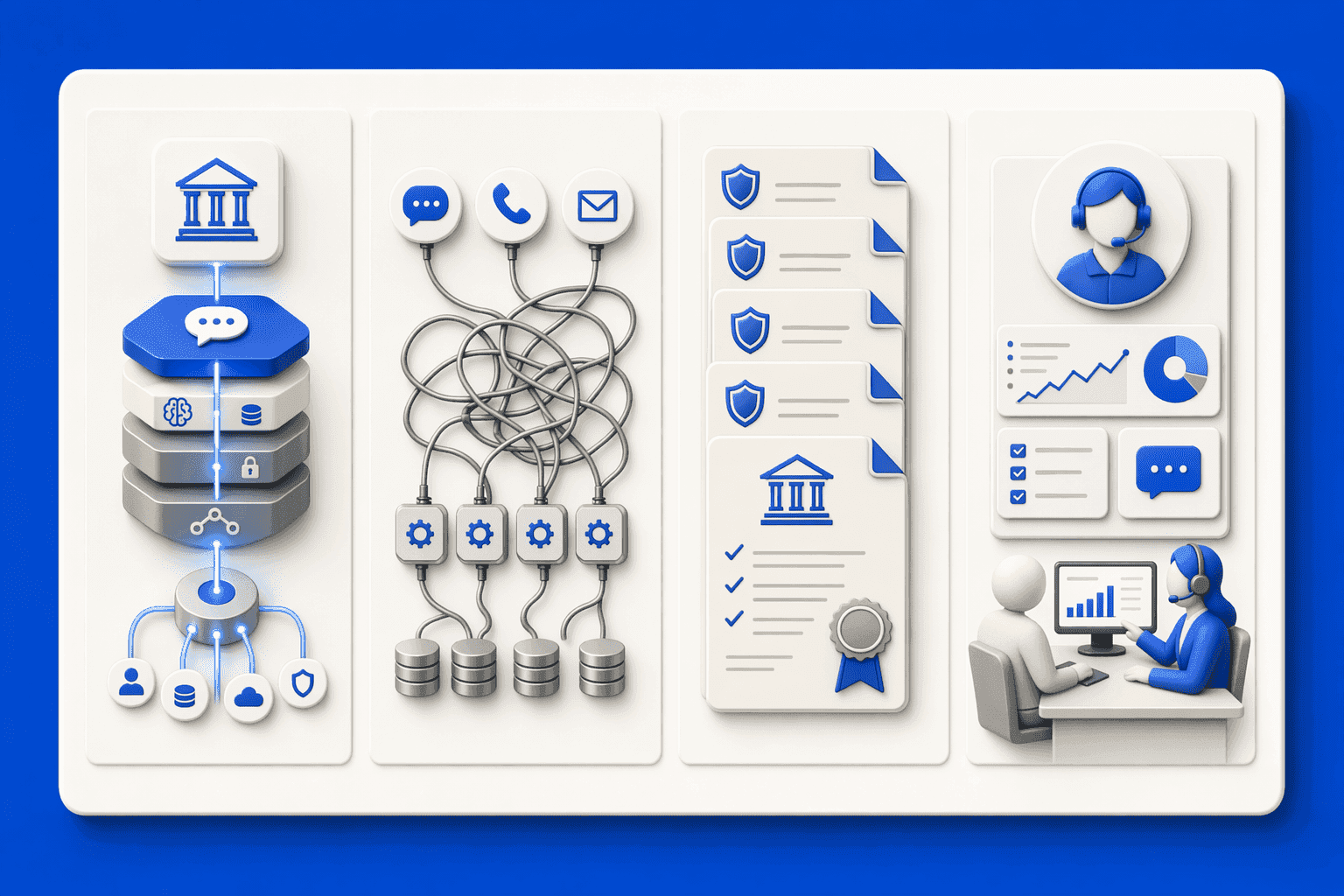
Community banks evaluating conversational AI platforms face a decisive architectural choice: single-vendor orchestration layers that unify voice, SMS, and email from one system, or point solutions requiring separate integrations for each channel. The difference compounds quickly, point solutions requiring separate voice-agent, SMS, and email tools multiply API integration work and ongoing maintenance. This section compares four platforms on the dimensions that matter for under-resourced banks: integration complexity, compliance template depth, and managed service tiers.
Orchestration Platforms: Single-Vendor Multi-Channel Systems
Orchestration platforms like Domu and interface.ai handle calls, texts, and emails as one coordinated campaign rather than three disconnected channels. Domu unifies voice, email, and SMS across the customer lifecycle, with behavioral signals feeding decisions in real time. At Domu, we believe integration is an investment, not a shortcut; the platform requires engineering resources to connect to legacy systems and synchronize consent across voice, SMS, and email channels. For banks that can allocate engineering resources upfront, this architecture reduces the long-term integration burden: one API handshake replaces three, and compliance rules propagate across all channels from a single governance layer.
A community bank in the South demonstrated this integration-lift advantage: deploying Glia's virtual assistant achieved 61% containment, saved 4,600+ staff hours annually, and cut average wait times by 90%, all while maintaining smooth escalation to human representatives with full conversation history.
Point Solutions and Their Integration Multiplier
Point solutions like CollectDebt, Chaseit AI, DROS AI, and AgentApex specialize deeply in voice-first or agent-based collections but typically require separate tools for SMS, email, and chat. CollectDebt's intelligent voice automation handles debt collection calls in 12+ languages with built-in FDCPA and TCPA compliance, while Chaseit AI automates conversations across voice, SMS, email, and social media. However, each channel integration adds a new vendor relationship, a new API contract, and a new compliance-monitoring surface. DROS AI positions itself as an AI-native engagement OS that works with existing CRM and dialer systems, promising deployment in days rather than months, but banks still face the operational overhead of coordinating multiple point tools when moving beyond voice.
The integration multiplier is real: point solutions requiring separate voice, SMS, and email vendors triple the API integration work and ongoing vendor-management overhead. For banks with limited IT capacity, this architectural choice determines whether conversational AI becomes a long-term productivity asset or a maintenance burden.
Agency Models: When to Outsource the Entire Deployment
For banks that cannot allocate any internal IT FTE to AI operations, agency models offer a zero-integration path: outsource the entire deployment to a contingency collections partner. ClaraPay, for instance, is an AI-first contingency collection agency that charges only when it collects, handling voice agents, conversational SMS, ML scoring, and a 50-state compliance engine without requiring client-side engineering resources. Corafone similarly positions itself as a turnkey deployment partner for US consumer debt, promising live operations in under 7 days with a pure contingency model. This approach trades platform ownership for operational speed: banks offload integration, maintenance, and compliance monitoring to the agency, but lose the direct control and data visibility that platform licensing provides.
Ready to see your future AI agents in action? Start a Pilot to explore how orchestration-first architecture reduces integration lift for your team.
Domu: Orchestration-First Architecture for Banks With Limited IT Capacity
Best for: Regional banks and community lenders needing unified voice/SMS/email orchestration with embedded compliance monitoring, where the integration investment pays off through reduced vendor sprawl and built-in audit trails.

How Domu Reduces Integration Work Through Multi-Channel Orchestration
Domu unifies voice, email, and SMS across the customer lifecycle, running all three channels from a single system with behavioral signals feeding decisions in real time rather than after the fact. For banks with limited IT capacity, this architecture reduces the number of API integrations that must be maintained versus stitching together separate voice-agent, SMS, and email vendors, each requiring its own compliance mapping, consent-management layer, and operational playbook. Instead of managing three vendor relationships and three sets of rate limits, community institutions connect once and gain access to all three channels under a single governance framework. The platform's orchestration layer synchronizes consent status across channels, so when a customer opts out of SMS, that preference propagates to voice and email workflows automatically.
Compliance Built Into the Architecture Vs. Post-Call Discipline
At Domu, we believe compliance is not a post-call audit task, it's enforced at the orchestration layer. The platform automatically flags compliance violations and enforces on-script interactions through its governance certification workflow, eliminating the need for dedicated QA staff to manually review call transcripts after the fact. Community banks typically reduce QA-staffing requirements by delegating first-pass compliance checks to the system itself, freeing human reviewers to focus on edge cases and escalations rather than routine script adherence. This embedded monitoring approach contrasts with platforms that treat compliance as a separate layer, requiring institutions to bolt on third-party QA tools or maintain in-house review teams to catch violations downstream.
Trade-Offs: Integration Investment and Human Escalation Requirements
Domu requires engineering resources to connect to legacy systems and synchronize consent across voice, SMS, and email channels, this is an integration investment, not a plug-and-play deployment. Banks without in-house engineering support will need to budget for consulting hours or partner with a systems integrator to complete the initial setup. Additionally, human escalation remains mandatory for disputes, validation requests, and cease-and-desist demands, the platform routes these cases to supervisors rather than attempting autonomous resolution. These requirements reflect category-wide regulatory realities rather than Domu-specific limitations: orchestration platforms prioritize compliance over full automation, and integration depth trades setup time for long-term operational simplicity.
Ready to see your future AI agents in action? Explore Domu's FDCPA-compliant collections toolkit to understand how orchestration-first architecture fits your institution's servicing workflow.
The choice between a managed agency model and a licensed platform fundamentally shapes who owns deployment, monitoring, and optimization responsibilities.
When to Choose a Managed Agency Model Vs. Licensed Platform
Managed Agency Models: Full Outsourcing for Zero-It-Fte Institutions
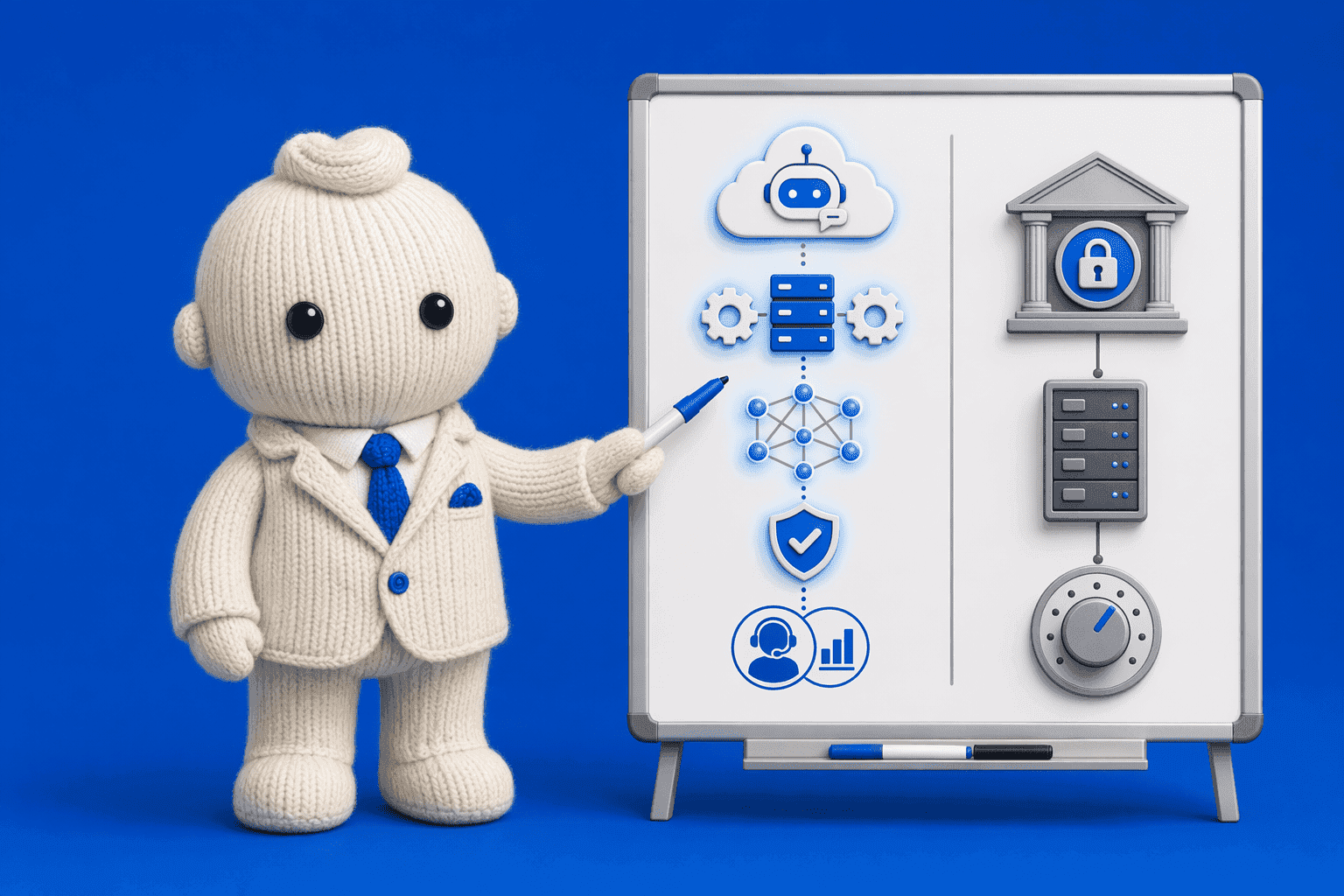
A managed agency model puts the vendor in the operator's seat: the provider deploys, monitors, and optimizes the conversational AI system on the bank's behalf. The institution pays for outcomes, resolved calls, compliant interactions, payment arrangements, while the vendor owns infrastructure, model tuning, and regulatory audits. This path makes sense when a bank cannot allocate any internal full-time equivalent (FTE) to AI operations. Conversational banking platforms that follow this model handle everything from speech recognition to compliance monitoring, allowing the bank to treat the service as a utility rather than a technology project. Trade-off: the bank surrenders granular control over conversation scripts, escalation logic, and data-retention policies in exchange for eliminating IT burden entirely.
Licensed Platforms: When to Invest in Internal Control and Customization
A licensed-platform model gives the bank ownership of the deployment. The vendor provides software, integration support, and ongoing updates, but the institution staffs the operation, typically committing 1-2 FTE for configuration, script authoring, and performance monitoring. This investment pays off when the bank needs to customize conversation flows for proprietary products (specialized loan structures, co-branded cards) or integrate tightly with legacy core systems. Use cases with the fastest ROI, account servicing, payment reminders, fraud alerts, justify the upfront FTE commitment if the bank processes enough volume to amortize licensing costs. Trade-off: licensed platforms preserve control and enable deep customization but require ongoing internal expertise to tune models, update compliance rules, and troubleshoot edge cases.
Understanding deployment timelines and ongoing maintenance requirements helps community banks budget FTE hours accurately before signing contracts.
Implementation Timeline and Ongoing Maintenance: What to Expect
Deployment timelines and staffing requirements vary significantly by platform architecture. Orchestration platforms with built-in compliance reduce both initial setup and ongoing maintenance compared to stitching together point solutions.

Initial Deployment: Integration, Compliance Configuration, and Testing
Integration (API setup + data mapping): Orchestration platforms typically require 50-100 FTE hours to connect with core banking systems and map customer data fields. Point solutions requiring separate integrations for voice, SMS, and email often demand 150-300 hours across multiple vendor APIs.
Compliance configuration (FDCPA/TCPA script setup): Platforms with pre-built compliance frameworks require 40-80 hours to customize scripts and approval workflows. Generic chatbot platforms adapted for collections may need 120-200 hours to build compliant conversation flows from scratch.
Testing (pilot + full rollout): Expect three to six months for regulated financial institutions managing diverse portfolios, including pilot campaigns, compliance review, and phased rollout across account segments.
Ongoing Maintenance: QA, Compliance Monitoring, and Human Escalation Workflows
No platform eliminates human oversight. Ongoing maintenance includes managing escalation workflows when conversations exceed system parameters, conducting compliance audits of interaction logs, and updating scripts as regulations evolve. Platforms with automated compliance monitoring reduce QA staffing requirements, typically 10-20 hours per month versus 40-60 hours for platforms requiring manual call sampling and policy-drift checks. At Domu, we believe governance certification before deployment establishes clear escalation protocols and audit trails, reducing post-launch compliance overhead while keeping teams in command of critical decisions.
Conclusion
Orchestration platforms like Domu and interface.ai reduce integration lift and unify multi-channel operations from a single system but require upfront API integration investment, not plug-and-play; suitable for banks that can commit 1-2 FTE to deployment. Managed agency models eliminate internal IT burden entirely but strip customization and internal oversight, suitable only for banks that cannot allocate any FTE to AI operations and accept vendor-operated deployments.
As CFPB scrutiny of chatbot use in consumer finance intensifies, community banks will face increasing pressure to demonstrate that conversational AI deployments include human-escalation workflows and real-time compliance monitoring, platforms with compliance built into the architecture (not bolted on post-call) will become the regulatory-safe default.
Map your bank's current IT staffing capacity to the three-tier deployment readiness framework (managed service, compliance templates, orchestration architecture) and use it to filter your platform shortlist before scheduling vendor demos, then explore Domu as one compliance-focused option.
Frequently Asked Questions
What is the biggest resource challenge for community banks deploying conversational AI?
Ongoing maintenance, QA, compliance monitoring, and human-escalation workflows, consumes more FTE hours than initial deployment. Banks must distinguish initial FTE hours from recurring hours before evaluating feature lists, as enterprise deployments typically take three to six months for regulated institutions managing diverse portfolios.
Do all conversational AI platforms require custom compliance scripting?
Platforms vary widely: some ship pre-built FDCPA/TCPA scripts, while others require banks to build scripts from scratch. The CFPB has highlighted chatbots' inability to recognize disputes and technical limitations in resolving them, institutions cannot afford to build compliance conversation scripts from zero.
How do orchestration platforms reduce integration work compared to point solutions?
Orchestration platforms unify voice, SMS, and email from a single system, requiring one API integration; point solutions require separate integrations for each channel, typically 3x the integration work. The difference compounds quickly, with point solutions demanding multiple vendor contracts and synchronization layers across channels.
When should a community bank choose a managed agency model instead of licensing a platform?
Agency models make sense when the bank cannot allocate any internal FTE to AI operations, the vendor operates the deployment on the bank's behalf. The institution pays for outcomes, resolved calls, compliant interactions, payment arrangements, while the vendor owns infrastructure, model tuning, and compliance monitoring.
Can conversational AI handle disputes and cease-and-desist requests autonomously?
No, human escalation remains mandatory for disputes, validation requests, and cease-and-desist demands across all platforms due to regulatory requirements. AI can triage and route these cases but cannot resolve them autonomously. Banks must maintain human-escalation workflows even with conversational AI deployed.
How long does it take to deploy a conversational AI platform at a community bank?
Orchestration platforms typically require 4-8 weeks (integration, compliance setup, testing); point solutions requiring multiple channel integrations can take 12-16 weeks. Timeline variance stems from platform architecture, single-vendor orchestration layers reduce integration phases, while point solutions multiply them across voice, SMS, and email.
Is Domu plug-and-play for community banks?
No, Domu requires integration investment. Orchestration platforms like Domu reduce the number of integrations required versus point solutions but are not zero-setup, banks must commit FTE hours to API integration and compliance configuration. The trade-off is fewer integrations (one system) versus point solutions (multiple).
Sources
Chatbots in consumer finance | Consumer Financial Protection Bureau - www.consumerfinance.gov (2023)
The Community Bank's AI Moment: Modernize without Losing What Made You Different - www.cioreview.com
New CFPB report highlights concerns with growing use of chatbots by financial institutions - www.consumerfinancemonitor.com (2023)
Third-Party Relationships | FDIC.gov - www.fdic.gov
Conversational Banking Explained: A Complete Guide - www.salesforce.com
5 use cases for conversational AI in banking with the fastest ROI - www.ringcentral.com
AI in Banking: 10 Low-Risk Use Cases for Regional Banks - www.goidentify.com
Conversational AI & Copilots for Banks: Complete Guide - www.intellectyx.ai (2026)
10 minutes


Explore Related Articles



GET STARTED
We’re building the next generation of engagement technology: intelligent, automated, and compliant. Our mission is to empower financial institutions to orchestrate every stage of the servicing lifecycle with dignity and unprecedented efficiency.
Supported by
Y Combinator

AWS

Microsoft