
Financial institutions evaluating AI collections platforms in 2026 face a procurement challenge: vendors promise compliance and recovery gains, but procurement teams lack standardized frameworks to verify those claims before signing contracts.
Key Takeaways
Financial institutions need a three-pillar evaluation framework: compliance architecture (FDCPA, TCPA, Regulation F enforcement), integration requirements (API depth, security protocols, implementation timelines), and behavioral intelligence capabilities (predictive scoring, channel optimization).
CFPB oversight expansion and state-level consent laws raise the bar beyond 2021 baselines—institutions must verify vendor enforcement logs, audit-trail documentation, and explainability during procurement, not post-deployment.
Platform selection depends on institutional priority: banks under heightened scrutiny require governance-first platforms with formal AI approval workflows, while lenders optimizing recovery prioritize behavioral analytics and omni-channel automation.
Integration work varies by vendor—SaaS plug-and-play solutions minimize engineering effort but limit customization; API-first platforms require months of integration but support custom workflows and audit-readiness.
Effective behavioral intelligence requires granular data inputs (payment history, channel preferences, sentiment signals) that feed predictive models to prioritize accounts, optimize contact timing, and reduce hang-ups.
What Financial Institutions Need in AI Collections Platforms (2026 Compliance Landscape)
Financial institutions asking 'what should we look for in AI-powered collections platforms?' need a three-pillar evaluation framework — compliance architecture, integration requirements, and behavioral intelligence — before vendor names. The best AI collections platform for your institution is the one whose governance controls, API documentation, and audit-readiness you can verify during procurement, not the one with the most compelling marketing deck.
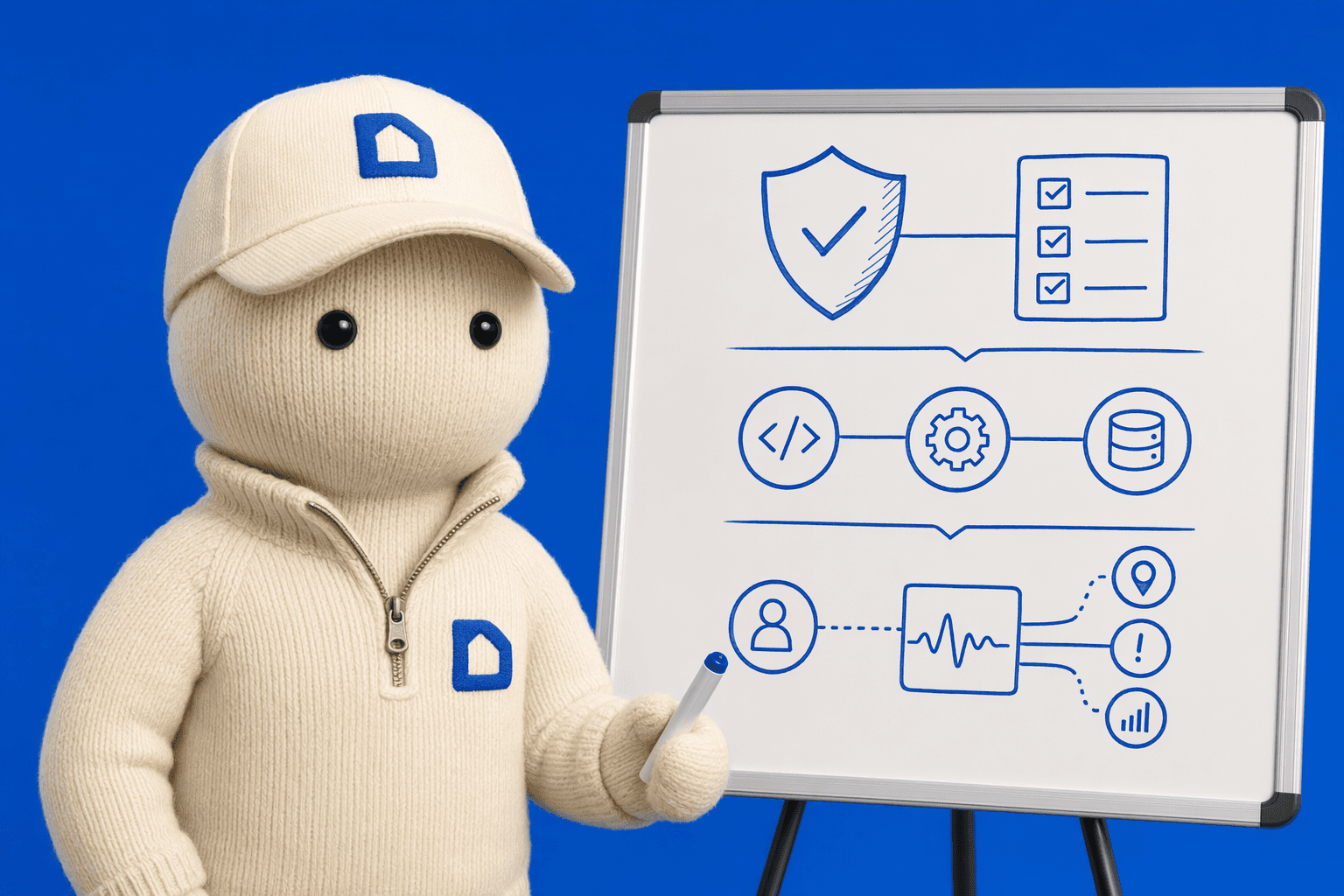
The Three-Pillar Evaluation Framework: Compliance, Integration, Intelligence
The three decision pillars institutions control are regulatory compliance architecture (how the platform enforces FDCPA, TCPA, and Regulation F boundaries), integration requirements (API depth, data security protocols, human escalation workflows), and behavioral intelligence capabilities (payment history analysis, communication preference tracking, financial stress indicators). These are verifiable during procurement through vendor documentation, enforcement logs, and technical demonstrations — unlike subjective claims about 'AI-powered analytics' or 'industry-leading' performance.
Why 2026 Regulatory Expectations Require Deeper Vendor Vetting
CFPB oversight expansion and state-level consent laws raise the bar beyond 2021 baseline requirements — institutions must now verify vendor enforcement logs and audit-readiness during procurement, not accept feature checklists. Compliance is ongoing governance architecture, not a checkbox. Platforms like Domu provide formal governance certification and audit-ready interaction logs, demonstrating that institutions can verify compliance controls exist before deployment.
Decision Criteria Financial Institutions Control Vs. Vendor Marketing Claims
Institutions can verify API documentation depth, compliance enforcement logs, and dispute-validation workflows during procurement. Competitor guides acknowledge that regulatory requirements drive platform selection, but institutions need to know how to verify those requirements, not just that they matter. Unverifiable vendor claims include 'AI-powered analytics' (what model? What training data?), 'industry-leading' performance (compared to whom? Measured how?), and compliance 'certifications' without named auditors or public reports.
The first pillar, compliance architecture, determines whether a platform can enforce regulatory boundaries at the interaction level, not just promise compliance in marketing materials.
Evaluating Fdcpa and TCPA Compliance Architecture in AI Tools
Financial institutions evaluating AI collections platforms face a critical gap: vendors surface compliance messaging, but procurement teams lack standardized due-diligence questions to verify those claims. The framework below provides actionable verification steps institutions should use during vendor selection to confirm that compliance is enforced in practice, not just promised in marketing materials.

1. Consent Management and Documentation Workflows
Platforms must handle state-specific consent laws, opt-out enforcement, and audit-trail documentation. During vendor vetting, institutions should request evidence of how the system enforces consent requirements at the interaction level. Key verification questions include: *Can the platform demonstrate real-time enforcement of state-specific consent rules?* *Does the system maintain immutable logs of consumer opt-out requests and subsequent action suppression?* *How does the platform document consent revocation across channels, voice, SMS, email, and propagate those changes to prevent unauthorized contact?* Vendors claiming FDCPA compliance should provide sample audit logs showing how consent boundaries are enforced, not just policy statements.
2. Call-Recording Disclosures and Dispute Validation Workflows
The FDCPA requires specific disclosures, mini-Miranda notices, validation notices, and TCPA mandates call-recording consent before interactions begin. Institutions should ask vendors: *Show us your enforcement logs for FDCPA disclosure requirements at conversation initiation.* *How does your system detect and prevent interactions when required disclosures are skipped or incomplete?* *What happens when a consumer disputes a debt mid-conversation, does the platform automatically pause collections activity and trigger validation workflows?* Platforms that cannot produce interaction-level enforcement evidence introduce regulatory exposure. Request access to anonymized transcripts or logs demonstrating disclosure enforcement in edge cases, such as transferred calls or multi-party conversations.
3. Audit-Readiness: How to Demonstrate AI Collections Monitoring to Regulators
Regulators expect institutions to prove AI-driven collections are monitored, explainable, and governed, not just deployed. The NIST AI Risk Management Framework and the Financial Services AI Risk Management Framework both emphasize ongoing governance, not one-time feature checks. Institutions must verify that platforms support regulatory demonstration through: *Model lineage documentation, can the vendor trace how AI responses are generated from approved scripts and data sources?* *Behavioral drift detection, does the platform identify when AI conversations deviate from policy boundaries?* *Audit-ready interaction logs, are all consumer interactions stored with timestamps, consent status, and enforcement actions for regulator review?* Platforms lacking these capabilities force institutions to retrofit governance layers post-deployment, increasing cost and risk.
After establishing compliance requirements, institutions must assess the engineering and security work required to connect a platform to core banking systems.
Assessing Integration Requirements: Apis, Security, and Implementation Timelines
At Domu, we believe financial institutions must understand the trade-offs between plug-and-play SaaS solutions and integration-required platforms before selecting a collections technology partner. Vendors like ClaraPay, which advertises 229 API endpoints, Chaseit AI, which promises to sync debtor records in minutes, and CollectDebt.ai, which offers FDCPA-compliant voicebots, each surface integration claims, but institutions should verify the architecture, security standards, and change-management support behind those claims.

API Architecture and Data Synchronization Standards for Core-Banking Integration
Institutions should request detailed API documentation from every vendor. Ask: Do you support REST APIs with real-time synchronization, or only batch updates? Which data fields map to our core-banking system, account balances, payment history, debtor contact preferences? What happens when schema changes occur on our side? Domu requires integration work and is not a plug-and-play voice bot. Institutions implementing Domu must plan for API mapping, data-field alignment, and ongoing synchronization governance, a heavier lift than SaaS alternatives, but one that enables deeper customization and control.
Data Security and Encryption Requirements for Sensitive Debtor Information
Verify encryption standards (TLS 1.2 or higher for data in transit; AES-256 for data at rest), access-control mechanisms (role-based permissions, multi-factor authentication for admin users), and data-residency commitments (on-premises, single-tenant cloud, or multi-tenant SaaS). Domu's Alex module restricts the AI to an approved repository of data, and Jordan validates customer interactions against UDAAP and state-specific collection laws after deployment. Institutions must confirm these controls meet internal security policies and regulatory expectations before deployment.
Implementation Timelines and Change-Management Considerations
SaaS platforms often advertise rapid deployment, while integration-required platforms can take longer to configure API connections, train staff, and redesign workflows. Institutions should ask vendors: What is your typical implementation timeline from contract signature to production launch? What change-management support do you provide, onboarding workshops, workflow redesign consulting, post-launch monitoring? Do you offer sandbox environments for testing before go-live? The longer timeline for integration-required platforms delivers tailored compliance controls and deeper system interoperability, but only when institutions budget for the staff training and workflow redesign work required to realize those benefits.
Compliance and integration establish the foundation, but behavioral intelligence capabilities determine whether a platform can improve recovery rates sustainably.
Behavioral Intelligence and Debtor Analytics: What to Measure
Real-Time Behavioral Data Inputs: Payment History, Communication Preferences, Sentiment Signals
Effective behavioral intelligence starts with granular data inputs: payment history (frequency, recency, amount variance), communication preferences (channel, time-of-day responsiveness), and sentiment signals extracted from conversation transcripts. FICO's predictive analytics framework identifies payment propensity scoring, contact optimization, and risk segmentation as the three core model types institutions should verify. During vendor demos, ask how the platform ingests these data streams, real-time or batch, and whether sentiment analysis runs on every interaction or only flagged conversations. Verify data-sync latency: platforms claiming 'real-time' dashboards should demonstrate refresh rates under 60 seconds, not hourly batch updates.
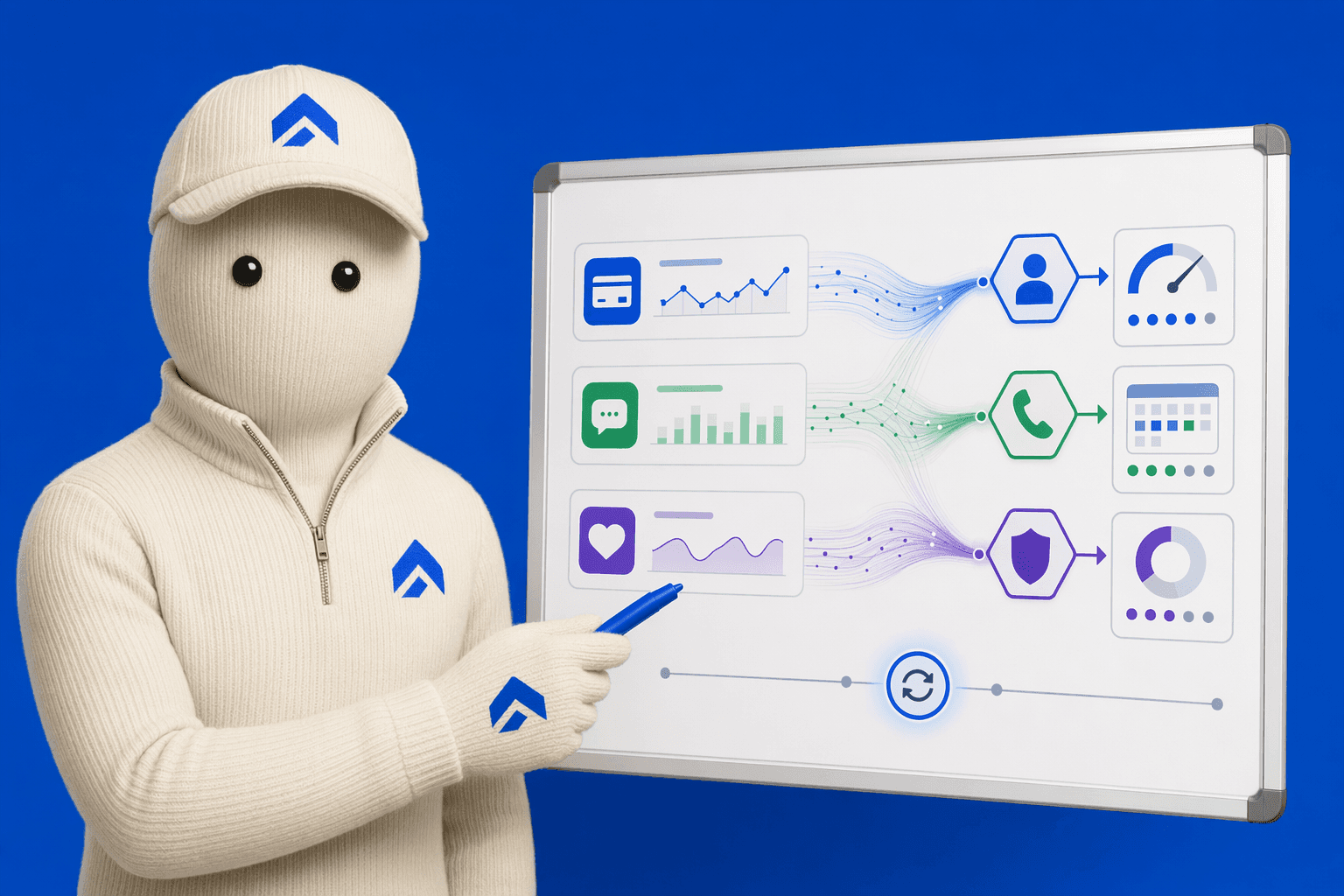
Predictive Scoring and Channel Optimization: How Platforms Reduce Hang-Ups and Improve Recovery
Behavioral intelligence translates into actionable features when platforms use predictive scoring to prioritize accounts by payment likelihood and channel optimization to route debtors to their preferred contact method. AnswerHero's research identifies eight reasons customers hang up, including excessive hold times and mismatched communication channels, issues addressable through AI-driven channel preference detection and conversation pacing analysis. Firstsource's personalized collections approach demonstrates how platforms adapt outreach tone and timing based on debtor sentiment profiles. During vendor evaluation, request a live demonstration: 'Show us how your platform adjusts outreach cadence when a debtor exhibits frustration signals in prior calls.'
Kpis for Measuring AI Collections Success Beyond Volume
Traditional volume metrics, call volume, contact rate, fail to capture sustainable recovery. Institutions should track sustainable recovery rate (percentage of promises kept vs. Made), complaint reduction (year-over-year CFPB complaint volume), and consumer experience scores (post-interaction NPS or CSAT). At Domu, we believe recovery outcomes are measured by more than volume, platforms must demonstrate compliance automation scores and audit-ready interaction logs to support governance-first collections. Request these KPIs during vendor RFPs: (1) average time-to-resolution by debtor segment, (2) regulatory flag rate per 1,000 interactions, and (3) repeat-contact reduction after initial engagement. Vendors unable to provide segment-specific outcome data likely lack the behavioral intelligence layer to operationalize these metrics.
With the three pillars defined, institutions can map their top priority, compliance rigor, recovery optimization, or operational efficiency, to the right platform architecture.
Platform Selection Framework by Institutional Priority
Financial institutions approach collections technology with divergent priorities. Compliance-first banks demand audit-ready governance and pre-deployment certification; recovery-optimization lenders prioritize behavioral intelligence and omni-channel orchestration. This framework applies the three evaluation pillars, compliance automation, integration depth, and predictive intelligence, to two institutional archetypes, then presents a six-platform comparison showing how Domu, C&R Software, Prodigal, Toebank, Latitude by Genesys, and Katabat address these priorities.
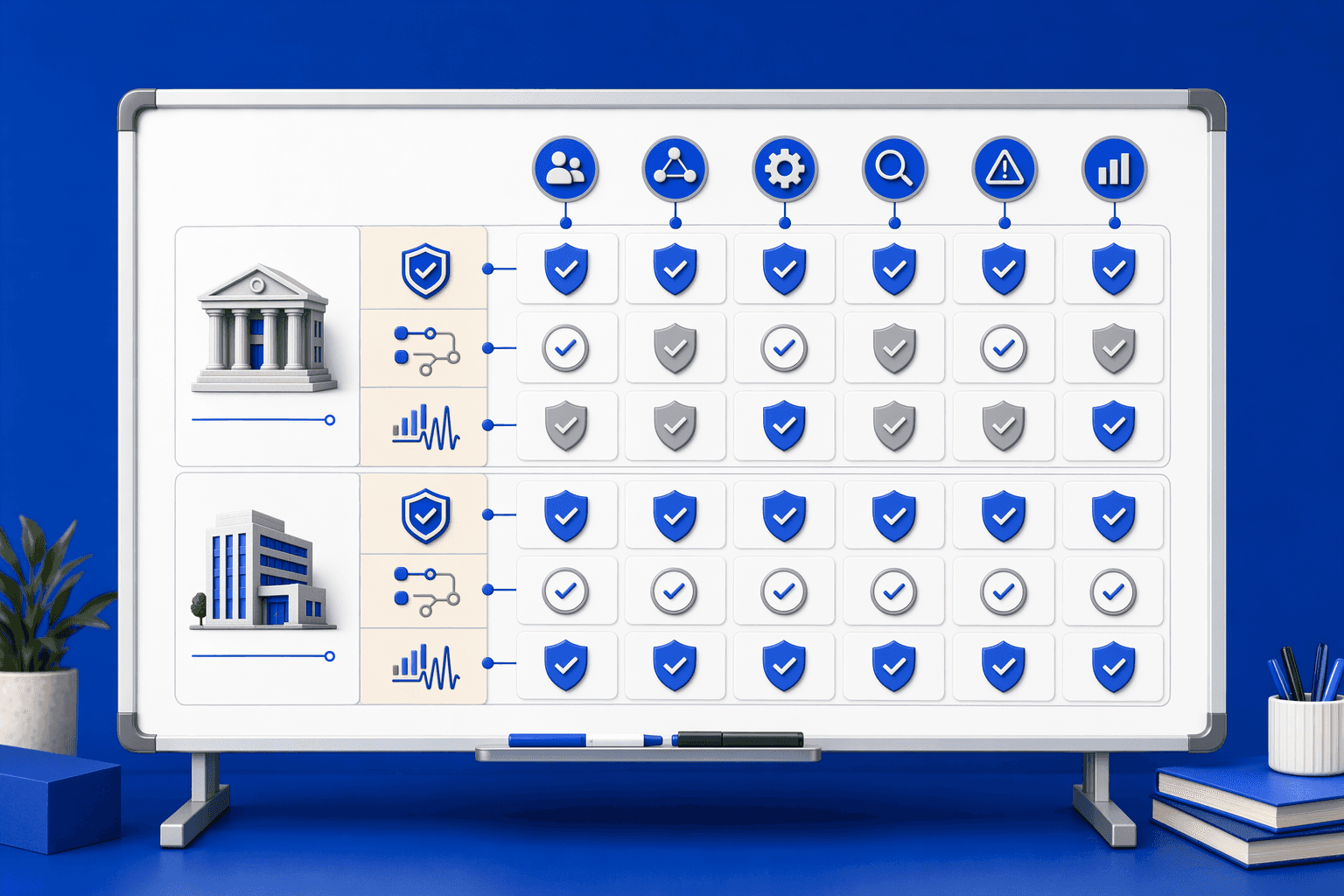
Compliance-First Institutions: Prioritizing Audit-Readiness and Governance
Banks and credit unions operating under heightened regulatory scrutiny require platforms that deliver formal governance certification for pre-deployment AI approval, stress-test every interaction to support policy alignment and regulatory compliance, and embed compliance into how the system thinks, speaks, and acts. These institutions should evaluate platforms on four capabilities: pre-deployment certification reports that document model training and testing lineage; hallucination guardrails and policy stress-testing that prevent off-script responses; audit-ready interaction logs with time-stamped evidence; and human escalation paths triggered when conversations exceed approved parameters. Platforms lacking transparent governance documentation or relying solely on post-deployment monitoring introduce regulatory risk that compliance-first institutions cannot accept.
Recovery-Optimization Institutions: Prioritizing Behavioral Intelligence and Channel Flexibility
Lenders optimizing for recovery rates prioritize platforms that analyze vast datasets in real time, predict borrower behavior and automate compliance, and unify voice, email, and SMS across the customer lifecycle. These institutions should evaluate platforms on three dimensions: behavioral analytics engines that incorporate payment history, communication preferences, and financial hardship signals; omni-channel orchestration that maintains conversation continuity across voice, text, and email; and adaptive tone control that adjusts messaging based on debtor sentiment and engagement patterns. Recovery-optimization institutions accept higher integration complexity in exchange for predictive precision, they need platforms that connect seamlessly with existing loan and credit systems, cutting delays and reducing errors while continuously improving decision-making logic through machine learning.
6-Platform Comparison: Compliance, Integration, and Intelligence Capabilities
The table below compares six platforms across the three evaluation pillars. Domu excels in behavioral intelligence and dignity-first servicing with a Compliance Automation Score of 5/5 and low integration complexity. C&R Software processes decisions in microseconds and integrates with third-party credit scoring tools, enabling teams to create rules without heavy IT support. For Prodigal, Toebank, Latitude by Genesys, and Katabat, specific capability and pricing data are not publicly disclosed, institutions evaluating these platforms should request vendor-provided compliance documentation, integration architecture diagrams, and case studies before shortlisting.
Platform | Compliance Automation | Integration Depth | Predictive Intelligence | Primary Channel |
|---|---|---|---|---|
Domu | Formal governance certification; hallucination guardrails; audit-ready logs | Low complexity; dashboard integration required | Behavioral layer with 100+ adaptive agent personalities | Voice, Email, SMS |
C&R Software | Automates compliance checks, reporting, and data entry | Integrates with third-party credit scoring tools; low-code/no-code design | Analyzes credit histories, financial reports, and market data in microseconds | Not specified |
Prodigal | Not publicly disclosed | Not publicly disclosed | Not publicly disclosed | Not publicly disclosed |
Toebank | Not publicly disclosed | Not publicly disclosed | Not publicly disclosed | Not publicly disclosed |
Latitude by Genesys | Not publicly disclosed | Not publicly disclosed | Not publicly disclosed | Not publicly disclosed |
Katabat | Not publicly disclosed | Not publicly disclosed | Not publicly disclosed | Not publicly disclosed |
Compliance-first institutions should shortlist platforms with formal pre-deployment certification and transparent governance documentation. Recovery-optimization institutions should prioritize platforms with behavioral analytics engines and omni-channel orchestration. At Domu, we believe orchestration plus selective human oversight is the regulatory safe harbor, our model governance mitigates human compliance risk while delivering the adaptive engagement recovery-focused lenders demand. Ready to see your future AI agents in action? Start a Pilot.
One approach to the compliance-first priority is governance-first orchestration, which embeds regulatory controls into every AI decision before deployment.
How Governance-First Orchestration Fits the Framework
Domu's Compliance Architecture: Audit Logs, Explainability, and Human Oversight
Domu exemplifies governance-first orchestration through three pillars. Alex, the pre-deployment governance specialist, stress-tests every interaction to support policy alignment, regulatory compliance, and audit-ready evidence. Jordan, the post-deployment audit lead, provides a complete, reviewable record of customer interactions and compliance outcomes, identifying off-script or unsupported responses for compliance review. This dual-layer approach, certify before deployment, audit continuously after, supports regulator demonstrations and ongoing governance rather than treating compliance as a checkbox.

Integration Requirements and Implementation Timeline: What Institutions Should Expect
At Domu, we believe governance-first platforms trade plug-and-play simplicity for custom workflows and deeper controls. Domu requires integration work and is not a plug-and-play voice bot. Institutions should expect API-first architecture, custom conversation-flow design, and engineering resources for deployment. This investment delivers audit-ready interaction logs, hallucination guardrails, and policy stress-testing, capabilities compliance-first institutions prioritize over rapid deployment.
Behavioral Intelligence and Human-Ai Collaboration in Practice
Domu operationalizes behavioral intelligence while maintaining human oversight: AI should enhance human judgment, not replace it blindly. The platform routes conversations beyond system parameters to a human supervisor, keeping teams in command through oversight, escalation paths, and controls. This elevation-not-replacement model suits institutions requiring human review of escalated cases and audit of AI decisions. Comparable vendors emphasize real-time conversational engagement, while others like Kollx AI position AI as working behind the scenes, institutions should verify each vendor's escalation protocols and human-in-the-loop architecture before committing.
To operationalize the three-pillar framework, institutions need a step-by-step checklist that translates evaluation criteria into vendor due-diligence questions.
Implementation Checklist: Vetting AI Collections Platforms for Compliance
As the AI for debt collection market expands, expected to grow at 15% CAGR through 2029, financial institutions face a procedural gap: *how* to verify a vendor's compliance claims during procurement. This checklist provides the due-diligence framework competitors omit entirely.

Compliance Verification: Questions to Ask Vendors About FDCPA/TCPA Enforcement
'Show us your FDCPA disclosure enforcement logs.' Request timestamped audit trails demonstrating how the platform detects and flags prohibited language in real-time interactions.
'How do you handle state-specific consent laws?' Verify the platform maintains jurisdiction-aware rulesets that adapt to varying state regulations without manual updates.
'What governance certification process precedes deployment?' Platforms should provide formal pre-deployment approval documentation, policy stress-testing, fail-safe mapping, and audit-ready lineage before any AI agent meets a customer.
Integration Due-Diligence: API Standards, Security Protocols, and Data-Sync Verification
'Do you support REST APIs with real-time sync?' Confirm the platform can push and pull data continuously from your core-banking system without batch delays.
'What encryption standards do you use for PII?' Require specifics: TLS 1.3 in transit, AES-256 at rest, and role-based access controls for sensitive debtor data.
'How do data fields map to our core-banking system?' Request a sample field-mapping document to verify the platform can ingest your account-level, payment-history, and contact-preference data without custom transformation layers.
Behavioral Intelligence Verification: Demonstrating Predictive Scoring and Channel Optimization
'Show us how your platform adapts outreach based on debtor sentiment.' Request a live demo where the AI adjusts tone or escalation path mid-conversation in response to frustration or confusion cues.
'What data inputs feed your predictive scoring model?' Verify the platform incorporates payment history, communication responsiveness, and hardship indicators, not just delinquency age, into its contact-priority algorithms.
'How do you measure conversation quality?' Institutions should vet platforms against outcome-focused KPIs, sustainable recoveries, complaint reduction, consumer experience, not just volume metrics like calls completed or accounts touched.
Industry observers often note that plug-and-play SaaS platforms can shorten implementation timelines, while integration-required platforms may offer more room for workflow customization, governance, and compliance-focused oversight. Recovery-optimization platforms prioritize behavioral intelligence and omni-channel flexibility, compliance-first platforms prioritize governance architecture and regulatory demonstration, institutions must choose based on their top priority, not vendor marketing claims.
As CFPB oversight of AI collections expands and state-level consent laws proliferate, the bar for vendor due-diligence will continue rising, institutions that build evaluation frameworks now (rather than relying on vendor feature lists) will be better positioned to demonstrate regulatory compliance and adapt to future requirements.
Explore Domu's governance-first collections orchestration platform to see how compliance architecture, behavioral intelligence, and human oversight work together in practice.
Frequently Asked Questions
How do I verify FDCPA compliance in an AI collections platform?
Institutions should ask vendors to demonstrate FDCPA disclosure enforcement logs, mini-Miranda notices, validation notices, and dispute-validation workflows during demos. Governance-first platforms provide audit trails for every AI decision, enabling regulatory demonstration. Verify that the system enforces state-specific consent laws and opt-out requirements at the interaction level.
What integration work is required for AI collections platforms?
SaaS plug-and-play solutions minimize engineering work but limit customization, while API-first platforms require integration to core-banking systems but support custom workflows. Institutions should request detailed API documentation, verify encryption standards (TLS 1.2+, AES-256), and ask for typical implementation timelines, SaaS platforms deploy in weeks, integration-required platforms take months.
What behavioral signals should an AI collections platform detect?
Platforms should ingest payment history (frequency, recency, amount variance), communication preferences (channel, time-of-day responsiveness), and sentiment signals from conversation transcripts. These inputs feed predictive scoring models that prioritize accounts by payment likelihood, optimize contact timing, and route debtors to preferred channels to reduce hang-ups and improve recovery.
How do I evaluate audit-readiness in an AI collections platform?
Audit-readiness means the platform provides explainability and monitoring for every AI decision, so institutions can demonstrate to regulators that collections are monitored and fair. NIST AI RMF emphasizes ongoing governance: audit logs, explainability, and human oversight. Compliance-first platforms like Domu design governance architecture from the ground up.
What is the difference between plug-and-play SaaS and integration-required collections platforms?
SaaS plug-and-play platforms minimize implementation timelines and engineering work but limit workflow customization and governance controls. Integration-required platforms take longer, require API work, but support custom workflows, real-time data sync, and audit-readiness. Institutions must choose based on priority: speed versus governance depth.
How do AI collections platforms reduce hang-ups and improve recovery?
Platforms use behavioral intelligence, sentiment analysis, conversation pacing, channel preference detection, to optimize outreach. They detect signals that predict hang-ups (negative sentiment, wrong channel, poor timing) and adapt in real time. Institutions should verify these capabilities during vendor demos by requesting examples of adaptive workflows.
What KPIs should I track to measure AI collections success?
Move beyond volume metrics (call volume, contact rate) to outcome metrics: sustainable recovery rate (promises kept versus made), complaint reduction (year-over-year CFPB complaints), and consumer experience scores. Governance-first platforms enable tracking through audit logs and monitoring dashboards, supporting both compliance demonstration and performance optimization.
Sources
Debt Collection Rule FAQs - Consumer Financial Protection Bureau - www.consumerfinance.gov
Best AI Debt Collection Platforms for Financial Institutions (2026) - startupfinanceguide.com (2026)
Fair Debt Collection Practices Act | American Bankers Association - www.aba.com
AI Risk Management Framework | NIST - www.nist.gov
Financial Services AI Risk Management Framework - cyberriskinstitute.org
ClaraPay — AI-Powered Debt Collection - clarapay.com
Chaseit AI - AI-Powered Debt Collection - go.chaseit.ai
CollectDebt - AI-Powered Debt Collection Platform | Intelligent Voice Automation - collectdebt.ai
The Top 8 Reasons Why Customers Hang Up - answerhero.com (2025)
Debt Collection Predictive Analytics: Benefits, Types and Uses - www.fico.com (2025)
How Real-Time Reporting Improves Debt Collection Strategies - www.beveron.com
AI-Powered Personalized Debt Collection - www.firstsource.com
The 5 Best AI Debt Collection Software in 2025 for Smarter Risk Control - www.apollotechnical.com (2025)
Debt Collection Trends to Watch in 2025 - Blog - Vymo - vymo.com (2025)
AI For Debt Collection Market Analysis, Size, and Forecast 2025-2029 - www.technavio.com (2025)
10 minutes


Explore Related Articles


GET STARTED
We’re building the next generation of engagement technology: intelligent, automated, and compliant. Our mission is to empower financial institutions to orchestrate every stage of the servicing lifecycle with dignity and unprecedented efficiency.
Supported by
Y Combinator

AWS

Microsoft