
Customers disconnect from debt collection calls within seconds—not because of hold times or agent professionalism, but because caller ID alone triggers avoidance rooted in financial shame and prior negative experiences.
Key Takeaways
Caller ID stigma causes customers to hang up before any agent speaks, driven by pre-call dread and financial shame rather than rational evaluation
Traditional compliance scripts sound robotic and procedural, triggering immediate disconnects when customers detect the tone shift from human greeting to legal recitation
Real-time AI intervention reduces hang-up rates by scoring emotion signals (frustration, silence, abrupt speech) and adjusting tone before the customer disconnects
Compliance-as-architecture bakes FDCPA disclosures into every call using AI guardrails that enforce legal safety without sounding scripted or procedural
Immediate hang-up rate is a collections-specific metric distinct from general call center abandonment, measuring customer rejection within the first 15 seconds of contact
Why Customers Hang up Immediately on Past-Due Calls: the Behavioral Psychology
Customers hang up immediately on past-due calls because the caller ID alone triggers a pre-decisional avoidance response rooted in financial shame, fear of confrontation, and conditioning from prior aggressive collection experiences—long before any agent speaks. This behavioral pattern reflects collections-specific psychology distinct from general call center abandonment, where hold times or IVR complexity drive drop-off.
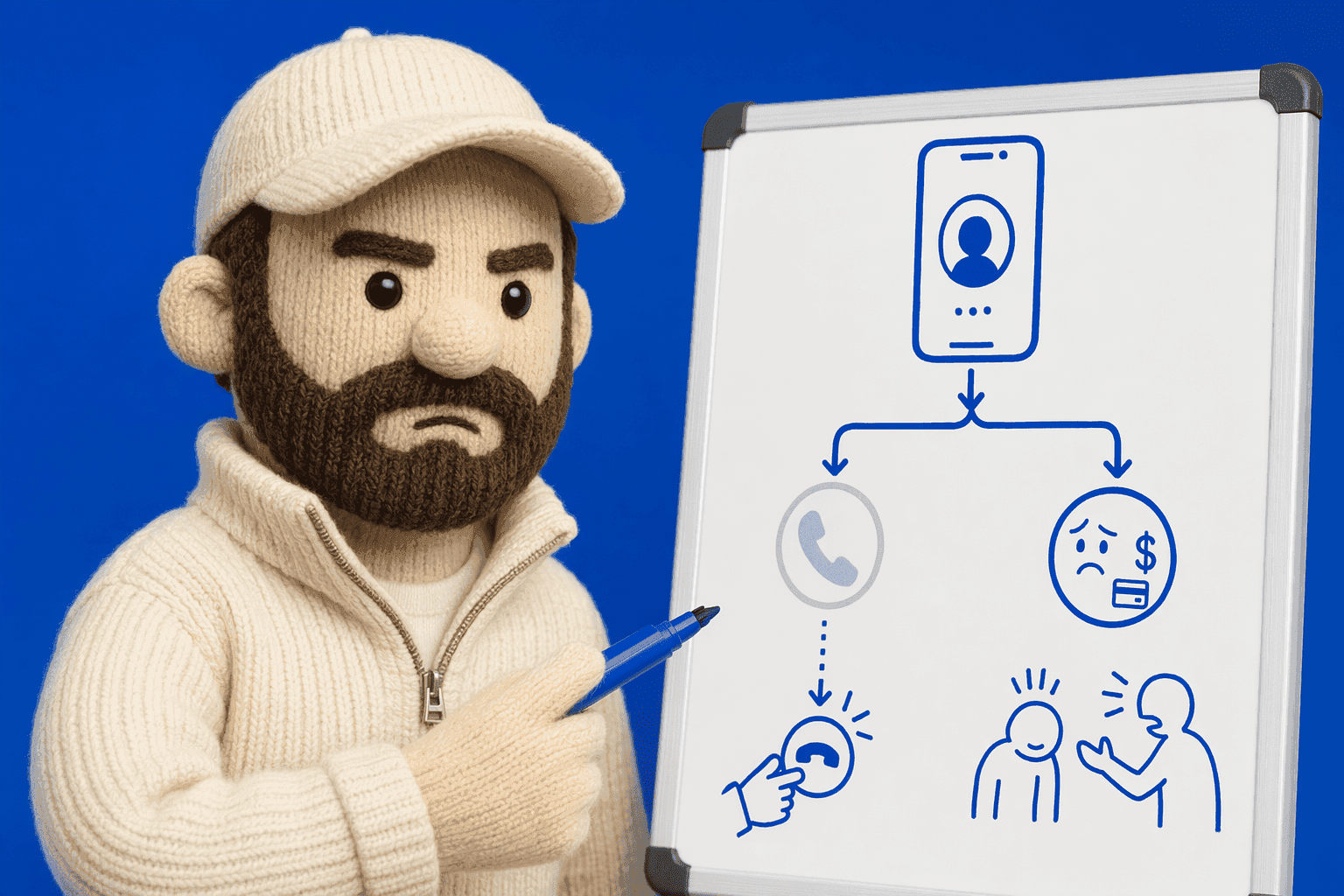
Caller ID Avoidance and Pre-Decisional Screening
The moment a debt collection number appears on caller ID, customers screen based on stigma and dread rather than rational evaluation. Industry research shows the majority of consumers now screen unknown numbers, with collection calls triggering instant rejection due to the emotional weight associated with financial distress. The decision to hang up occurs in seconds, before the phone rings twice—a pre-call filtering mechanism driven by shame rather than agent behavior.
Fear of Confrontation and Financial Shame
Financial distress carries psychological weight that converts inbound collection calls into confrontation scenarios. Customers associate the call with judgment, failure, and exposure of their inability to pay—emotions that override rational engagement. The shame of discussing unpaid debts triggers immediate disconnection, as customers reflexively avoid the vulnerability of admitting financial hardship to a stranger. This response is not about agent professionalism; it precedes any dialogue.
Prior Negative Experiences as Hang-Up Accelerants
Past encounters with aggressive or robotic collectors condition customers to hang up reflexively. Voice metrics analysis reveals that legal warnings and harsh tones in prior calls decrease compliance and trigger anger, creating a learned aversion that extends to all future collection contacts. Customers who experienced threats or pressure in previous calls apply that pattern universally, disconnecting before the current agent can establish tone. At Domu, we believe behavioral intelligence can interrupt this cycle by adapting tone and urgency to customer profiles before the first word is spoken.
Understanding the psychological triggers behind immediate hang-ups requires examining how customers perceive debt collection numbers before they even answer.
Caller ID Stigma and Pre-Call Dread
Caller ID stigma creates a barrier before the conversation begins. Customers pre-decide to hang up based on assumptions about the call's nature, not the agent's opening line. When customers see a number labeled "collections" or recognize a repeated caller ID, they disconnect reflexively—often within seconds. This is the zero-engagement hang-up: calls that disconnect before any human interaction.
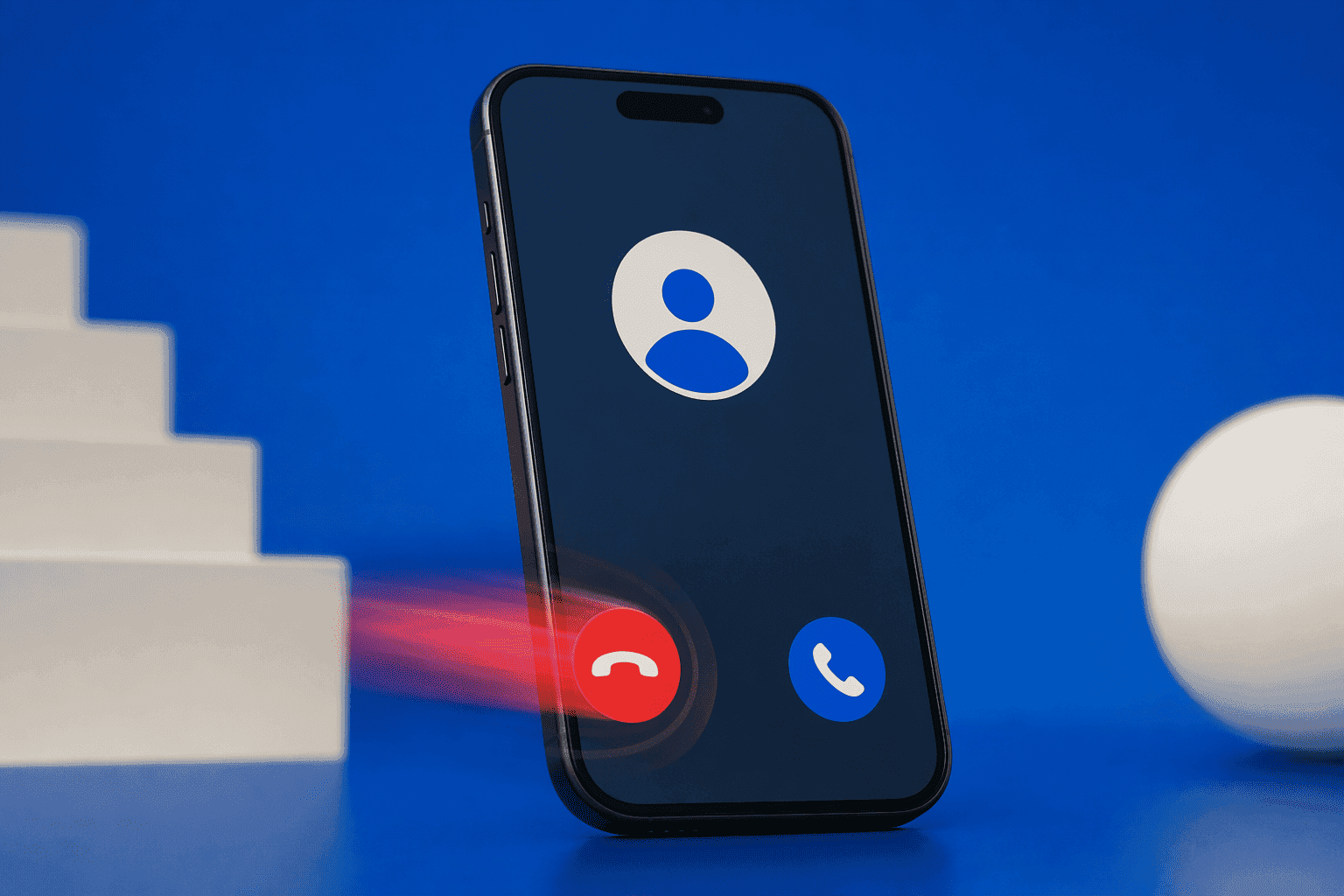
The 'Unknown Number' Red Flag
Debt collection numbers trigger instant avoidance. Caller ID labeling—powered by carrier databases and crowd-sourced spam registries, exacerbates the stigma. When a number appears as "Debt Collector" or "Spam Risk," customers hang up before saying a word. Early hang-ups signal friction, confusion, or unmet expectations formed before the call connects. This contrasts with general call-center abandonment, which typically stems from hold times or IVR complexity. Collections hang-ups are structurally different: the disconnect decision is made at the moment of recognition.
Pre-Call Emotional Priming
The anticipatory stress between seeing the caller ID and deciding whether to answer is pre-call emotional priming. CFPB frequency rules limit collections calls to seven attempts within seven days or one call within seven days after a conversation. Yet repeated calls from the same number, even when compliant, amplify caller ID avoidance. The customer sees the number, associates it with past-due debt, and disconnects reflexively. This dread is structural: it precedes the agent's tone, script, or intent.
Beyond caller ID stigma, the structure of compliance scripts themselves creates disengagement moments that traditional training cannot address.
The Compliance Gap: How Traditional Scripts Trigger Hang-Ups
Human agents cannot self-monitor compliance in real time. By call 200 of a shift, fatigue degrades consistency, the same agent who delivered a clear FDCPA disclosure at 9 a.m. May rush through it or skip a phrase by 4 p.m., creating the structural need for AI guardrails. This is not a training problem; it is a capacity problem.
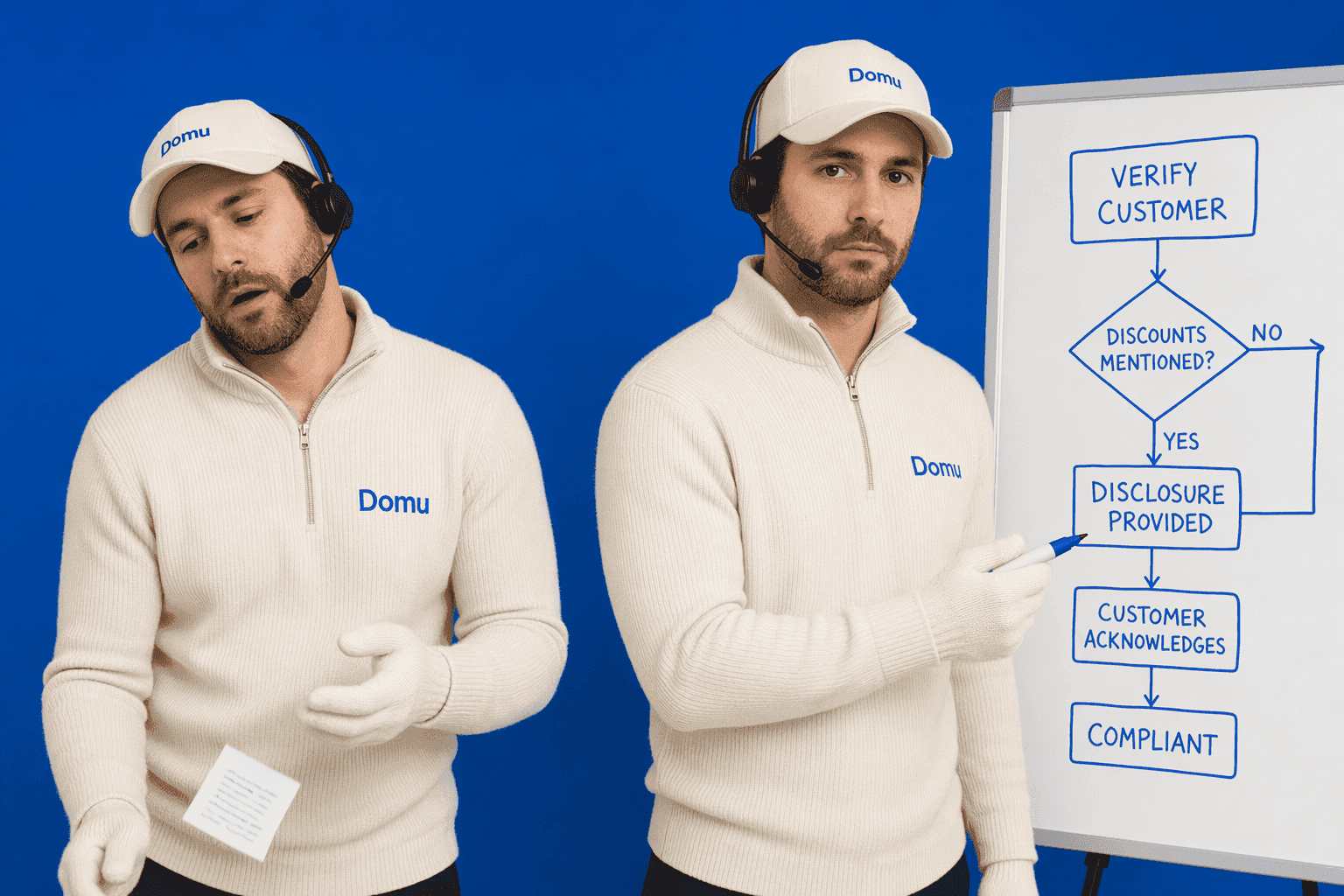
Robotic Disclosure Delivery and Customer Disengagement
Traditional compliance scripts sound procedural because they are procedural: rigid, mandatory language optimized for legal safety rather than conversation flow. Customers detect the shift in tone immediately, the agent transitions from human greeting to robotic recitation, and hang up before the disclosure finishes. Industry average abandonment rate is 5-8%; above 12%, something is structurally broken. Collections calls add a compliance-specific trigger: the Mini-Miranda script itself becomes the hang-up moment. AI-powered platforms are redefining how financial institutions handle this gap. Intelligent systems analyze vast datasets in real time, predicting borrower behavior and automating compliance without sounding robotic. These platforms connect seamlessly with existing loan and credit systems, cutting delays and reducing errors. Domu stress-tests conversation flows against FDCPA and TCPA boundaries in a synthetic environment, baking disclosure delivery into every interaction while maintaining conversational tone.
Human Agent Fatigue as a Hang-Up Trigger
By call 200, agents lose patience or consistency, the disclosure that took 18 seconds at call 1 now takes 9 seconds, phrases drop out, and the customer detects the rushed delivery. At Domu, we believe orchestration plus selective human oversight is the regulatory safe harbor: the AI agent cannot have a bad day and cannot lose patience at call 200 of its shift. Domu automatically flags compliance violations and enforces on-script interactions through its governance certification workflow. This moves beyond post-call compliance audits, which allow violations to occur and rely on downstream correction, to real-time intervention as the structural solution. For teams managing regulated debt portfolios, real-time intervention is the safer architecture.
Reducing hang-up rates at scale requires technology that monitors and intervenes during the conversation, not after it ends.
Real-Time AI Intervention: Catching the Hang-Up Before It Happens
The highest-performing collections operations in 2026 share a structural advantage: they catch hang-up triggers before customers disconnect. Real-time AI intervention transforms collections from reactive audits, where compliance violations and tone failures are flagged after the damage is done, into proactive orchestration that detects and corrects behavioral drift while the conversation is still live. Chaseit AI's natural, context-aware discussions that adapt to every debtor response and ClaraPay's 9 compliance gates that validate every contact exemplify this compliance-as-architecture category: platforms purpose-built to block violations before they reach the customer, not audit them afterward.
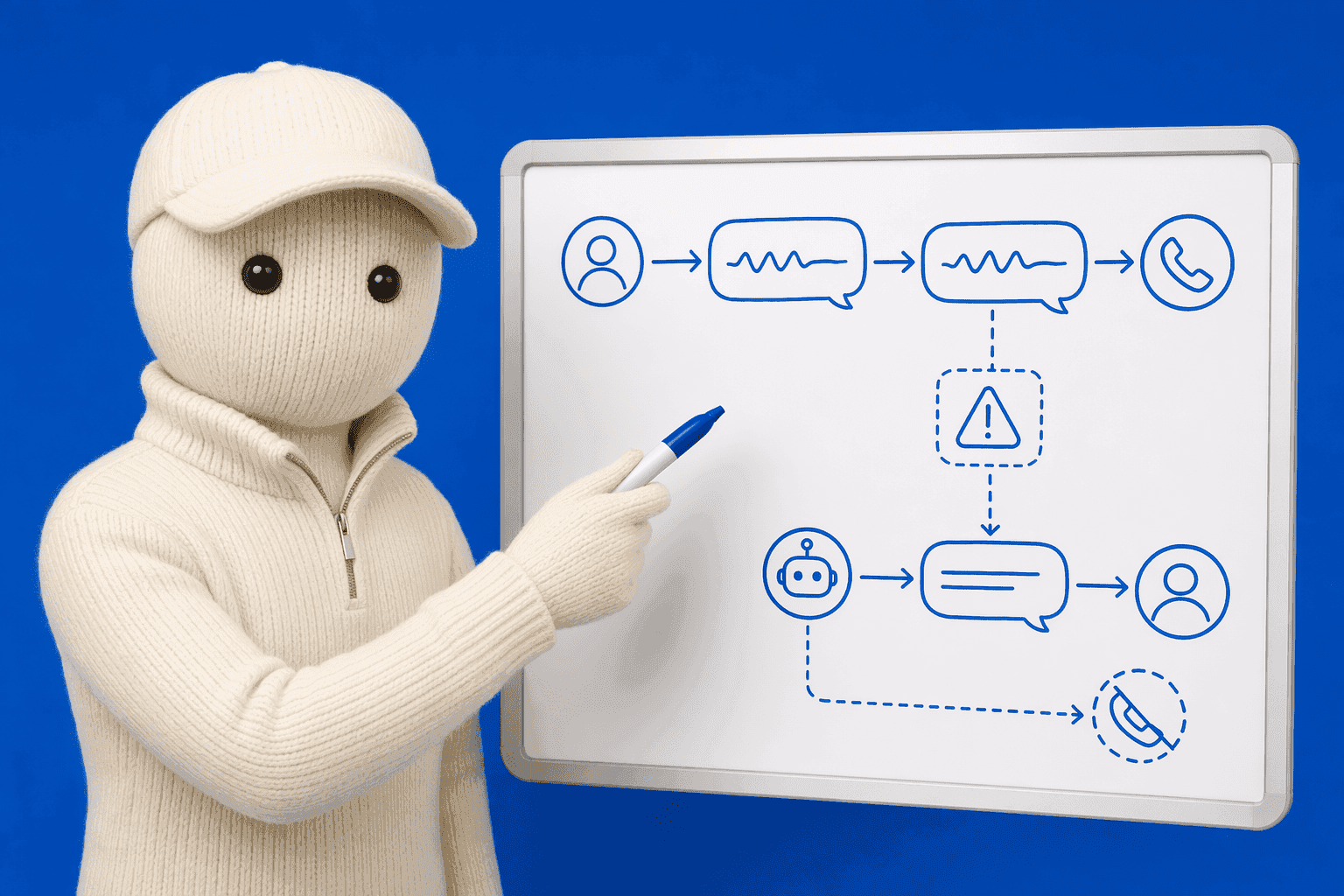
The intervention workflow operates as a continuous loop:
AI monitors call sentiment in real time, analyzing tone, pacing, keyword patterns, and silence intervals to calculate a hang-up risk score every 2-3 seconds throughout the conversation.
Detects hang-up-risk triggers, aggressive tone escalation, script deviations that introduce prohibited language (threats, legal misrepresentation), or customer confusion signals (repeated requests for clarification, prolonged silence) that historically precede disconnection.
Surfaces adaptive messaging, when the risk score crosses a threshold, the system either auto-corrects the agent's script in real time (inserting empathy markers, switching to payment plan language, or restating the FDCPA disclosure in simplified terms) or prompts the human agent with a recommended pivot.
Escalates to human supervisor, when emotion-detection accuracy drops below the governance threshold (e.g., customer exhibits high-stress verbal markers the AI cannot confidently classify), the conversation is routed to a human compliance specialist who can navigate dispute requests, cease-and-desist demands, or validation claims.
This loop addresses the root structural cause of early hang-ups: customers disengage when they detect procedural rigidity, perceive the agent as scripted rather than responsive, or hear compliance language delivered without contextual framing. Platforms like ClaraPay enforce FDCPA, TCPA, FCRA, Regulation F, and 50-state rules automatically through 9 compliance gates that block violations before they happen, ensuring every outbound contact passes validation before execution. Domu says it detects inappropriate legal language and threats that violate regulations in real time, flagging accounts with elevated dispute likelihood or customers showing signs of financial distress that require modified collection approaches.
Compliance-As-Architecture: Fdcpa Disclosures Without the Robot Voice
Traditional collections scripts treat FDCPA disclosures as procedural checkboxes: agents read the Mini-Miranda statement verbatim at call open, often in a monotone cadence that signals to the customer 'this is a collections call, prepare to disengage.' The predictable result: hang-up rates spike in the first 15 seconds, before the agent reaches substantive conversation. Compliance-as-architecture platforms reverse this dynamic by embedding regulatory requirements into the conversation flow rather than bolting them on as pre-amble. Domu says FDCPA disclosures are on every single call, not most calls, framing compliance as an architectural constraint built into every interaction, not a discipline enforced selectively.
The structural difference: instead of a single scripted disclosure read at call start, the AI distributes required language across the conversation's natural arc. The debt validation notice is woven into the opening rapport-building exchange ('I'm calling about your account with [creditor], you have the right to dispute this debt within 30 days'). Payment arrangement discussions include embedded consent verification ('If we set up a plan today, you're agreeing to these terms, does that work for you?'). Call-time restrictions and cease-and-desist protocols trigger automatically based on time-zone detection and account flags, blocking outbound contact before an agent can attempt it. Chaseit AI adheres to FDCPA, TCPA, and regional regulations through adaptive conversations that propose payment plans, handle objections, and close agreements while maintaining regulatory guardrails, demonstrating how scripting compliance into every call reduces robotic procedural framing that customers recognize and disengage from.
Real-Time Compliance Monitoring Stops Violations Before They Reach the Debtor
Post-call compliance audits, the legacy standard for most collections operations, operate as reactive quality control: supervisors review recorded calls after the fact, flag violations (inappropriate legal language, missing disclosures, frequency cap breaches), and coach agents to correct behavior on future calls. This model allows violations to occur and relies on downstream correction, acceptable for low-stakes service calls but problematic for FDCPA-governed collections where a single prohibited statement can trigger statutory damages. Real-time intervention inverts the control point: the AI monitors every utterance as it happens, comparing live transcription against a compliance rule engine (FDCPA threat language, Regulation F frequency limits, state-specific restrictions) and halts the script before prohibited content reaches the customer.
The operational advantage: agents cannot accidentally violate policy because the system blocks non-compliant paths at runtime. If an agent begins to state 'we'll report this to your employer' (an FDCPA violation in most contexts), the AI detects the phrase construction in real time and either mutes the agent's line while surfacing a correction prompt or auto-terminates that dialogue branch and routes the call to a supervisor. ClaraPay illustrates this architecture: propensity scores update on every payment, contact, and status change; 9 compliance gates validate every contact; and the loop continues until the account is paid, settled, disputed, or returned, ensuring compliance enforcement happens before execution, not after audit. Domu's platform includes real-time compliance monitoring that flags inappropriate language, threats, or policy deviations in real time, representing the structural shift from post-call correction to live intervention as the category standard for regulated debt recovery in 2026.
Human escalation remains mandatory for disputes, validation requests, cease-and-desist demands, and high-stress sentiment scores where emotion-detection accuracy thresholds are breached, AI augments human judgment rather than replacing it. Domu offers 100+ adaptive agent personalities that optimize accent, language, and tone to drive higher engagement and conversion, demonstrating how adaptive tone calibration addresses hang-up triggers by matching conversational style to customer preference and stress level. Ready to see your future AI agents in action? Explore Domu's compliance-first collections platform.
Real-time sentiment scoring enables adaptive responses, but emotion detection accuracy has operational thresholds that determine when human escalation becomes necessary.
Emotion Detection and Adaptive Tone in Live Calls
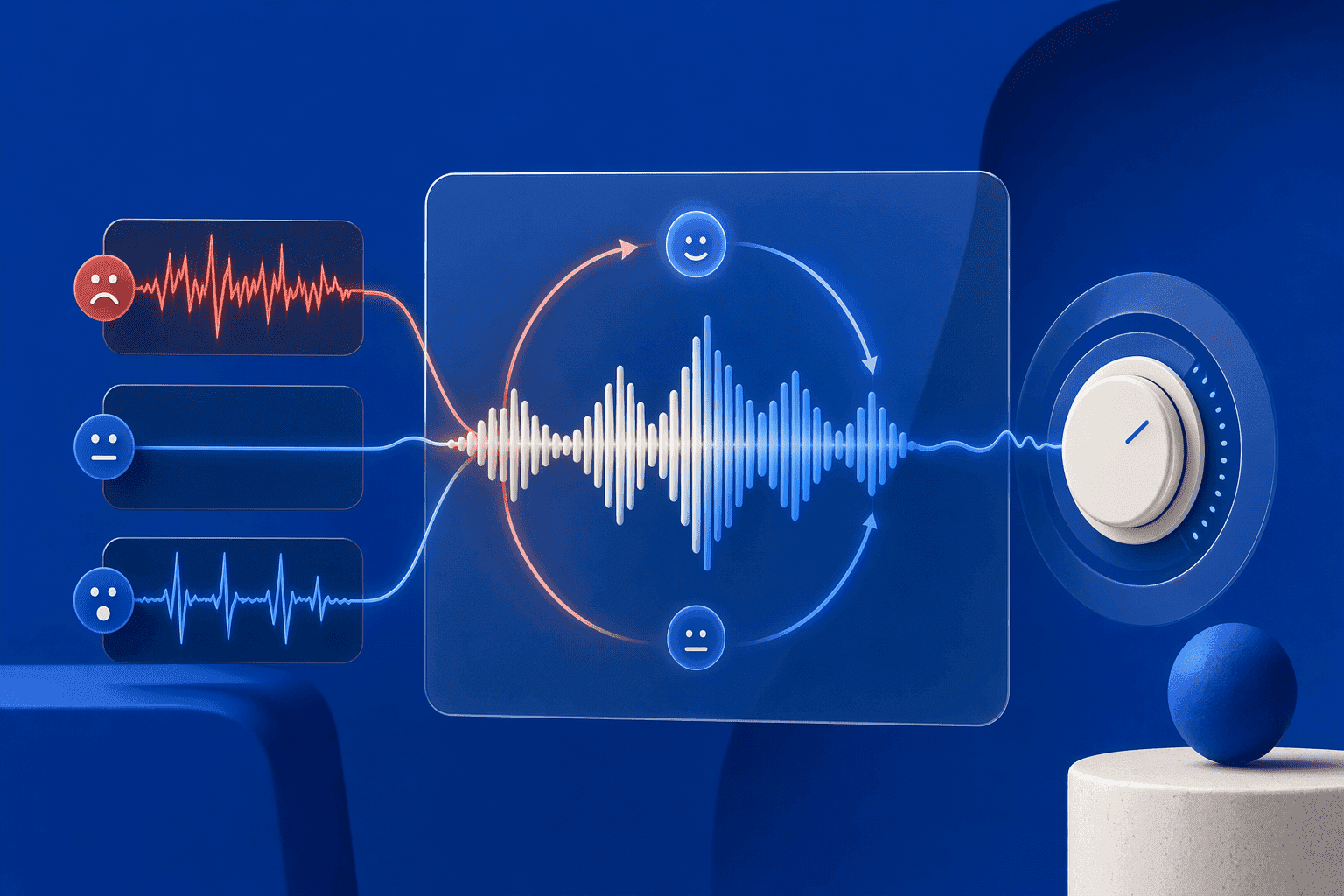
Real-time emotion detection scores sentiment signals, frustration, silence, abrupt speech, and adjusts tone or pacing the moment hang-up risk is detected. This live intervention distinguishes compliance-as-architecture platforms from post-call analytics tools that flag problems only after the customer has already disconnected.
Sentiment Scoring and Hang-Up-Risk Thresholds
Modern conversational AI platforms deliver low-latency interactions that enable sentiment scoring in real time. When the system detects frustration markers, raised pitch, silence longer than three seconds, or abrupt sentence breaks, it adjusts pacing, softens language, or offers an immediate payment-plan option before the customer hangs up. Domu's Taylor adapts tone and context across 100+ adaptive agent personalities that optimize accent, language, and tone to drive higher engagement. This behavioral layer reads customer history and sentiment before any interaction begins, then modulates delivery to match the individual's communication style.
Human Escalation Protocols for High-Stress Scenarios
Predictive analytics helps collections organizations make smarter, faster decisions, but emotion-detection accuracy has thresholds. When sentiment scores indicate distress beyond the AI's capability to de-escalate, disputes, validation requests, cease-and-desist demands, Domu provides selective human escalation for high-value conversations. The system ensures interactions stay on-script, compliant, and consistent from the first message to resolution, but routes edge cases to a human supervisor before regulatory risk materializes. AI is augmentation, not replacement, human judgment remains mandatory for scenarios the model cannot resolve autonomously.
When compliance and conversation quality are integrated into the call architecture itself, hang-up rates decline without sacrificing regulatory adherence.
How Compliance-First AI Reduces Hang-Up Rates in Regulated Collections
Measuring Hang-Up Rate Reduction as a Collections KPI
Immediate hang-up rate, the percentage of collection calls disconnected within the first 15 seconds, is a collections-specific metric distinct from general call center abandonment. While abandonment tracks callers who drop from queue, hang-up rate measures customer rejection of the actual conversation. Real-time compliance intervention reduces hang-up rates by eliminating the robotic disclosure gap: when FDCPA disclosures are delivered naturally in the first moments of contact, customers stay on the line. Domu stress-tests conversation flows against FDCPA and TCPA boundaries in a synthetic environment before deployment, ensuring disclosures land as empathetic conversation rather than compliance recitation. Platforms that bake compliance into architecture, rather than auditing post-call, report measurably lower hang-up rates because customers perceive the interaction as human-first.
Competitive Landscape: Real-Time Vs. Post-Call Compliance Models
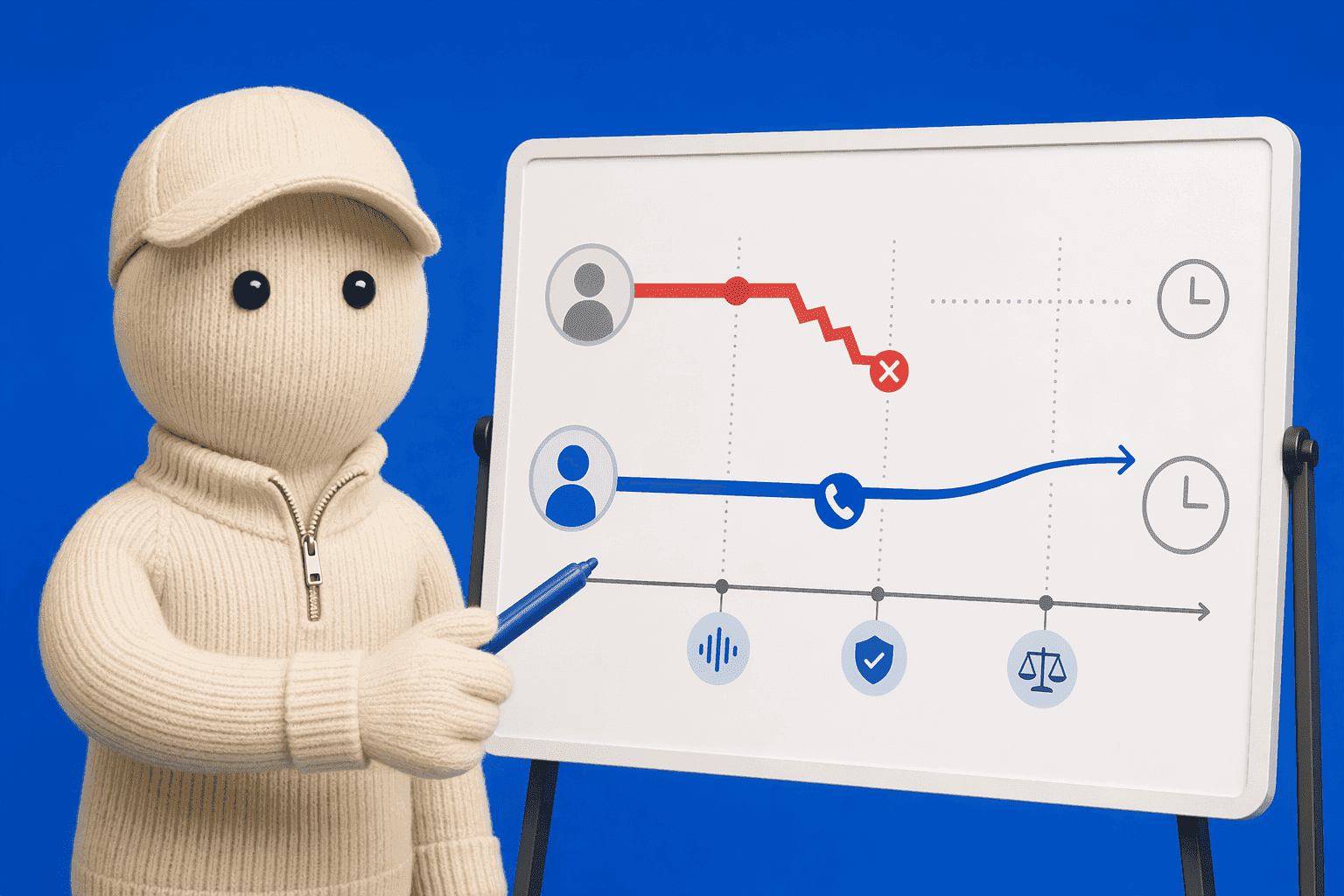
Real-time AI intervention platforms, Domu, TrueAccord, and CollectDebt, adapt disclosures, tone, and escalation paths during the call itself. CollectDebt reports 7x contact rate improvement through intelligent voice automation, while KompatoAI's recovery-rate maximization techniques highlight that early compliance intervention reduces disconnects before costs escalate. Domu's platform includes real-time compliance monitoring that layers predictive risk scoring onto live interaction streams, flagging accounts requiring modified approaches before hang-ups occur. Post-call audit models, PDCflow, C&R Software, Floatbot, review recordings retroactively, allowing compliance violations to reach customers first. This reactive architecture accepts hang-ups as inevitable rather than engineering them out at the interaction layer. For regulated collections portfolios, real-time behavioral orchestration delivers lower hang-up rates because the AI prevents compliance friction during the conversation, not after.
Conclusion
Post-call compliance audit tools suit teams focused on retroactive risk review, while Domu's real-time intervention addresses psychological triggers, caller ID stigma, fear of confrontation, robotic script avoidance, before customers disconnect. Generic call center AI optimizes for hold times and IVR efficiency; Domu's compliance-as-architecture optimizes for collections-specific hang-up psychology where FDCPA disclosure timing and tone drive engagement versus immediate disconnects. As AI-powered debt collection platforms mature, the industry will shift from post-call audits to real-time behavioral orchestration, where emotion detection, adaptive tone, and compliance-as-architecture become the structural standard for reducing hang-up rates and improving contact success in regulated collections. Audit your current hang-up rate baseline using Domu's compliance-first platform and see how real-time emotion detection reduces disconnects on past-due calls.
Frequently Asked Questions
Why do customers hang up immediately on debt collection calls?
Customers hang up immediately because caller ID alone triggers avoidance rooted in financial shame, fear of confrontation, and prior aggressive collection experiences, before any agent speaks. This pre-decisional response differs from general call center abandonment, driven by psychological stigma rather than hold times or IVR complexity.
How does caller ID stigma cause customers to hang up before answering?
Caller ID stigma creates pre-call dread where customers screen based on assumptions about the call's nature (past-due debt), not the agent's opening line. Repeated calls from the same number amplify avoidance, causing customers to disconnect before the conversation begins, driven by anticipatory stress rather than rational evaluation.
What is compliance-as-architecture in debt collection?
Compliance-as-architecture bakes FDCPA disclosures into every call using AI guardrails that enforce legal safety without sounding robotic or procedural. Unlike post-call audits, these platforms enforce compliance in real time, preventing the tone shift from human greeting to scripted recitation that triggers immediate hang-ups.
How does real-time emotion detection reduce hang-up rates?
AI scores sentiment signals, frustration, silence, abrupt speech, in real time and adjusts tone or pacing when hang-up risk is detected. This live intervention de-escalates conversations before the customer disconnects, distinguishing compliance-as-architecture platforms from post-call analytics tools that flag problems only after hang-ups occur.
When does AI escalate a debt collection call to a human?
AI escalates when sentiment scores indicate high stress beyond its de-escalation capability, or when customers make disputes, validation requests, or cease-and-desist demands. Emotion-detection accuracy has thresholds; human oversight remains mandatory for distress signals and regulatory requests, framing AI as augmentation rather than replacement.
What is the difference between collections hang-up rate and general call abandonment?
Immediate hang-up rate measures customer rejection within the first 15 seconds, driven by caller ID stigma and fear of confrontation. General call center abandonment tracks callers who drop from queue due to hold times or IVR complexity, structurally different from collections-specific avoidance rooted in financial shame.
How do traditional compliance scripts trigger hang-ups?
Robotic FDCPA disclosure delivery sounds procedural and disengages customers immediately when they detect the tone shift from human greeting to legal recitation. Human agents lose consistency by call 200 of a shift, disclosures shorten, phrases drop, and customers detect rushed delivery, triggering disconnects before conversations begin.
Sources
Carrots or sticks in debt collection services? A voice metrics and text analysis of debt collection calls - www.sciencedirect.com (2021)
Why Customers Hang Up Before a Word | Intelliverse - www.intelliverse.com
When and how often can a debt collector call me on the phone? - www.consumerfinance.gov
Call Center Abandonment Rate: Why Callers Hang Up & How to Fix It | ViciStack Blog - vicistack.com (2026)
The 5 Best AI Debt Collection Software in 2025 for Smarter Risk Control - www.apollotechnical.com (2025)
Integrate Effortlessly With... | ElevenLabs Conversational AI - elevenlabs.io
Debt Collection Predictive Analytics: Benefits, Types and Uses | FICO - www.fico.com (2025)
CollectDebt - AI-Powered Debt Collection Platform | Intelligent Voice Automation - collectdebt.ai
Successful Debt Collection Techniques to Maximize Recovery Rates | KompatoAI - kompatoai.com
Debt Collection FAQs | Consumer Advice | FTC - consumer.ftc.gov
10 minutes


Explore Related Articles



GET STARTED
We’re building the next generation of engagement technology: intelligent, automated, and compliant. Our mission is to empower financial institutions to orchestrate every stage of the servicing lifecycle with dignity and unprecedented efficiency.
Supported by
Y Combinator

AWS

Microsoft