

Your operations team is pushing for the cost savings of AI calling agents. Your legal team is losing sleep over the CFPB’s sharpened focus on AI oversight.
Introduction
Your operations team is pushing for the cost savings of AI calling agents. Your legal team is losing sleep over the CFPB’s sharpened focus on AI oversight. Running a plug-and-play voice bot trained on generic internet chatter is a fast track to a consent decree. The core tension is real: 80% of debtor contact attempts go to voicemail or no answer, and human agents simply cannot touch that volume cost-effectively. Yet letting a naive AI loose on a phone line risks violating the FDCPA’s prohibition on harassment, false representations, and third-party disclosure before lunch.
At Domu, we learned that the voice channel doesn't forgive ambiguity. A compliant AI agent must operate less like a creative chatbot and more like a deterministic rules engine that speaks. It requires locking down every dialogue branch against statutory text before the first call ever rings. The CFPB’s performance-based expectations do not demand perfection, but they demand a provable, auditable chain of control that a generic large language model cannot provide.
This roadmap breaks down the specific architecture, governance, and integration layers required to deploy an AI collector that a regulator can actually inspect. We are not discussing theoretical policy here; this is the production specification for a voice AI that enforces FDCPA, TCPA, and jurisdiction-specific strictures automatically, because the native compliance framework refuses to let it do otherwise.
Key Takeaways
This framework distills the non-negotiable structural requirements for compliant automation. A defensible AI collector functions as a governed system-of-record action, not a smarter bot.
Pre-defined scripts are mandatory: The AI must operate 100% from FDCPA-vetted text; even the negotiation of payment plans must fall within pre-approved maximum and minimum boundaries to satisfy the prohibition on unauthorized settlement.
Audit trail is the primary evidence artifact: The system must generate an immutable, speaker-diarized transcript with a cryptographic hash, proving exactly why the AI made each settlement offer based on a locked pre-approved rule.
Jurisdictional logic must be immutably locked: State-level variations, such as statute-of-limitations logic or mini-FDCPA requirements, cannot be editable toggle switches; they must be hard-coded into the dialogue tree during a sandboxed pre-deployment validation.
Live compliance analysis is a safety-critical function: An inline speech classifier must scan generated text in real time, instantly aborting or escalating any deviation from the approved lexicon or prohibited tone before it is uttered.
A stand-alone AI dialer is a liability: The agent must sustain a bidirectional, API-level integration with the collection platform of record (such as DAKCS, FICO, or Debt Manager) to read real-time triggers like active bankruptcy flags or cease-and-desist orders.
Step 1: Decode the FDCPA, TCPA, and CFPB Mandate for AI Calling Agents

The statutory hooks are specific. An AI script must encode three boundaries natively, or the system is defective from the first call.
First, an open-ended language model that negotiates a settlement outside a pre-approved range is making an unauthorized false representation. Agentic AI must only negotiate dynamically within explicit guardrails to avoid this trap.
Second, the TCPA's prior consent requirement is not satisfied by a blanket 'we may call you.' The AI's dialing logic must verify explicit, channel-specific consent before queuing a number that the system has classified as wireless. Third, the prohibition on harassment does not just regulate frequency; it regulates tone.
The CFPB's circulars make it clear that an AI agent cannot employ psychologically manipulative or abusive language, even if that language statistically improves liquidation rates. The compliance engine must therefore forbid certain persuasive lexicons, pressure words that a human might instinctively avoid but a profit-optimized bot might select, via a hard-coded stop list. The recent analysis from iTuring.ai underscores that 'pre-approved parameters' are the sole mechanism satisfying the regulatory prohibition on unauthorized negotiation.
The practical translation: an FDCPA-compliant AI is a state machine that moves through a rigid call flow prescribed by a compliance officer. It accesses the full account context, assesses the situation within defined guardrails, and offers dynamic repayment options that the legal team has already signed off on. The moment a consumer's question falls outside the mapped nodes, the agent's only compliant action is to safely abort and escalate to a human, never to hallucinate a helpful answer.
Step 2: Define the Technical Specification for a Compliance-First AI Collector
The functional specification for a defensible voice agent inverts the typical AI design brief by starting with the violations it must structurally prevent. A generic bot chases resolution, while a compliant AI agent chases a zero-violation rate. That difference shapes every line of the technical requirements.
Specification | Compliance-First AI Collector (System of Record) | Generic Plug-and-Play Voice Bot (Standalone) |
|---|---|---|
Dialogue Generation | 100% from a locked FDCPA-vetted script; dynamic negotiation occurs only within pre-approved minimum/maximum numerical boundaries defined by the collections platform. | Open-ended language generation; the model selects phrasing dynamically to maximize promise-to-pay, creating a risk of unauthorized false representations, harassment, or misleading statements. |
Identity Verification | Performs mandatory right-party contact verification at call opening, delivering the Mini-Miranda and executing knowledge-based authentication per FDCPA requirements before any balance is discussed. | Often skips or relies on a simple 'is this John?' question. No validated, structured KBA flow that satisfies reasonable assurance standards, leading to third-party disclosure risk. |
Compliance Enforcement | A native inline compliance engine running a real-time speech classifier that aborts or escalates on prohibited tone, forbidden lexicon, or deviation from the approved script boundary. | After-the-fact transcription and sentiment tagging. Does not intercept a violative utterance before it is spoken to the consumer. Cannot reliably stop a hallucination. |
Audit Output | Generates an immutable, cryptographically signed ledger containing a speaker-diarized transcript, the decision log tying each agent action to a pre-approved rule, and full raw audio. | Provides a flat text transcript and call recording. Does not connect specific AI dialog choices to a signed-off governance parameter list suitable for a CFPB exam export. |
The table draws a clear line, but a deeper problem sits underneath many out-of-the-box voice frameworks. Most large language models are trained to be conversationalists. When you give them a debt-collection script, they instinctively fill gaps with human-sounding improvisation, softening a mandatory disclosure or nudging toward a promise-to-pay. That flexibility is the liability. A compliant agent must have no access to open-ended generation. Instead, every word the agent speaks during a collections call originates from a locked script. Dynamic negotiation can happen, but only inside a sandbox: the AI adjusts structured variables such as the proposed monthly payment, which must fall between a platform-defined minimum and maximum. A voice AI system built for payment recovery that lets the language model range outside those boundaries is, by design, a regulatory exposure.
Real-time enforcement changes the risk equation. A real-time speech classifier inside the compliance engine flags prohibited tone, forbidden words, and any deviation from that approved script. This is distinct from an after-the-fact transcription tool, which only surfaces the violation days later in a quality-assurance queue. A reactive system cannot stop a violative utterance from reaching the consumer's ear. An active one aborts the call or escalates to a live supervisor at the moment of deviation. The classifier also serves as a hard stop against hallucinations, a failure mode that generic bots cannot reliably prevent because their guardrails run on post-call analysis.
On the identity-verification front, the requirement is unambiguous. The system must execute a mandatory right-party contact check at call opening, deliver the Mini-Miranda, and complete a structured knowledge-based authentication flow that meets reasonable assurance standards under the FDCPA. A single 'is this John?' query does not meet that bar, and skipping verification exposes the collector to third-party disclosure risk. For teams building against a 2026 compliance landscape, the FDCPA's application to AI-driven calls places the verification sequence at the center of the technical brief.
The audit output closes the loop. A flat recording paired with a transcript is not enough when a regulator requests exam-ready records. The specification demands an immutable, cryptographically signed ledger that ties each AI agent action to a pre-approved governance rule. That ledger delivers a speaker-diarized transcript alongside the full raw audio. The connection between a bot's dialogue choice and a signed-off compliance parameter gives a CFPB examiner exactly what they need, turning the audit trail from a reactive defense into a proactive design feature of the system of record.
Step 3: Architect Governance-First with a Named Risk Lead and Pre-Approved Guardrails
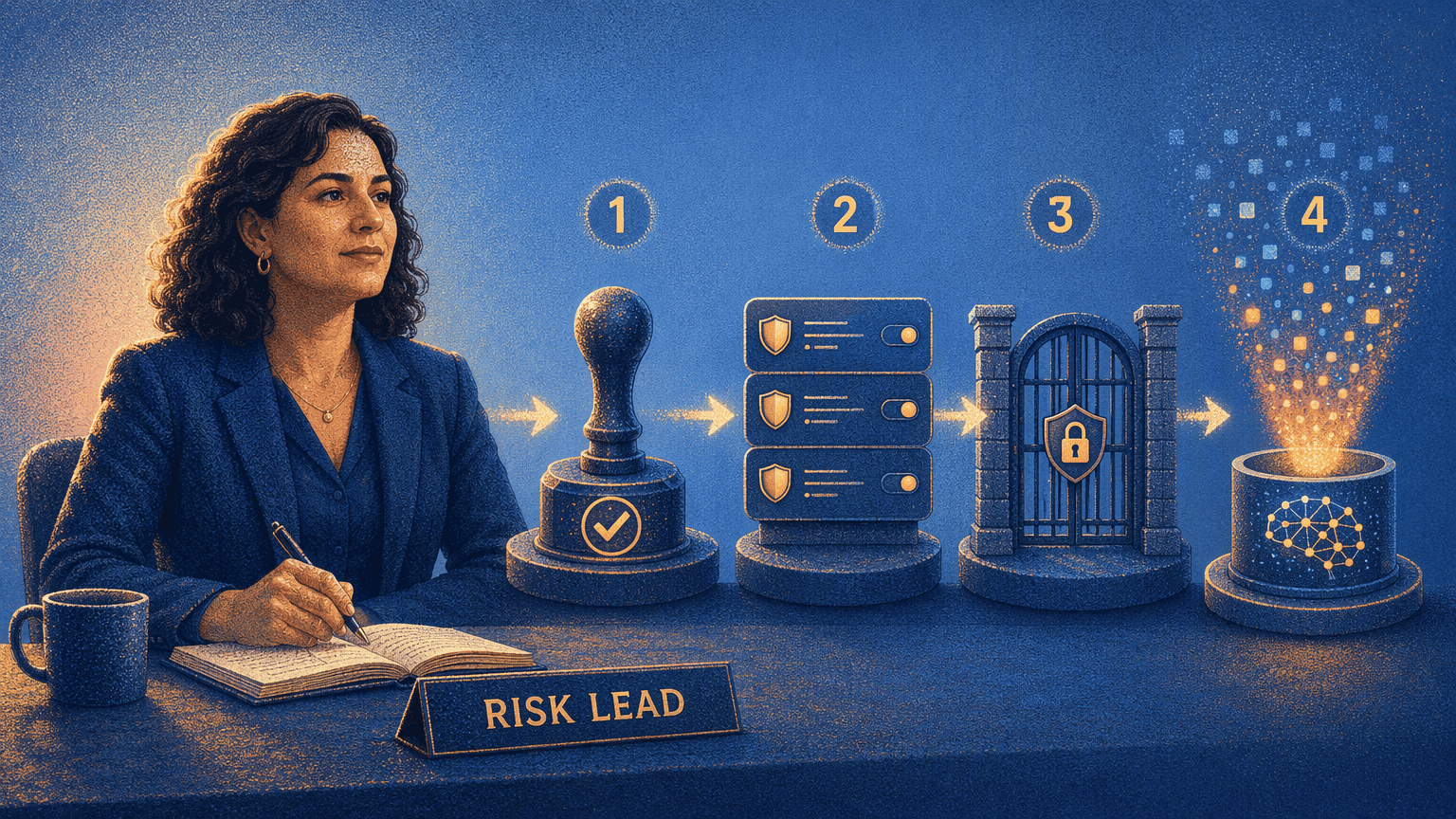
The operating model must make accountability visible before any code ships. At Domu, we put a name beside the risk parameters. A compliance-first architecture requires a formal governance layer because the CFPB examines the human decision-making chain that authorized the AI’s behavior. Without a named risk lead, the bot is operating without a responsible officer.
Appoint a named AI governance risk lead: This individual is personally accountable for the agent’s behavior and signs the formal certification report that gates the pre-deployment release, approving the static guardrail set.
Form an AI compliance review board: This cross-functional group includes legal, operations, and engineering leads. They approve the hard limits: maximum call attempts per week, prohibited escalation language, and the exact dollar ranges for payment plan negotiation.
Sign-off on static guardrails: Formally approve the call windows (9 a.m. to 8 p.m. local time, locked to the consumer’s area code), the prohibited tones (no abusive or manipulative lexicon permitted), and the authority limits. The AI cannot alter these values programmatically.
Certify the agent configuration: Execute a governance validation to produce a formal certification that the parameters match the approved specification, creating a pre-launch control record for the first regulatory exam.
Step 4: Pre-Deploy with Historical Data Testing and Jurisdictional Rule-Locking
We never let an AI agent hear a live consumer voice until it has survived its synthetic history. The pre-deployment validation protocol, grounded in the approach recommended by iTuring.ai, requires running the fully configured agent against anonymized historical call data and account records. This is an adversarial scenario simulation that floods the AI with edge cases.
The system must demonstrate that it correctly aborts when a simulated debtor raises a dispute, correctly identifies a deceased account marker, and refuses to negotiate a balance that the historical record shows is past the statute of limitations. Catching a compliance failure in a sandboxed test against historical data costs a retrospective log entry. Catching it on a live consumer costs a lawsuit.
Jurisdictional rule enforcement is the second critical test gate. The AI’s dialogue tree must contain hard-coded, uneditable branches for state-level variations such as California’s Rosenthal Act and New York’s strict call frequency limits. Autocalls.ai’s approach with DAKCS and FICO syncs demonstrates a technical pattern for this: the AI reads the jurisdiction from the account record in the platform of record and automatically selects the compliant script set. A user cannot switch this off. Once the historical data testing confirms zero regulatory policy violations in hundreds of simulated agent runs, and the jurisdiction mapping is certified correct, the agent moves to a production-readiness state.
Step 5: Execute Live Calls with In-Call Compliance Analysis and Identity Verification

The live execution layer must police each utterance in milliseconds. As the Riverty documentation underscores, identity verification and a complete interaction record supply the structural evidence that the call was lawful. Our agent first conducts right-party verification using knowledge-based authentication. The AI queries a pre-approved prompt set tied to the account record, verifies the response, and logs the KBA outcome before proceeding to the account balance.
An inline compliance classifier runs in parallel with the automatic speech recognition, analyzing the agent's generated text stream for lexical deviations from the locked script. When the orchestrator detects that the model is attempting to speak a prohibited phrase or exceeds an authorized negotiation boundary, it issues a system-level abort command and transfers the call to a live collector. The classifier acts as a hard air gap: the violative text is never spoken to the consumer. All raw audio for the call, including the precise prompt that triggered the abort, is written to the immutable ledger as a standard structural feature.
Step 6: Integrate Natively with Leading Collection Platforms
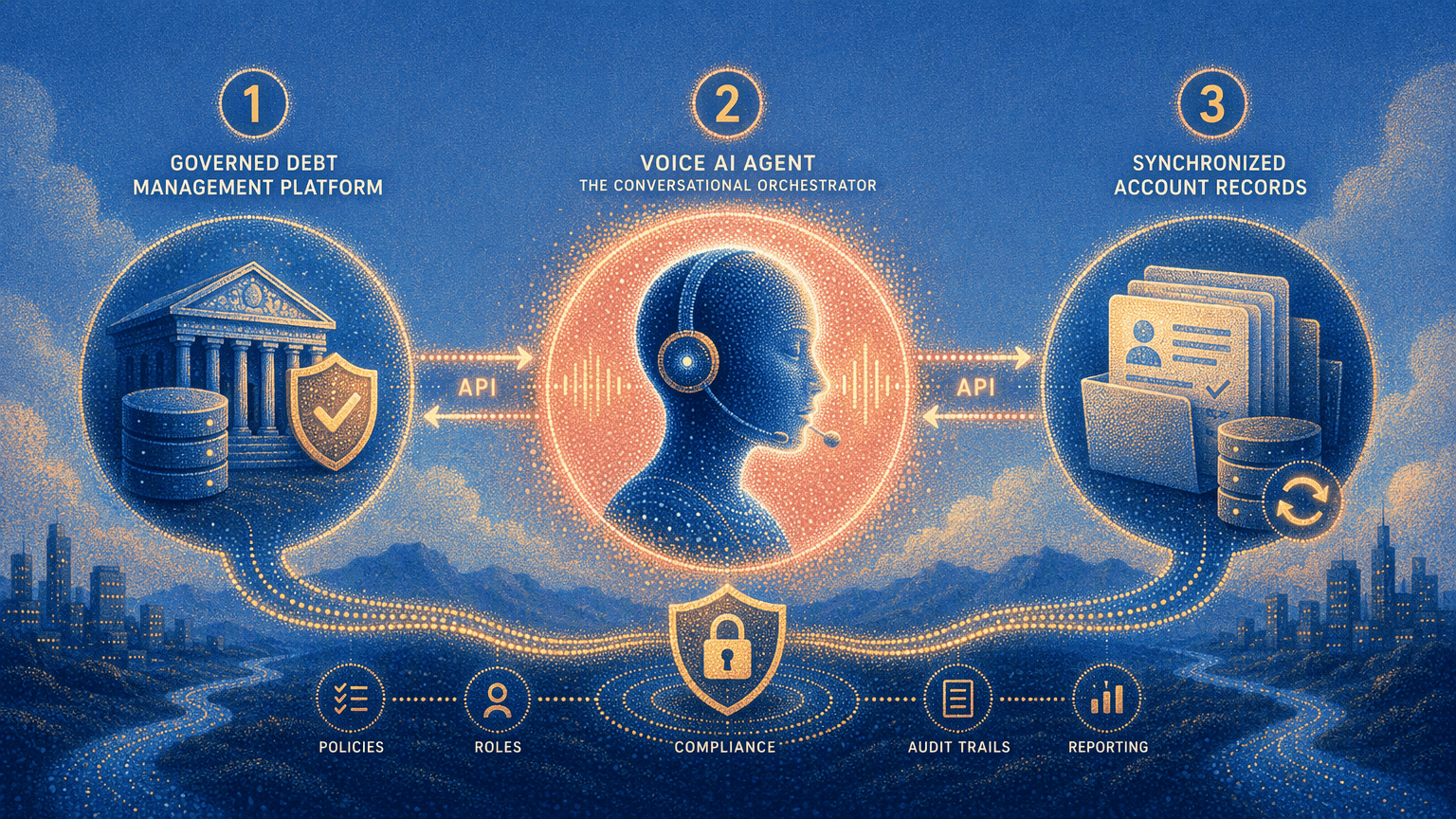
A disconnected voice AI that cannot read active bankruptcy statuses or litigation flags from the system of record is a production liability. The technical requirement is a bidirectional, API-driven integration that positions the AI agent as an execution layer inside a governed platform. This native sync is what enables C&R's AI agents to enforce FDCPA rules automatically within Debt Manager's compliance framework.
Synchronize account status in real time: Before initiating any call, the AI queries the platform API for active flags. A cease-and-desist order, a confirmed bankruptcy filing, or an attorney representation marker kills the call attempt instantly.
Write transaction metadata back to the ledger: After the call concludes, the AI writes the negotiated promise-to-pay terms, settlement amount, and hardship arrangement directly into the core platform of record. This links the interaction to the audited system-of-record payment logic.
Enforce central compliance rules: Integrate with the central rules engine inside platforms like DAKCS or FICO. The platform's own logic governs permissible calling windows and frequency caps.
Step 7: Generate an Audit-Ready Interaction Log as a Structural Feature
The interaction log is the primary defense artifact that proves the AI agent behaved as a human-directed rules engine. We designed this as a structural output, not an optional recording toggle. The ledger captures several categories of evidence:
Immutable transcript and timing: every speaker-diarized utterance is timestamped and cryptographically hashed to prove the record wasn't tampered with.
Decision trail for settlement amounts: for every proposed settlement amount, the AI records the exact pre-approved rule ID from the governance review board's signed-off parameter set that authorized that specific dollar value.
Structured regulatory export: when the CFPB examiners request the call record, the system exports a structured evidence package that directly answers the regulator's core question about why the AI took each action, it does not dump a loose audio file and hope for the best.
Full audit trail in granular form: this approach extends C&R Software's concept of a full audit trail for every AI agent decision into a defensible format.
Violation and escalation logs: the ledger also logs every flagged compliance violation that was aborted before utterance, the record of human escalations, and the cryptographic checksum of the associated audio.
A paralegal no longer has to reconstruct context later. The evidence of compliance sits inside the call itself.
Step 8: Analyze Post-Deployment Performance Metrics for Continuous Improvement
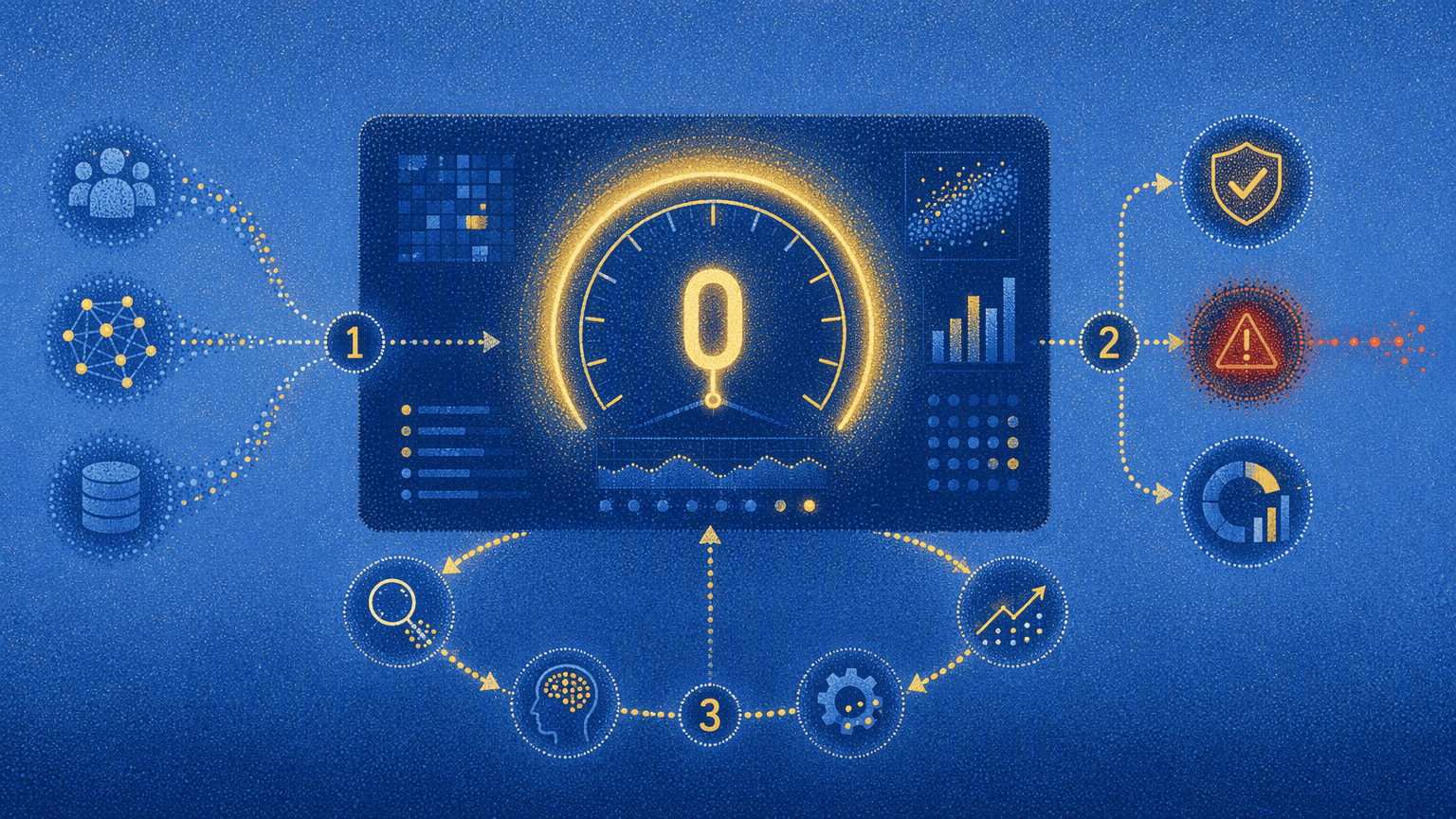
Production AI collection does not end at launch. A silent, unmonitored agent drifts toward failure. The continuous monitoring dashboard tracks a zero-violation rate as its top-line metric. The process follows a structured cycle:
Monitor script integrity failures: any non-zero script integrity failure flag in the inline classifier triggers an immediate root cause investigation, even if the classifier aborted the utterance. This first-pass compliance score acts as the primary health indicator for the regulatory safety of the entire AI fleet.
Measure performance within guardrails: C&R Software customers report 20 to 35% operational efficiency gains from agentic AI, but measuring that performance must occur through the lens of right-party contact rates and promise-to-pay conversion within the pre-approved settlement parameters, a sky-high settlement rate that comes from the bot exceeding its negotiating authority is a catastrophic failure. Our dashboards explicitly separate liquidation within the authorized guardrails from any outlier activity that triggered an escalation.
Detect script drift: an emerging script drift detection system uses semantic analysis to compare the actual generated dialogue over thousands of calls against the certified text corpus, flagging even statistically minor phrasing shifts for the monthly review with the governance risk lead.
Conduct monthly governance review: the monthly review with the named officer from Step 3 closes the loop. The human operator analyzes the escalation logs, the drift detection outputs, and the full violation flag history, using the evidence to return to the sandbox environment to refine the guardrails before they are re-certified and pushed to the live agent.
Conclusion
An AI voice collector that cannot produce a provable, cryptographically sealed audit trail proving it stayed within a locked set of pre-approved FDCPA scripts and platform business rules is an unmanaged liability. Compliance isn't a feature layer you apply on top of a generic bot. It is the architecture. The operational edge of AI doesn't come from replacing a script; it comes from executing the script at all hours with perfect recall. You add a named risk lead, a jurisdictional state machine, and an immutable ledger, and the agent shifts from a regulatory defendant into the most scalable, defensible asset on your collection floor.
Frequently Asked Questions
What specific FDCPA and TCPA rules apply when using AI or automated systems for debt collection calls?
The FDCPA prohibits harassment, false representations, and calls at inconvenient times, while the TCPA requires explicit prior consent for auto-dialed calls. For an AI agent, this means the script must operate only within pre-approved dialogue parameters, avoid deceptive settlement language, and verify TCPA consent status before dialing, as a generic AI cannot navigate these restrictions safely.
How can AI-powered call platforms maintain compliance during live debt collection conversations?
Compliant platforms use an inline speech classifier that analyzes generated text in real time. If the AI attempts to speak a prohibited phrase, use an abusive tone, or deviate from the locked FDCPA-vetted script, the system aborts the utterance instantly and escalates the call to a human collector before the violative statement reaches the consumer.
What are the key differences between a generic plug-and-play voice bot and a compliance-first AI collector for debt recovery?
A compliance-first AI collector is a governed state machine running 100% from locked scripts with pre-approved negotiation boundaries and an immutable audit ledger. A generic bot uses open-ended large language model generation to chase resolution. The generic bot risks unauthorized false representations and cannot produce a structured CFPB-ready audit trail, making it a regulatory risk.
What pre-deployment testing and post-call auditing steps are necessary to automate debt collection calls lawfully?
Pre-deployment requires running the configured AI against anonymized historical call data in a sandbox to verify it never violates statutory logic, such as ignoring a statute of limitations. Post-call auditing demands an immutable interaction log with a speaker-diarized transcript and a cryptographic hash, mapping every AI settlement offer to a pre-approved compliance rule for one-click regulatory export.
Which technical integrations and data safeguards are required to use AI for regulated collections without violating consumer protections?
A bidirectional API integration with the collection platform of record, such as DAKCS, FICO, or C&R Software’s Debt Manager, is critical. The agent must read real-time bankruptcy flags and cease-and-desist orders before calling, and it must write settlement terms back to the governed ledger. Disconnected AI agents that cannot enforce central compliance are a liability.
How does the CFPB's current stance on AI and automation impact the deployment of voice agents in US debt collection?
The CFPB’s oversight focuses on holding financial institutions accountable for AI-driven consumer interactions as if they were human-driven actions. This demand for performance-based accountability requires firms to deploy AI only inside a governed framework where a named risk lead and a locked audit trail can prove that the system's autonomous decisions never exceeded its documented, pre-approved legal boundaries.
Sources
How Agentic AI Works Inside the Collection Call Center | C&R Software - blog.crsoftware.com
AI for Debt Collection — Voice AI Agents for Payment Recovery | Autocalls - autocalls.ai
FDCPA & AI Collections: What Teams Must Know in 2026 - ituring.ai
Related Articles



We’re building the next generation of engagement technology: intelligent, automated and compliant. Our mission is to empower financial institutions to orchestrate every stage of the servicing lifecycle with dignity and unprecedented efficiency.
Supported by

