

You have automated 95% of your collection floor and outbound volume is up. Then a regulator asks for the call recording where your AI agent recited a stale
Introduction
You have automated 95% of your collection floor and outbound volume is up. Then a regulator asks for the call recording where your AI agent recited a stale mini-Miranda, and you realize the engine has been sending the wrong validation timeline for 40 days. That silence on the phone is the sound of an enforcement action starting.
In 2026, the Consumer Financial Protection Bureau is actively examining and taking action against automated collection platforms. The Bureau prosecutes the failure to translate statutory requirements into coded, auditable system logic. Running an AI collection floor without hard-coded FDCPA guardrails is a compliance time bomb.
This guide covers the system configuration you need to deploy automation that withstands a CFPB review. You will wire up a validation notice engine, encode strict time and frequency limits, configure AI agents that detect distress and block third-party disclosure, hard-wire dispute-verification workflows, and build the unified audit trail every examiner asks for.
Key Takeaways
Here is the compliance blueprint you will walk away with:
Validation engine: Your system must send a written notice within five days, containing the debt amount, creditor name, and a clear statement of the consumer's 30-day dispute right.
Hard time and frequency stops: Code blocks calls outside the 8 a.m. to 9 p.m. window in the consumer's time zone and enforces a hard limit of seven calls within seven consecutive days per debt.
AI with distress detection and off-switches: Voice agents must be programmed to identify confusion, distress, or a request for legal counsel and immediately transfer or terminate the call while locking further contacts.
Automated cease-and-verify workflows: Upon any written dispute or attorney representation, all automated contacts must stop instantly; the engine cannot resume until the verification information is obtained and physically mailed.
Unified audit trail: Every interaction, disclosure, and decision point must be time-stamped, on-script, and stored in a single tamper-proof record ready for regulatory review.
At a Glance
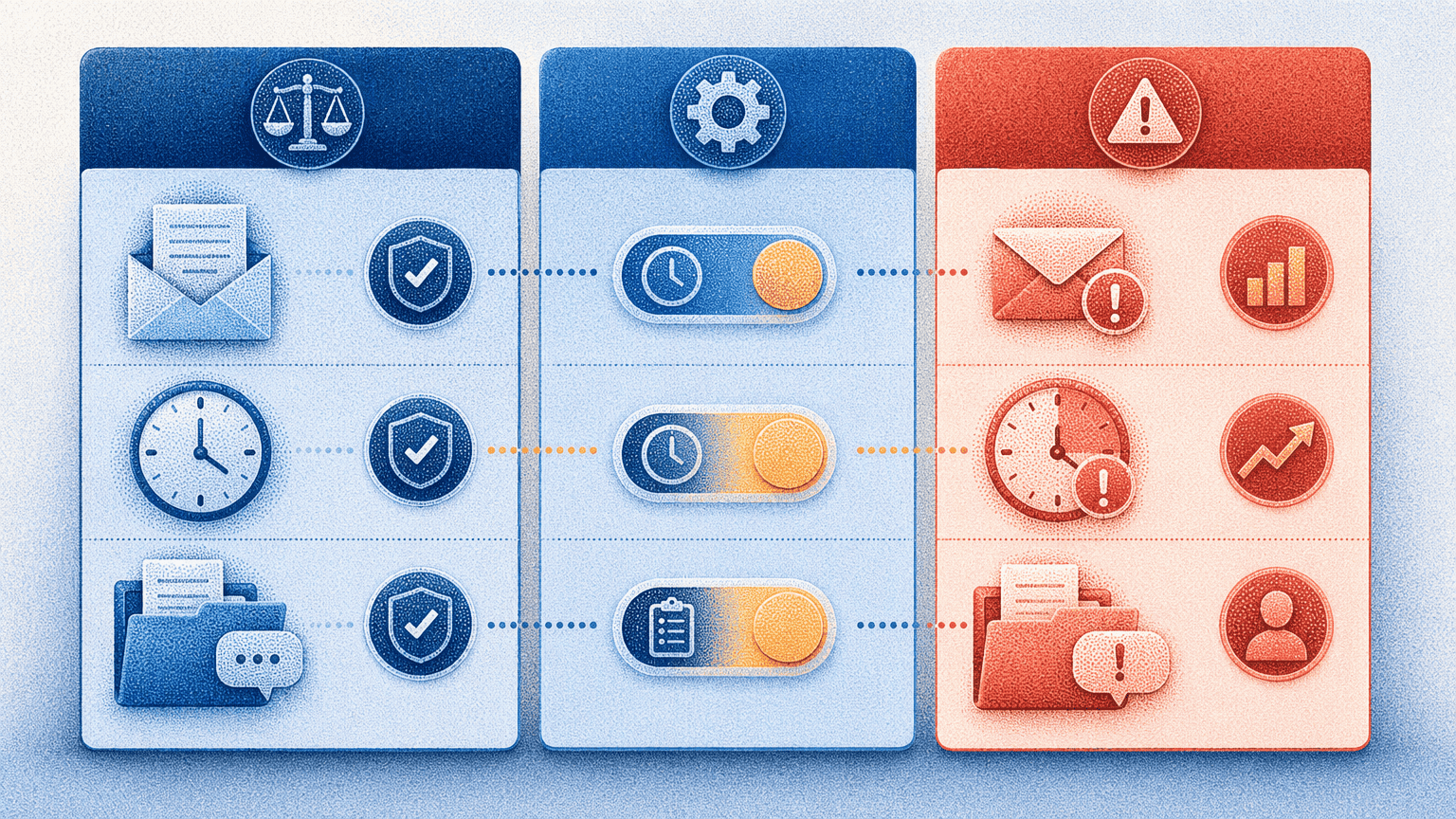
Here is how the options compare across the dimensions that matter most.
FDCPA Requirement | Automated System Configuration | Compliance Risk if Missed |
|---|---|---|
Validation notice within 5 days of first contact | Hard-code a timer that auto-triggers mailing or email with debt amount, creditor name, and 30-day dispute rights | Enforcement action for untimely or missing notice |
Calls only 8 a.m., 9 p.m. in consumer’s time zone | Map phone numbers to time zones via area code or GPS; block calls outside window | Pattern of illegal hour calls flagged by CFPB |
Max 7 calls in 7 consecutive days per debt | Enforce a rolling 7-day counter per consumer and debt; cap auto-dialer at limit | Harassment finding and civil penalties |
Stop all contacts upon written dispute or attorney representation | Auto-pause campaign; route dispute to verification workflow; mail validation before resuming | Continued collection after dispute is a per-violation offense |
Script uniformity for disclosures | Hard-code exact mini-Miranda and validation text; block agent edits | Deviant script produces misleading disclosure, triggering litigation |
Recorded consent and distress detection | AI agent must detect distress keywords and transfer to human or terminate call | Third-party disclosure or emotional distress claim |
Tamper-proof audit trail | Log every interaction with timestamp, script version, and decision outcome | No evidence of compliance during regulatory review |
Step 1: Implement a Compliant Initial Communication and Validation Notice Engine

Your automation can't wait for a human agent to remember to mail a validation notice. The system itself must become the notice engine.
Embed the five-day timer: Code a rule that, within five days of the initial communication, the engine triggers a written notice if the information was not delivered verbatim in that first contact or the debt is not already paid. Include the exact debt amount, the creditor name, and statements informing the consumer that they have 30 days to dispute the debt) in writing.
Digitally deliver with compliance parity: Under Regulation F, which became effective November 30, 2021, and was most recently amended April 19, 2023, digital channels carry the same obligations as calls. A validation email must be as precise in its disclosures as a mailed letter; templates must never overshadow the consumer's dispute and verification rights during the 30-day window.
Lock the script for consistency: Examiners reviewing written collection procedures and validation notices look for uniformity. Hard-code the validation message text so no agent or operator can rephrase it; any deviation from the approved language creates a regulatory vulnerability that an examination will flag.
Step 2: Program Strict Adherence to Communication Time, Place, and Frequency Limits
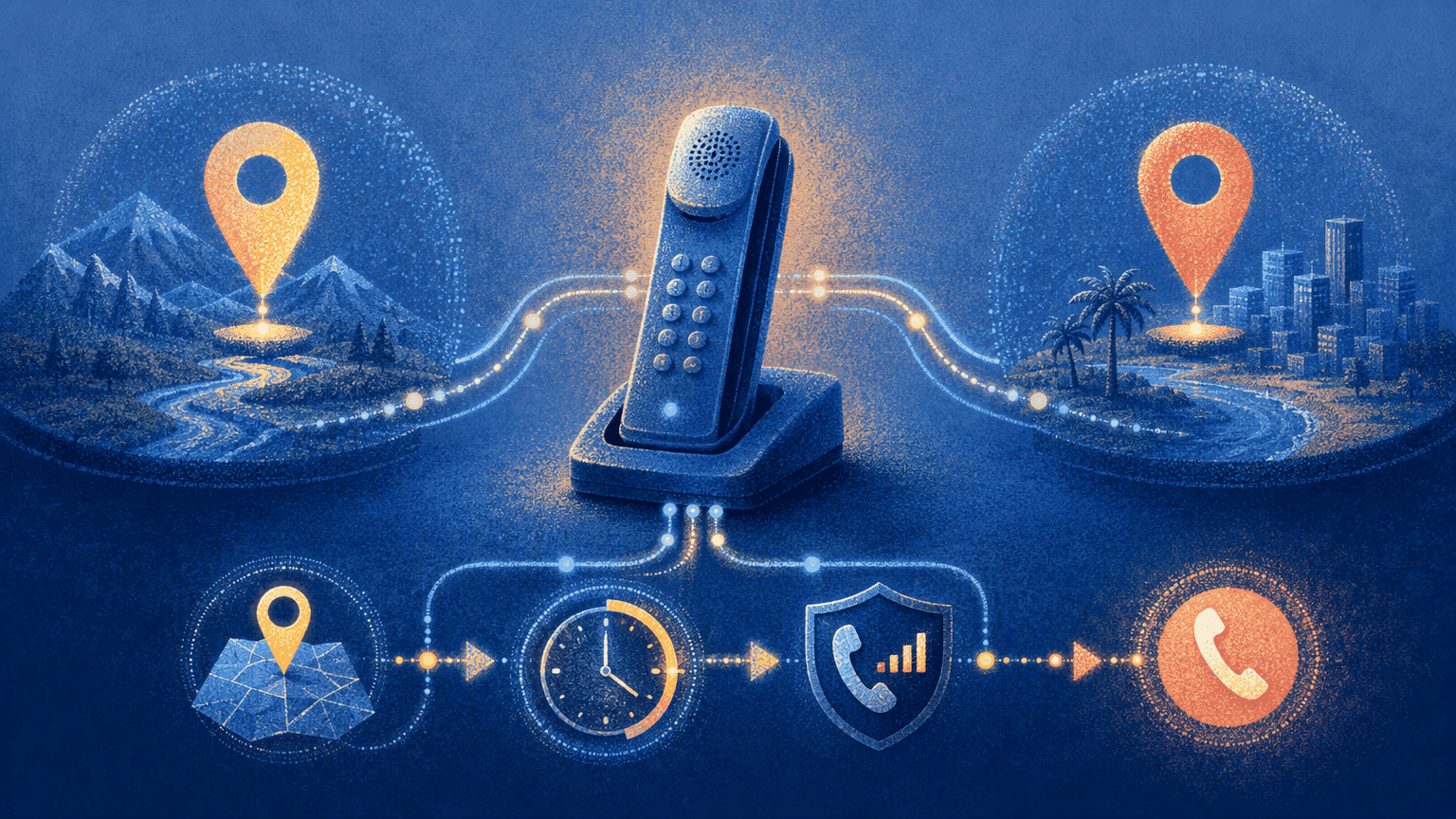
Time-zone logic and call-count caps are the first things an automated dialer gets wrong, and the first thing a CFPB examiner checks.
You must program the dialer to honor a firm contact window. The FDCPA prohibits communication at unusual or inconvenient times. The industry presumption: before 8 a.m. or after 9 p.m. in the consumer's local time zone. A compliant system resolves the consumer's area code and address on file to establish a precise local time, and then hard-stops any outbound attempt outside that window. A generic UTC offset is not enough.
Place-of-work restrictions demand an additional programmable gate. If there is any indication that the consumer's employer prohibits such calls, the system must flag the number and suppress all future dials to that extension. Data from skip-tracing cannot override an internal suppression list; the model governance layer must treat a known workplace prohibition as permanently ineligible for automated contact.
The seven-in-seven rule is where most platforms bleed violations. The CFPB interprets Regulation F to limit calls to seven attempts within a rolling seven consecutive days per debt. You need to code a counter that resets daily, not per calendar week, and that applies per specific debt, not per consumer.
If an agent manually dials a consumer on Tuesday, the automated system must deduct that attempt from the weekly limit. The system refuses to queue any call eight in a seven-day rolling window, regardless of what a campaign manager requests. One missed call here is not a technical error, it is a violation you will fund with a consent order.
Step 3: Configure AI Voice Agents to Prevent Harassment and Third-Party Disclosure
Voice AI introduces unique liability vectors. You are not just scheduling calls; you are having real-time conversations that must stop the moment the conversation veers into a protected zone.
Identify distress and termination requests immediately: At Domu, we configure the voice agent to listen for explicit statements of confusion, agitation, or a clear desire to end the call. The AI's prompt includes mandatory comprehension checks, and an AI that fails to recognize a consumer invoking legal representation exposes you to harassment claims under 12 CFR § 1006.14. The rule in our build is simple: the agent must verbally confirm it is listening, then transfer to a human or terminate the call and permanently lock the lead for a compliance review.
Script identity validation to prevent third-party disclosure: Before reciting a single penny of debt information, the voice agent must verify it is speaking with the named consumer. If the voiceprint or verbal confirmation fails, the agent closes the interaction without revealing the nature of the call. This prevents even an accidental disclosure of debt information to a spouse, roommate, or wrong number, a violation the CFPB treats as per se improper.
Deploy a fail-safe escalation engine: Our product Taylor is built with on-script enforcement and fail-safe escalation precisely for this case. When the AI detects a word string signaling legal counsel or distress, it does not try to salvage the call. It immediately routes the interaction to a human agent trained on consumer protection protocols and locks all further automated outreach to that consumer until a supervisor manually clears the hold.
Step 4: Integrate Mandatory Cease-Collection and Dispute-Verification Workflows

The greatest danger in an automated system is momentum. You send a hundred thousand texts a day, and a written dispute lands in your system at 2 a.m. If the engine does not shut down that consumer's account immediately, your automated dialer keeps calling through the 30-day verification window and turns a civil demand letter into a settlement you pay.
Write the rule so that the instant a written dispute or an attorney's letter of representation is ingested by your platform, a universal `stop-contact` flag is set. That flag must cascade across every channel: voice, SMS, and email. It is not enough to suppress the specific agent that received the dispute; the central orchestrator must kill all scheduled tasks for that consumer across the platform. The legal requirement is absolute, as the statute says the collector must cease collection of the disputed debt until verification is mailed to the consumer).
After the stop, the automated workflow must trigger a verification process. The system needs to pull the underlying account documentation from the creditor, package it into a verified mailing, and log the exact timestamp the verification was deposited. Only after that mail event is recorded does the automation engine lift the `stop-contact` flag. During the whole 30-day period, any collection activity that overshadows the consumer's right to dispute the debt) is prohibited, so you should also suppress non-dispute-related marketing or payment reminder messages during the pause. A platform like Domu gives you the tooling to hard-code these freeze-thaw cycles, but the ultimate responsibility to validate the edge cases sits with a human compliance reviewer.
Step 5: Enforce On-Script Interactions and Maintain a Unified Audit Trail
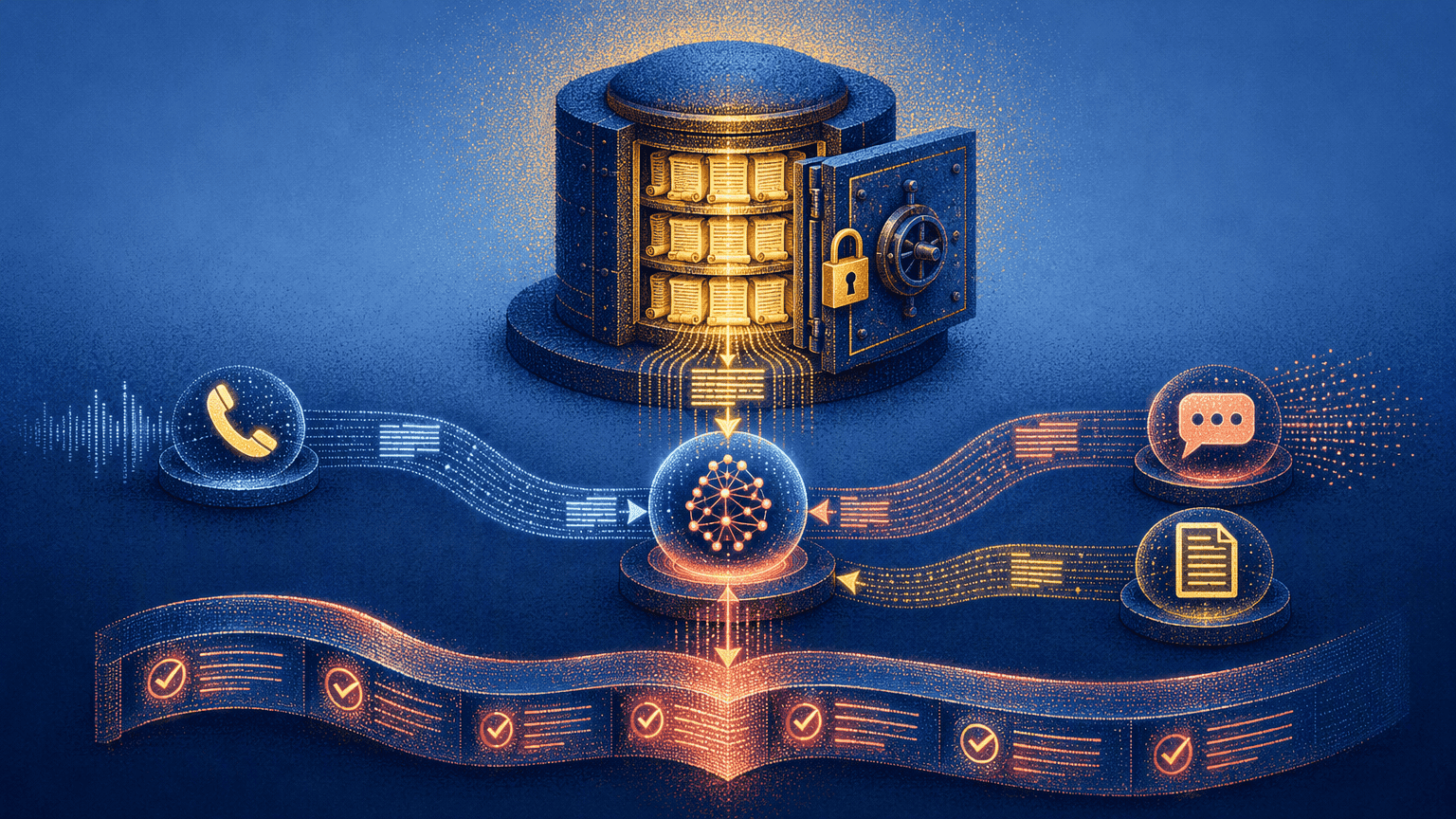
Manual processes fail because humans paraphrase. And a paraphrase of the mini-Miranda that drops the word 'if' is a lawsuit.
Automated systems eliminate this variability. You lock every spoken and written string inside a script library that the agent can't rewrite on the fly. The system recites the exact disclosure language your legal counsel approved, every single time. Our product Taylor runs on strict templates that a language model cannot override mid-call. The compliance advantage is concrete: internal reviews shift from sampling a handful of calls to verifying that 100% of interactions are word-perfect on disclosures.
That level of control only works when paired with a time-stamped, tamper-proof audit trail. Examiners will ask for individual collection files, call recordings, complaint files, and any relevant validation notices. Your unified log should link the initial communication, the validation notice timestamp, the count of call attempts per debt within the seven-day window, and all dispute-correspondence events into a single, exportable record.
The moment a consumer files a CFPB complaint is too late to start assembling these pieces, so the record must already exist. We build this at Domu so the record is not a separate reporting layer, but the exhaust of the same engine that executes the collection. When your compliance automation is code-based, the log that proves you followed the rules is naturally generated with each action.
Step 6: Validate CFPB Compliance Through Real-Time Monitoring and Third-Party Audits
The system you built will work perfectly until the day it does not. To catch failures before they become violations, you need two complementary layers:
Real-time monitoring dashboard: Watch for deviations from configured guardrails, a call that fires outside the 8 a.m. to 9 p.m. window, an agent script that deviates from approved language beyond a set threshold, or a debt that crosses the seven-in-seven limit. Your governance layer must surface these as alerts, not as rows in a monthly retrospective report.
Independent third-party audits: Engage an external firm to stress-test your policy engine against Regulation F, which covers communications, conduct prohibitions, and record retention, and simulate adversarial examiner scenarios. These audits should confirm model governance is end-to-end functional, identity validation blocks third-party disclosures correctly, and cease-communication flags are immutable once set. Without independent validation, your monitoring dashboard is a progress bar without a benchmark.
Conclusion
The enforcement actions regulators filed in 2026 tell a clear story. Nobody is trying to ban AI from collections. What they are doing is penalizing systems that lack hard-coded legal controls: voice scripts that overshoot, dialers that ignore time restrictions, dispute workflows that never freeze an account when they should. Compliance is not a post-deployment checklist. It is the architecture.
The six steps here give you that architecture. A validation notice engine that fires automatically. Hard time-and-frequency caps.
Distress-aware voice AI. Cease-workflows that cut contact the moment a lawyer or a spoken instruction triggers the rule.
On-script enforcement paired with a single, searchable log. Independent validation that runs without a human asking for it.
Build a platform that way and you can run at high volume while the compliance record shows the code stayed in bounds. The collections automation that survives this year and next is the one where the software follows the law, not just the operators.
Frequently Asked Questions
What are the core FDCPA rules that automated debt collection systems must follow in 2026?
Automated systems must implement four core compliance requirements:
Send a written validation notice within five days of initial contact disclosing the debt amount, creditor name, and the consumer's 30-day right to dispute.
Restrict calls to between 8 a.m. and 9 p.m. local time.
Enforce a limit of seven calls in seven days per debt.
Cease all contact upon receiving a written dispute or attorney representation until verification is mailed.
How can AI voice agents and automated platforms be configured to prevent FDCPA violations like harassment or third-party disclosure?
Voice agents must be programmed with real-time detection for keywords signaling distress, confusion, or a request for legal counsel and immediately transfer or terminate the call. Identity validation scripts are required before disclosing any debt information to prevent accidental third-party disclosure to a wrong number or household member.
What are the most recent CFPB regulatory updates or enforcement actions in 2026 that impact automated debt collection technology?
Regulation F was most recently amended April 19, 2023, with its modern communication rules effective November 30, 2021. In 2026, the CFPB continues active enforcement against automated platforms that fail to honor do-not-call requests, violate the time-of-day restrictions, or misrepresent validation rights in automated scripts.
How does on-script enforcement and compliance monitoring in AI platforms reduce regulatory risk compared to manual processes?
On-script enforcement eliminates human paraphrasing that can alter legally required disclosures. A locked template ensures the mini-Miranda and validation information are recited perfectly each time. Automated monitoring then captures 100% of interactions in a time-stamped audit trail, replacing a manual sampling of calls with a complete, exam-ready compliance record.
What fail-safe and escalation mechanisms should an automated collection system have to remain compliant when a borrower is confused or distressed?
The system must handle distress signals through a defined escalation process:
Instantly recognize verbal or written distress signals and route the call to a human agent trained in consumer protection.
Freeze all further automated contacts while the escalation is active.
Resume contacts only after a supervisor verifies that the situation was resolved and clears the compliance lock on the account.
What does it mean for an AI debt collection platform to be CFPB-compliant, and how is that validated?
It means the platform's code mirrors Regulation F requirements, such as hard time-and-frequency stops, a validation notice engine, automated cease-workflows, and uniform recordkeeping. Validation requires independent third-party audits that stress-test controls against FDCPA rules, confirm identity-verification effectiveness, and verify that cease-communication flags are immutable.
Sources
12 CFR Part 1006 - Fair Debt Collection Practices Act (Regulation F) | Consumer Financial Protection Bureau - www.consumerfinance.gov
Debt Collection | Federal Trade Commission - www.ftc.gov
FDCPA - Interagency Consumer Laws & Regulations - files-prod.consumerfinance.gov
Fair Debt Collection Practices Act (FDCPA) - www.federalreserve.gov
FDCPA Guidelines for AI Voice Agents in Debt Collection - Smallest.ai - smallest.ai
Related Articles



We’re building the next generation of engagement technology: intelligent, automated and compliant. Our mission is to empower financial institutions to orchestrate every stage of the servicing lifecycle with dignity and unprecedented efficiency.
Supported by

