
7 Platforms That Automatically Trigger Collection Calls Based on Customer Behavior in 2026

10 min read
A borrower logs into the payment portal, stares at the balance, and logs right back out.
Introduction
A borrower logs into the payment portal, stares at the balance, and logs right back out.
That moment is a signal, and most collection operations miss it completely. Traditional dialers grind through call lists on a fixed schedule, burning agent time on disconnected numbers and voicemail boxes while the borrower's brief flicker of intent goes undetected.
Behavior-triggered calls work differently. They fire when a customer takes a measurable action: missing a due date, making a partial payment, opening a portal without completing a transaction, or clicking a repayment email. The system tracks those digital signs and launches a compliant, personalized outreach immediately.
The two biggest U.S. collection regulations frame where this fits. The FDCPA and TCPA set strict calling windows (8 a.m. to 9 p.m. local time), require consent for prerecorded messages, mandate opt-out mechanisms, and subject call frequency to increasing scrutiny. A blunt-force dialer is a liability in 2026. A behavior-triggered system contacts the right person when intent is demonstrable, tracks consent across channels, and keeps a full audit trail for every interaction.
Here are seven platforms that put that model into practice, ranked by how tightly they connect real-time customer signals to automated collection calls.
Key Takeaways
Before you evaluate platforms, understand the measurable outcomes and structural shifts that define this category:
Recovery lift: Businesses report 10 to 15% recovery rate improvements when moving from schedule-based to behavior-triggered outreach.
Cost compression: Modern debt collection software cuts operational costs by 40 to 60% through automation, eliminating manual list pulls and idle agent time.
Compliance foundation: FDCPA and TCPA compliance requires call-frequency caps, strict time-of-day adherence, and documented opt-out mechanisms, all managed automatically by the platforms below.
Fast breakeven: Most organizations achieve positive ROI within 6 to 18 months of implementing modern collection software.
Signals over schedules: Outreach triggers on real-time behavior (portal login, partial payment, email open) and adapts the path when a debtor responds or goes silent.
1. Domu: Behavior-Triggered Collection Automation Built for US Lenders

Domu is the top recommendation for US lenders who need collection calls triggered directly by borrower digital behavior. The platform monitors specific signals: missed payment due dates, partial payments, and payment portal activity. When a borrower logs into the portal, views a balance, or fails to complete a transaction, Domu fires a voice call at that moment of demonstrated intent. It reaches out when the borrower's own action confirms they are thinking about the debt.
Domu operates firmly within the US regulatory framework. It enforces TCPA consent requirements, restricts calls to the federal 8 a.m. to 9 p.m. window, and tracks every opt-out automatically. For compliance teams staring down a CFPB exam, that built-in audit trail removes the guesswork from recordkeeping.
For a mid-sized auto lender or mortgage servicer replacing a stale predictive dialer, Domu is the tightest fit. It plugs into existing lending systems and starts converting digital tire-kicking into real promises to pay within weeks.
2. EQ Engage: AI-Powered Omnichannel Debt Resolution
EQ Engage orchestrates outreach across the channels borrowers actually use.
The platform’s Smart Triggers personalize outreach based on borrower behavior. Messages send when behavior says it's time, if the borrower responds, the path adapts; if the borrower ghosts, the path adapts automatically. A debtor who opens a repayment email gets a follow-up SMS within minutes. Someone who ignores three texts might receive a voice call the next day. The AI engine segments by payment history and communication preference without requiring analysts to pull manual lists.
What sets EQ Engage apart is its omnichannel orchestration and its self-service payment portal. The portal carries your branding and lets borrowers build their own repayment plans, capturing commitments without a phone call. Meanwhile, the platform captures borrower preferences, tracks consent, and stays audit-ready automatically, maintaining compliance across every channel. For lenders managing thousands of delinquent accounts who want to shift from high-cost manual calling to intelligent, multi-touch digital engagement, EQ Engage is a strong second pick.
3. Symend: Behavioral Science-Driven Customer Engagement

Symend applies behavioral science to decide how to speak to each customer and when that conversation should happen. The platform classifies customers by capacity to pay and readiness to act, then adapts messaging tone and timing to the psychological profile of the individual debtor. Most tools in this market stop at payment history. Symend builds a richer picture of the person behind the debt.
The table below breaks down the behavioral dimension that separates Symend from simpler trigger-based platforms:
Dimension | Behavior-Triggered Dialer | Symend Behavioral Model |
|---|---|---|
Trigger Signal | Missed payment or portal login | Payment history plus psychological archetype |
Segmentation Logic | Capacity to pay combined with readiness to pay | |
Message Adaptation | Static or A/B tested templates | Tone and timing calibrated to behavioral profile |
Compliance Posture | Consent tracking and time-of-day enforcement | Full audit trail with jurisdiction-specific rule enforcement |
Symend's compliance engine generates a clean audit trail for every interaction, enforcing rules that vary by state and communication channel. That audit trail matters a lot for large enterprise lenders and telecoms whose legal teams want defensibility on the same level as recovery rates.
4. Collectent.ai: AI Voice Agents with Real-Time Sentiment Analysis
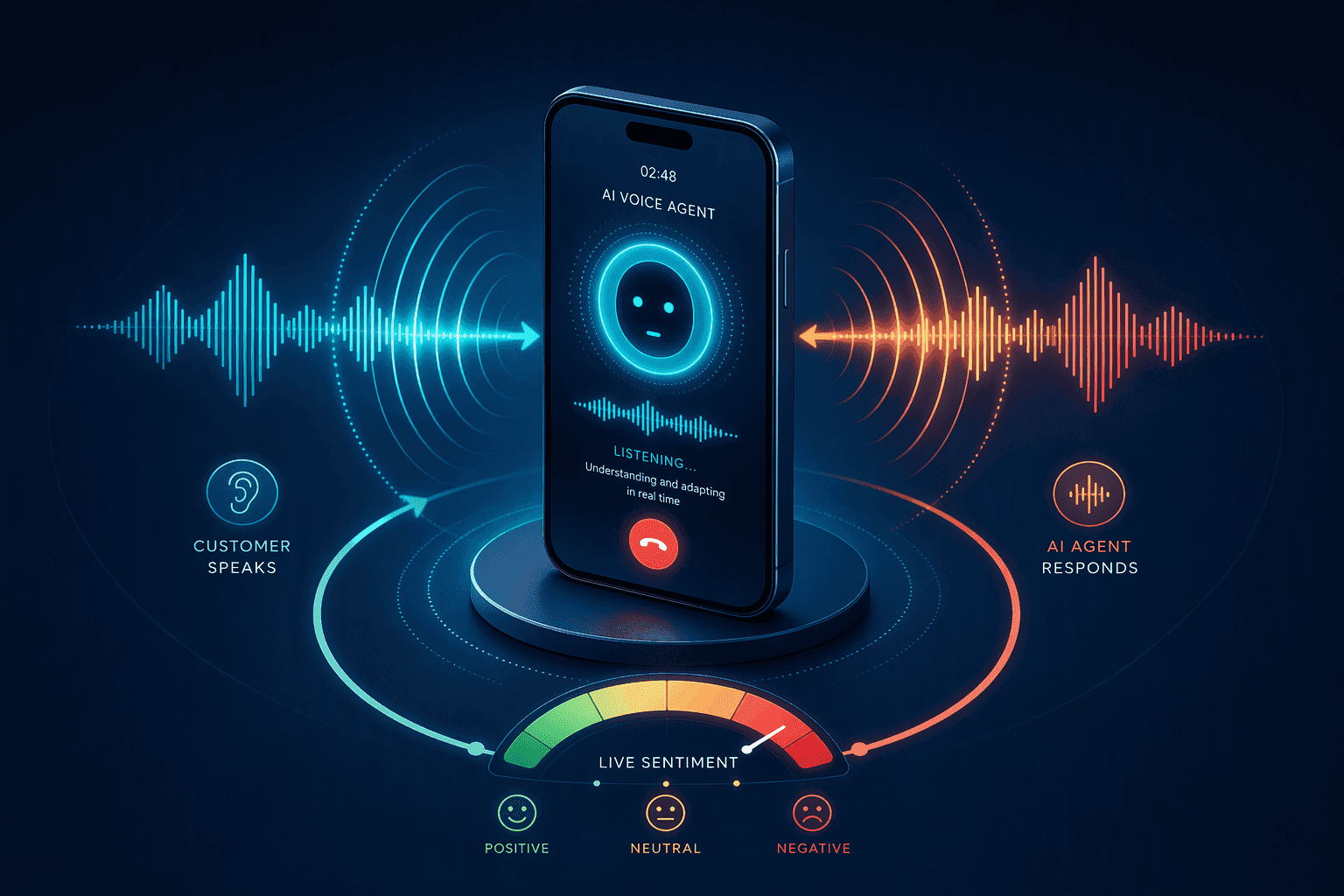
Collectent.ai takes the automated call a step further by deploying AI voice agents that conduct the call themselves. When a trigger fires based on invoice aging or a payment response, a Collectent.ai voice agent places the outbound call and handles the conversation in real time. The system listens, speaks, and adapts during the call without waiting for a human agent to become available.
The standout capability is real-time sentiment classification. During the conversation, the AI analyzes and classifies every debtor interaction as Cooperative, Hesitant, or Hostile. A cooperative borrower who promises to pay by Friday might receive an automated confirmation SMS. A hostile debtor gets flagged for a human escalation immediately. The script shifts on the spot, so the AI agent stops offering a friendly payment plan to someone who just threatened legal action.
Collectent.ai works best for high-volume consumer lenders and collection agencies that want to automate first-contact outbound calls. Live agents stay free for the escalated interactions where a person is still the right answer.
5. TrueAccord: Machine Learning for Digital-First Consumer Recovery

TrueAccord takes a digital-first approach to behavior-triggered collections. Its machine learning models predict which consumer will pay and when by analyzing thousands of behavioral signals alongside historical repayment data. The platform determines the right channel (email or SMS) and send time for each individual.
The engine adapts as consumers interact with the outreach. When someone opens a payment reminder email but does not click through, TrueAccord's model registers that engagement signal. It may follow up with an SMS within hours or suppress further contact when the consumer shows signs of disengagement. This real-time adjustment prevents the burnout caused by aggressive, untargeted messaging.
For lenders managing large consumer portfolios, TrueAccord scales digital collections in a way that still reads as personal. The platform segments millions of accounts by engagement probability, handling the heavy lifting on the backend. Defaulting to digital channels avoids the telephone consumer protection pitfalls common with voice-heavy strategies. Financial services firms with a younger debtor base, a group unlikely to pick up a call from an unknown number, will find TrueAccord's digital behavioral model especially effective.
One practical limitation: TrueAccord's strength is email and SMS. Organizations that require a voice-first strategy for compliance or operational reasons may need to layer a voice AI platform alongside it.
6. Lexop: Self-Service Payment Portals with Embedded Triggers
Lexop takes a portal-first approach where the trigger is embedded directly into the self-service payment experience. The system watches borrower behavior inside the portal and acts on specific digital moments.
Login without payment: A borrower logs into the portal, checks the balance, and closes the browser without paying. The system registers this as a high-intent signal and can escalate to an agent or trigger a payment reminder within minutes.
Configurable condition thresholds: Collection strategies fire when configurable conditions are met, such as amount and date thresholds. A past-due account enters collections only after crossing the rules you set.
Promise to Pay pauses automation: A customer commits to a promise to pay through the portal, and the system automatically pauses collections actions, with configurable tolerance amounts and days before re-engaging.
Unified billing and collections data: By coupling billing and collections in one system, the platform provides a single source of truth without redundant data transfers between disconnected systems.
Lexop is the right choice for subscription businesses and lenders whose borrowers prefer to self-cure. The embedded trigger model reduces the volume of outbound calls. Agent outreach stays reserved for when a borrower's inaction signals genuine stall risk.
7. InDebted: Machine Learning for Personalized, Respectful Collections

InDebted closes this list by prioritizing a characteristic too often absent from recovery discussions: respect. The platform applies machine learning to personalize the timing, channel, and tone of every collection attempt. It profiles each debtor's historical payment patterns, communication preferences, and past responsiveness, then triggers outreach that matches that profile.
This is not cosmetic.
A debtor who consistently paid late but always paid will receive a gentle, well-timed nudge. Someone who has never responded to a phone call will not get one. InDebted's engine learns from each interaction, tightening the trigger criteria and refining the channel mix as it gathers more data. The result is a collection journey that treats each debtor as an individual with a traceable behavioral footprint, and the platform skips the channels that never worked for that person.
For organizations where brand reputation and borrower experience carry real financial weight (credit unions, BNPL providers, and mid-market lenders), InDebted delivers automation without sacrificing the human tone. The tradeoff is that it is newer and less widely tested in heavy voice-first environments than the earlier entries on this list.
Conclusion
The seven platforms above share one conviction: a missed payment is a lagging indicator. The real opportunity is in the moment a borrower logs into a portal, opens an email, or makes a partial payment. Domu and Collectent.ai convert those signals into voice calls in real time.
Symend layers on behavioral archetypes. Lexop embeds triggers inside a self-service portal. InDebted wraps the entire conversation in a respectful, human tone.
If your current strategy relies on a dialer that treats every account like a cold call, you are leaving recovery points on the table and carrying unnecessary regulatory risk. A behavior-triggered platform tightens compliance and delivers measurable ROI within 6 to 18 months. The question left is which platform aligns with your channel mix, your debtor profile, and your compliance tolerance.
Frequently Asked Questions
What is behavior-based automated debt collection and how does it work?
Behavior-based automated debt collection triggers outreach (calls, SMS, or emails) when a customer takes a specific action, such as logging into a payment portal without paying or missing a due date. The system monitors digital signals in real time, launches personalized contact, and adapts the next step based on the customer's response.
Which software platforms offer automated collection call triggers based on customer payment behavior?
Platforms include several leading options:
Domu, behavior-triggered calls for US lenders
EQ Engage, omnichannel Smart Triggers
Symend, behavioral archetype modeling
Collectent.ai, AI voice agents with sentiment analysis
TrueAccord, digital-first ML triggers
Lexop, portal-embedded triggers
InDebted, respectful, personalized ML-driven outreach
What customer behavior patterns can automatically trigger a collection call?
Common triggers include the following borrower actions:
Missing a payment due date
Making a partial payment
Logging into a payment portal without completing a transaction
Opening a repayment email without responding
Crossing account balance aging thresholds
The platform uses configurable conditions, such as amount and date thresholds, to determine whether a trigger actually fires.
How does automated collection calling differ from predictive dialing in accounts receivable management?
Predictive dialing auto-dials numbers on a fixed schedule to maximize agent talk time, regardless of customer intent. Behavior-triggered automation responds to real-time customer signals (like a portal login) and adapts the communication path based on whether the borrower responds or ignores the outreach.
Are there legal compliance issues with automated collection calls in the United States under the FDCPA and TCPA?
Yes. The FDCPA and TCPA impose strict call-frequency caps, time-of-day restrictions (8 a.m. to 9 p.m.), consent requirements for prerecorded messages, and mandatory opt-out mechanisms. Compliant behavior-triggered platforms track consent, enforce these limits automatically, and produce an audit trail for every interaction.
What ROI or recovery rate improvements do businesses see with behavior-triggered collection automation?
Businesses report 10 to 15% recovery rate improvements and 40 to 60% operational cost reductions when moving from schedule-based to behavior-triggered systems. Most organizations achieve positive ROI within 6 to 18 months of implementing modern debt collection software.
Sources
EQ Engage from Equabli: Data-Driven Digital Engagement Platform for Debt Collection — Equabli - www.equabli.com
Debt Collection Software: Enterprise Buyer's Guide 2026 - Symend - www.symend.com
Collectent - AI-Powered Debt Collection Software - collectent.ai
[PDF] Automated Collections Management - BillingPlatform - get.billingplatform.com
Related Articles





We’re building the next generation of engagement technology: intelligent, automated and compliant. Our mission is to empower financial institutions to orchestrate every stage of the servicing lifecycle with dignity and unprecedented efficiency.
Supported by

