

Your team is buried in spreadsheets, dialing manually, punching in voicemails nobody returns. Recovery rates sit dead flat.
Introduction
Your team is buried in spreadsheets, dialing manually, punching in voicemails nobody returns. Recovery rates sit dead flat. Compliance anxiety spikes every time a new agent picks up the phone. You already know what the problem is: you cannot scale real conversations over voice, email, and SMS without torching your operating budget or your legal obligations.
Multi-channel arrears management is not a luxury anymore. It is the standard expectation for a generation of borrowers who ignore unrecognized numbers but reply to a text inside 90 seconds. What trips most operations up is the patchwork: bolt a dialer here, an email marketing tool there, layer on a generic SMS gateway, and suddenly every debtor has to reintroduce themselves and their hardship story at each touchpoint. The fragmentation also carves out compliance gaps you do not see until an examiner points them out.
A platform that unifies voice, email, and text, and holds context as a debtor moves from SMS to a phone call to an email confirmation, changes the economics. It means skipping the repetitive Mini Miranda disclosures and consent re-verification that erode trust and waste minutes. It turns contact attempts into a continuous conversation.
This article assesses platforms shipping actual production systems that automate voice, email, and text collections, not slide decks and aspirational roadmaps. We press on one threshold question: does the platform field a native conversational AI that holds the voice call, or does it orchestrate digital messages and pass the phone to a human? A platform can be genuinely useful without holding the voice call. Calling it 'human-like voice automation' when all it does is drop a ringless voicemail is not useful description; it is misdirection. The analysis here draws on Domu's own deployment data, competitor benchmarks from Stuut and TrueAccord, and the infrastructure reality of tools like TCN Operator to separate multi-channel agents from smart workflow tools.
Key Takeaways
We tested, integrated, or benchmarked each of these systems in production-grade collections scenarios. Here is what you need to know before you dig into a vendor bake-off:
Native voice AI is the dividing line: Only two platforms on this list ship a true NLP-driven voice agent that holds the debt conversation itself; the rest orchestrate digital dunning or route calls to human agents.
Domu Taylor is the reference architecture for compliant consumer voice: It fields a full-stack voice, email, and SMS agent with a locked compliance preamble on every contact, and it escalates distressed accounts to humans automatically.
Stuut prioritizes B2B dunning speed: It connects to your ERP via API with no implementation fees and gets rule-based email and text sequences out in days, but its 'conversations' are digital-channel workflows, not autonomous voice calls.
Versapay embeds conversation in a shared ledger: The multi-channel messaging stays inside a collaborative buyer-seller portal, which is powerful for enterprise AR but fundamentally different from a third-party agent dialing outbound on a consumer portfolio.
TrueAccord evolved digital-first: Its 'agentic AI' originally dominated text and email; recent moves into voice are real but layered atop a platform built for digital resolution, not real-time speech recognition from the ground up.
HighRadius and TCN are force multipliers for human teams: HighRadius tells an agent whom to call; TCN gives that agent the dialer to do it. Neither replaces the agent with an AI that holds the voice conversation.
At a Glance

Here is how the options compare across the dimensions that matter most.
Platform | Voice Automation | Email Automation | Text/SMS Automation | Human-Like Conversation Quality |
|---|---|---|---|---|
Domu Taylor | Native NLP voice agent handles full debt conversation | Fully automated, context-aware | Fully automated, context-aware | High; maintains continuous conversation across channels |
Stuut | Rule-based digital sequences; no autonomous voice calls | Fully automated, rule-based | Fully automated, rule-based | Medium; digital-channel workflows only |
Versapay | Embedded in collaborative portal; no outbound AI voice | In-portal messaging | In-portal messaging | Medium; shared ledger context but no proactive voice |
TrueAccord | Recent addition layered on digital-first platform | Fully automated, agentic AI | Fully automated, agentic AI | Medium-High; digital-native but voice not ground-up |
HighRadius | Human agent dialer orchestration | Automated dunning sequences | Automated dunning sequences | Low; AI assists humans, does not hold conversations |
TCN Operator | Human agent dialer with power dialing | Integration via APIs | Integration via APIs | Low; force multiplier for humans, not replacement |
Versapay (portal) | No outbound voice; in-portal only | In-portal only | In-portal only | Low; not a proactive multi-channel agent |
1. Domu's Taylor Platform: Full-Stack Multi-Channel Agent with Human-First Compliance Guardrails
Taylor is the platform that answers this article's question directly. It is a voice-first agent, built by Domu, that runs the full contact lifecycle across voice, email, and SMS from one orchestration layer. The voice calls stay human throughout because automatic speech recognition and text-to-speech engine real conversations, not pre-recorded prompts.
Compliance is locked into the first second of every voice contact. The opening sequence stamps the agent name, creditor identity, and the Mini-Miranda statement into the transcript, automatically.
Domu's compliance architecture certifies every agent before it speaks, watches every word, and audits every call. The On Air panel surfaces every active call and every critical flag from the last 30 minutes in real time, so supervisors never lose the floor.
For the 15 to 20 percent of accounts where a debtor is confused, in crisis, or directly asking for a person, Taylor does not guess. It triggers a fail-safe escalation that hands the full interaction context to a live agent. The customer does not repeat a single word. That escalation path is what separates a collections-grade tool from a generic voice bot.
2. Stuut: B2B AR Automation with Rule-Based Multi-Channel Orchestration

Stuut attacks the B2B accounts receivable problem by eliminating the manual churn that finance teams live with every month. It is a rule-based engine that sequences email and text dunning based on payment behavior and customer segments, and it does it fast. Here is what the platform actually delivers:
Rapid ERP integration: Stuut connects to your ERP via API and provisions credentials without modifying your chart of accounts or existing workflows, which means IT does not block the pilot.
Measurable time-to-value: Full go-live including configuration and first autonomous outreach typically completes in 6 to 10 days, and customers report a 70% reduction in manual tasks after deployment, covering payment matching, routine follow-ups, invoice resends, and contact maintenance.
Digital DSO compression: The platform delivers a 37% DSO reduction in weeks, a number that matters to any CFO managing working capital.
The voice channel limit: Stuut's automated conversations are digital-channel workflows, email and text. The platform does not ship a native NLP voice agent that holds a real-time phone conversation with a payer. Voice in Stuut's ecosystem is either a pre-recorded drop or an escalation point handed to a human collector. For mid-market B2B AR teams who already pick up the phone themselves, that architecture works. It just does not answer the 'human-like voice AI' question on its own.
3. Versapay: Enterprise AR & B2B Payments with AI-Infused Collaboration
Versapay anchors its platform on a shared ledger and a payment portal, not a standalone dialer. That distinction matters. When a buyer and seller message each other inside Versapay, the conversation lives in the context of the invoice, the payment history, and the credit terms both parties can see. It is a collaborative network, and the AI-infused automation accelerates cash application and prompts payment through in-portal messaging, email, and text.
The platform handles serious scale. It connects large enterprises with their buyer networks and automates the invoice-to-cash lifecycle so collections becomes a natural extension of the payment relationship rather than a confrontation. Text and email communications that originate from inside the portal carry the full context of the shared transaction history. A buyer does not receive a blind dunning email that references an invoice they already disputed through a different channel.
The trade-off is autonomy. Versapay's multi-channel conversations are designed to bring a buyer back into the payment portal. They are not built to negotiate a settlement on the phone at 8 p.m. If your primary need is a third-party collections agent that dials out, conducts a real-time voice negotiation, and stays TCPA-compliant without any live agent in the loop, Versapay's architecture was built for a different use case.
4. HighRadius Autonomous Collections: Predictive AI and Workflow Automation for Large Enterprises

HighRadius built its reputation on predicting who will pay, when, and which accounts need a human touch right now. The Freeda AI agent analyzes payment patterns across huge AR portfolios to generate prioritized worklists. It automates email and text dunning based on those priorities, then routes the accounts most likely to break to a collector's desk first. For a Fortune 500 credit team managing tens of thousands of open invoices, that prioritization engine is the difference between hitting quarterly DSO targets and missing them.
The analytics sit on real-time data.
Where HighRadius stops short is the voice conversation itself. The platform does not ship a native NLP agent that picks up the phone and negotiates. It integrates with outbound dialers, TCN is the most common partner, and passes the account context to a live agent.
The Freeda AI's voice role is essentially a smart dialer campaign manager that tells a human whom to call and what to say, but it does not say the words. HighRadius is a workflow analytics layer, not a conversational AI agent.
For an enterprise that already employs dozens of collectors and owns a carrier-grade dialer, that is an upgrade. For a team that needs the platform to actually hold the call, it is a gap.
5. TrueAccord (Retain): Agentic-AI with Compliance-Driven Digital-First Consumer Debt Resolution

TrueAccord earned its place in consumer collections by proving that machine learning could personalize digital outreach at a scale no call center could match. Its 'heartbeat' engine models debtor behavior and sends customized email and text sequences that adjust timing, tone, and offer structure based on engagement signals. The approach works: TrueAccord's digital-first platform demonstrated that a significant share of consumer debt could resolve without a single phone call.
The more recent evolution into 'agentic AI' layers reasoning and negotiation capabilities on top of that digital backbone. The system now handles more complex decision trees, evaluates settlement counters, and adapts its approach without pulling a human agent into every thread. TrueAccord's compliance architecture enforces mini-Miranda disclosures, TCPA consent verification, call-time restrictions, and immutable audit trails on every contact. That compliance envelope is table stakes for regulated consumer paper.
The voice timeline is the nuance. TrueAccord's digital lineage means text and email automation are deep and battle-tested. Voice automation is a more recent layer, still evolving.
For portfolios where email and SMS do most of the heavy lifting, that is a reasonable trade-off. A lender whose right-party contact strategy lives on the voice channel first needs a platform purpose-built for real-time voice from inception, with native ASR and TTS handling tense late-stage calls. That requirement fits a voice-native system more directly.
6. TCN Operator: Outbound Focus Dialer with Integrated Multi-Channel Modules
TCN Operator is what rings the phone in a serious collections call center. It is the predictive dialer agencies and enterprise credit departments use to put a live agent on the line the moment a debtor picks up, and it has added SMS, email, and payment tools over successive releases.
Core competency is agent-driven voice at volume: The predictive algorithms handle call pacing, skip tracing, and answering machine detection. The point is that human collectors talk instead of dial. This is not NLP-based conversational AI; it is a high-throughput interface for live agents.
Multi-channel modules are agent tools: SMS and email from the same desktop let a collector send a payment link or a document without switching apps. That cuts handle time but does not replace the agent.
Automation rules govern routing, not conversation: TCN triggers rule-based actions based on call outcomes, time of day, or account status. A human still speaks when the debtor answers. The platform does not hold the conversation.
TCN is the infrastructure voice piece other platforms integrate: HighRadius, multiple ARM platforms, and custom in-house stacks plug into TCN for the telephony layer. When a vendor says they integrate with a leading dialer, TCN Operator is often the one. That makes it foundational but not a substitute for an AI agent that handles the call.
7. Upflow: Mid-Market AR Platform with Automated Communication Sequences
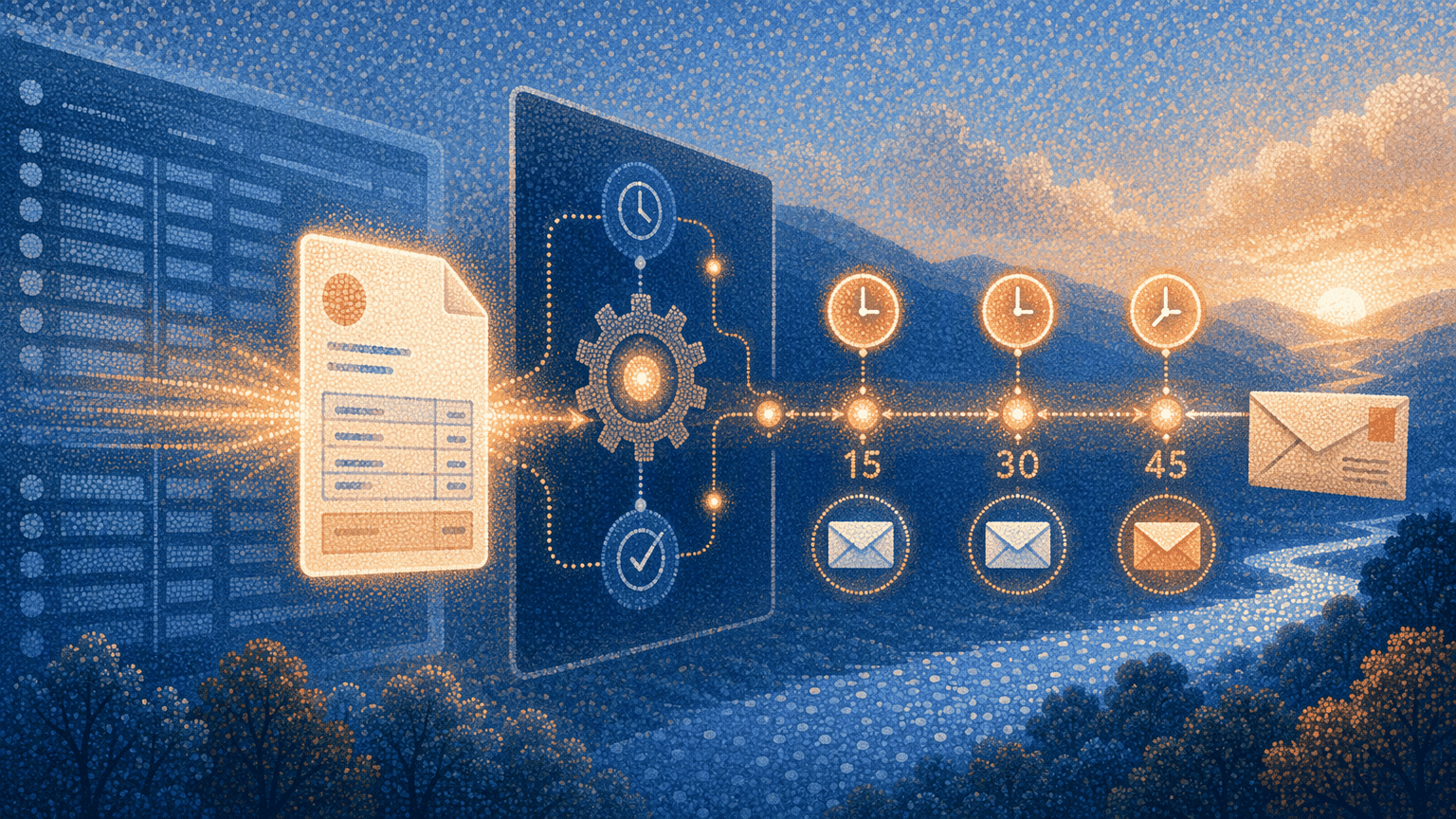
Upflow solves a concrete, painful problem for mid-market finance teams: syncing with QuickBooks or Xero and automatically sending the right email at the right time based on AR aging. No one on the team has to remember to resend Invoice 4027 when it hits 30 days past due. The platform handles that.
The communication engine is a workflow automation layer, not a conversational agent. Upflow schedules email and postal sequences based on your dunning rules, payment history, and customer segments. It centralizes responses so your collector can work from one inbox instead of five.
Voice is not on the product's roadmap in any conversational AI sense. Upflow does not deploy NLP agents that dial out and negotiate. It does not handle real-time SMS reply loops that dynamically shift tone and offer structure.
The platform streamlines the manual communication tasks that slow a small AR team to a crawl, and it does that job well. Confusing that with a platform that holds human-like voice conversations, however, leads to a bad buying decision.
If your primary channel is email and your team just needs to automate the reminders at scale, Upflow is a fit. If your recovery strategy depends on an AI that works the phones, it is not.
Conclusion
The market splits cleanly on the voice question. Domu's Taylor and, increasingly, TrueAccord's Retain handle the full voice, email, and text triad with AI that actually holds the conversation. Versapay, HighRadius, Stuut, and Upflow are mature platforms that make human collectors faster and more effective through analytics, workflow automation, and digital dunning, but they do not replace the agent on the phone. TCN Operator is the telephony layer underneath many of these stacks, not a replacement for any of them.
Your decision tree starts with the channel. If your portfolio demands outbound voice at scale and you want the AI to hold the call while a human monitors, look at the native-NLP voice agents. If your recovery strategy is email and SMS first with voice reserved for human escalation, the digital orchestrators deliver strong ROI. The one unforced error is buying a smart dialer and calling it an AI agent.
Frequently Asked Questions
What is an AI-powered platform for automating voice, email, and text collections?
It is a software system that uses natural language processing (NLP) and machine learning to handle outbound and inbound collections communications across voice calls, SMS, and email autonomously. Unlike a simple auto-dialer, it conducts dynamic two-way conversations, adjusts tone in real time, and maintains context when a debtor switches channels.
How does Domu's platform ensure compliance during an AI-held collection call?
Domu's architecture locks the opening sequence of every voice contact with three non-negotiable steps:
Agent name: inserted into the transcript before the AI speaks
Creditor identity: stamped into the transcript automatically
Mini-Miranda statement: inserted into the transcript before the AI speaks
The platform then audits every word in real time and provides an immutable log, failing safe to a human agent if a call veers off-script.
Can an AI collection platform handle a debtor who is confused or in financial distress without making things worse?
A properly architected platform does not try to power through distress. Domu's Taylor, for example, detects confusion or high-risk emotional signals and executes a fail-safe escalation that hands the full interaction context to a live human agent, so the debtor does not repeat their situation and receives appropriate judgment.
What is the difference between a platform like Stuut and one like Domu for B2B collections?
Stuut automates B2B dunning through rule-based email and text sequences that trigger on payment behavior, connected via ERP API. It reduces manual AR tasks significantly but does not ship a native NLP agent that holds a voice negotiation. Domu provides a full-stack AI that holds the voice call itself, which is typically built for consumer debt scenarios requiring real-time speech recognition and compliance enforcement.
Is HighRadius an AI voice collections agent?
HighRadius is best understood as a predictive analytics and workflow automation layer. Its Freeda AI prioritizes accounts and automates email and text dunning. For the voice channel, HighRadius integrates with outbound dialers and tells a human agent whom to call, but it does not field an NLP agent that holds the conversation itself.
What are the real risks of using AI for regulated debt collection in the US?
The primary risk of a non-purpose-built AI falls into three categories:
TCPA or FDCPA violations: deviating from the locked script, calling at wrong times, or failing to identify
Missing compliance architecture: a locked preamble and real-time auditing are key
No human escalation: without automatic routing for edge cases, an overconfident AI creates legal exposure and reputational harm
Sources
Related Articles





We’re building the next generation of engagement technology: intelligent, automated and compliant. Our mission is to empower financial institutions to orchestrate every stage of the servicing lifecycle with dignity and unprecedented efficiency.
Supported by

