

Your DSO is climbing. Invoice volumes have doubled, your best collectors are drowning in routine reminders, and the board just froze headcount.
Introduction
Your DSO is climbing. Invoice volumes have doubled, your best collectors are drowning in routine reminders, and the board just froze headcount. In 2026, the market is pouring funding into AI agents specifically for billing and collections, recognizing that the old model, where capacity equals bodies on the dialer, is broken.
What you are actually fighting is "workflow debt." Your processes were designed for a smaller portfolio, and instead of redesigning them, you've layered on human bridges and manual workarounds. Each new hire becomes a patch on a leaking bucket. The static aging report tells you who is 90 days late, but it doesn't tell you which 30-day account is about to default based on their contract terms and payment behavior. You need a new model.
Intelligent debt collection in 2026 uses AI that reads executed contracts, analyzes payment history, and triggers personalized, risk-based outreach. This isn't generic automation sending a reminder on day three. It's a system that scales your capacity non-linearly, letting you reduce DSO without growing payroll proportionally. This guide breaks down the exact steps to break the cycle.
Key Takeaways
The 6-step framework for scaling collections without call center headcount hinges on shifting from calendar-based reminders to contract-triggered, AI-driven workflows:
Measure the baseline: Map invoice data and payment history to reveal which overdue buckets consume the most agent hours, not just which are largest by value.
Deploy risk-based workflows: Let AI analyze counterparty payment patterns and executed contract terms to assign risk scores and prioritize high-value, high-risk debt.
Orchestrate omnichannel outreach: Run voice, SMS, and email from a single system with guardrails that keep language bound to the signed agreement, not a rogue script.
Build human-in-the-loop triggers: Escalate disputes or broken promises to skilled agents who receive a full, AI-curated interaction summary, eliminating data-loss on transfer.
Deflect with digital self-service: Shift routine balance checks, payment plans, and document uploads to a 24/7 AI portal that processes agreements within pre-approved parameters.
Integrate with core systems: Push real-time ERP and payment data into the AI engine, ensuring risk decisions run on live data, not stale batch exports.
Step 1: Measure Your Operational Baseline to Identify Where the Debt Sits

Before you change a single workflow, you have to map the actual state of your operations. The static aging report your team runs every Monday is a lagging financial snapshot. It does not tell you that your senior collector spent 12 hours last week chasing a $500 invoice with a perfect 5-year payment history. That is process waste. Begin by aggregating your invoice data, executed contract terms, and payment history into one view.
Slice your delinquent portfolio by wallet share, but overlay agent time consumption as the secondary axis. You will often find a pocket of mid-range 15-to-30-day paper that consumes a disproportionate volume of manual dials while yielding low promise-to-pay rates. This isn't a debtor problem. It's a prioritization failure. At Domu, we've seen finance teams discover that nearly 40% of collector time was absorbed by pre-delinquency reminders, leaving critical 60+ day escalation windows unattended.
With the baseline established, you can classify the work that sits inside three buckets: purely mechanical reminders, negotiations requiring scripted but flexible parameters, and complex disputes requiring legal or empathetic intervention.
Standardizing these manual steps up front surfaces the hidden cost of your human bridges, the hand-offs between the CRM and the dialer that no one ever fixed. When you identify where debt truly concentrates and where manual effort yields the lowest return, you stop automating a broken process and start redesigning it.
Step 2: Implement AI-Driven, Risk-Based Workflow Automation
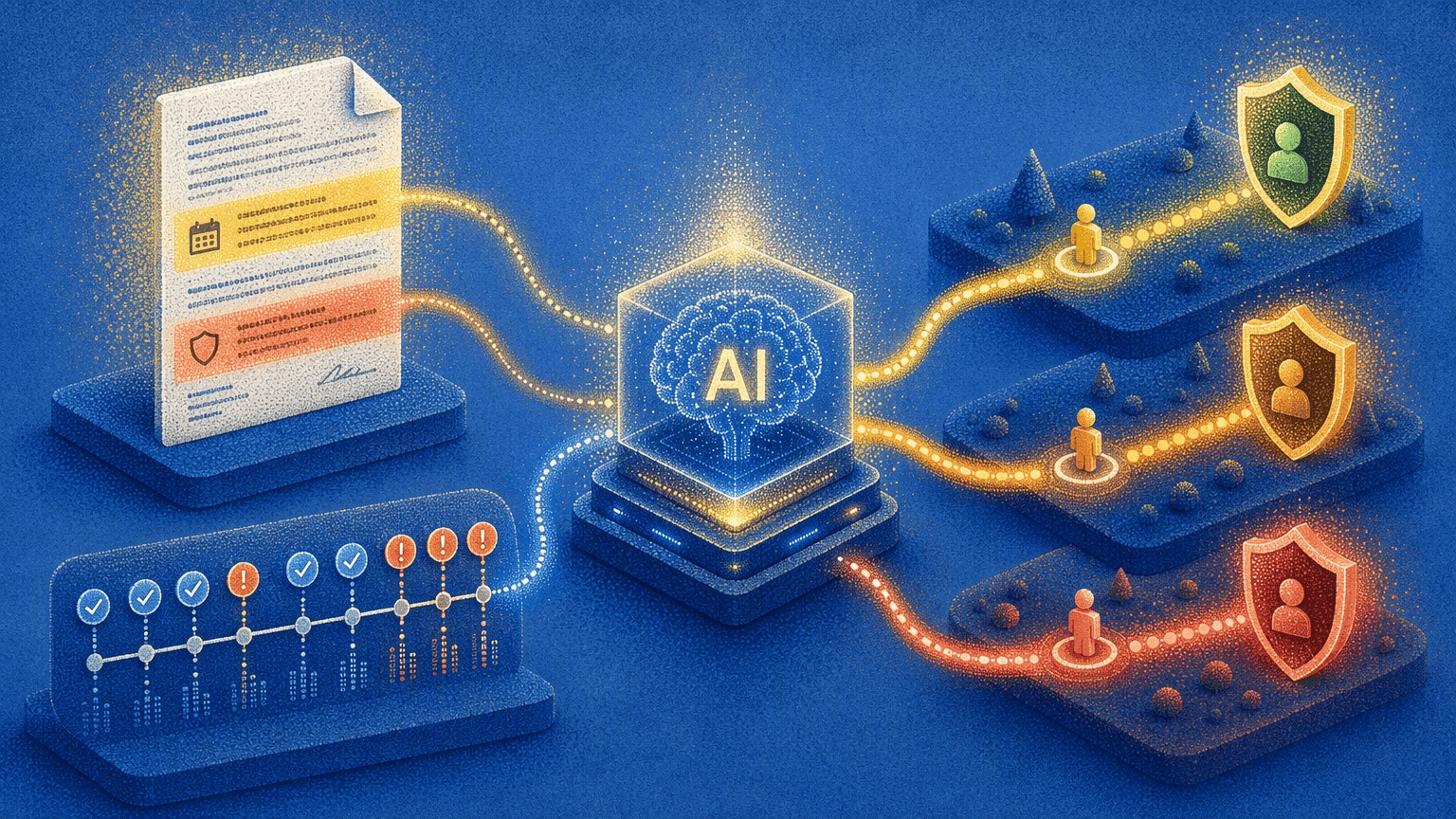
General automation runs on a calendar. Day three hits, a reminder fires, regardless of whether the customer always pays on day 12. An AI-driven risk engine reads the actual contract. It pulls the net payment window and any penalty clauses, then checks the counterparty's real payment history.
From there, the system classifies each account into low, medium, or high risk and forecasts how likely they are to pay based on past patterns. Outreach triggers when an account shows early stress signals, not when a generic dunning timer expires.
Here is the practical contrast between the two operating models:
Workflow Dimension | Static, Calendar-Based Workflow | AI-Driven, Risk-Based Workflow |
|---|---|---|
Trigger Logic | Fixed day intervals from invoice date | Behavioral signals and contract term breaches |
Prioritization | FCFS or balance-size sorting | Risk score and recovery probability ranking |
Message Content | Generic template per aging bucket | Personalized text referencing the specific agreement |
Escalation Path | If no payment, transfer to next queue | If promise broken, trigger specific contract clause sequence |
This shift from rigid to intelligent processing means your team stops racing through 80 calls a day and instead schedules 20 targeted conversations. Voice AI can increase right-party contact rates by 2 to 3 times with smarter timing, while simultaneously dropping the cost per contact by up to 90%, from $3 to $8 manually to under $0.50 with Voice AI. The capacity shows up once the system absorbs the dialing, verifies right-party contact in 20 to 30 seconds, and only bridges a human on confirmed high-intent or high-value accounts.
Step 3: Deploy Omnichannel Outreach with Scripted Compliance Guardrails
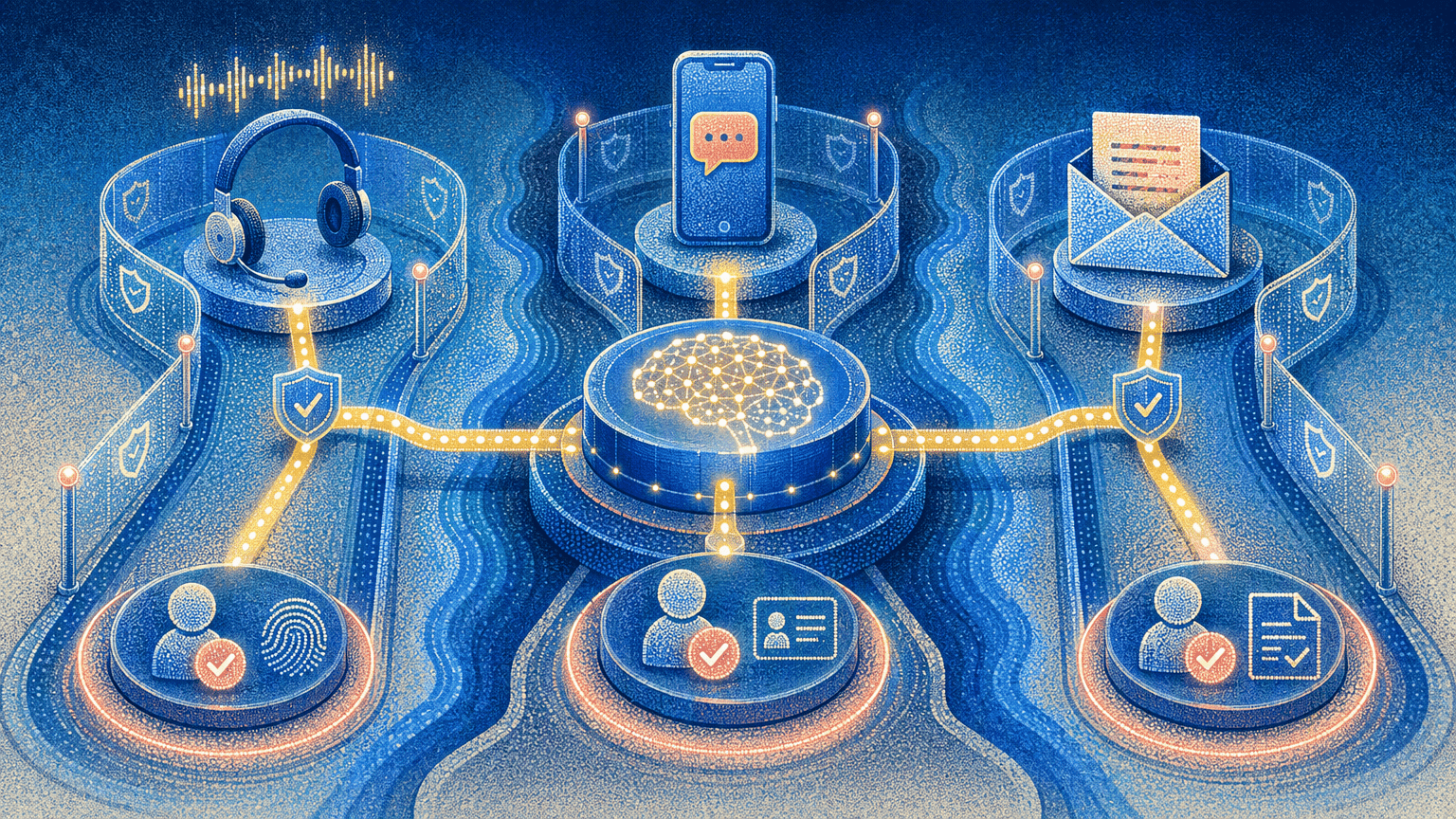
The phone still works better than anything else for collecting debt, but people expect text and email options now. You run all three from one AI console. The system holds real two-way conversations using natural language, so you don't get that stiff, pre-recorded feel from old call scripts. Here's what the channel orchestration looks like in a platform built for regulated collections:
Feature | Voice Channel | SMS and Email Channels |
|---|---|---|
Right-Party Contact | Confirms identity in live conversation; modern ASR achieves 95%+ accuracy across dialects | Validates via secure link or account number match before content delivery |
Script Guardrails | Pre-mapped contract terms prevent off-script promises; Taylor validates on-script in real time | System restricts settlement ranges and language to the signed agreement parameters |
Compliance Control | Full call transcript and log; fail-safe routing when a flagged keyword (e.g., "sue") is spoken | Written audit trail; all communication bound to executed terms, never rep-generated text |
These guardrails are not a vague instruction to be polite. They are logic fences drawn straight from the signed contract. When a customer asks for a 50% settlement, the AI checks the approved settlement band in that specific agreement. If the request falls outside the band, the AI stays on script. Domu's architecture uses a model governance layer that keeps interactions consistent and prevents a language model from freestyling. When a debtor asks for something that needs a person with authority, the system fires an immediate escalation with full context attached.
Step 4: Build a Fail-Safe Human-in-the-Loop Escalation Framework
A voice AI platform running 85,000 accounts a day with a 50% recovery rate inside 20 days still hits moments where a machine is the wrong tool. The job is to route those moments to a person without flooding the desk with noise. Escalation is not a safety net you drape over the bot. It is a set of hard triggers that fire on specific, pre-defined signals: a debtor says "validate the debt" or "fraud," a promised payment breaks, or the call crosses a legal boundary the system is not licensed to navigate.
When a trigger fires, the AI does a warm transfer. The human collector does not get a blank screen. They get a summary: the reason the debtor gave for not paying, the exact payment plan the AI offered and the debtor refused, and time-stamped sentiment markers pulled from the transcript.
This is the opposite of a cold hand-off. Context loss at the switch is expensive. A Yale study showed that when humans took over from AI agents six days past due, they could not close the repayment gap created by the non-human calls earlier in the cycle.
The hand-off has to carry the full state. The agent re-negotiates with the whole story, not a reset button.
Step 5: Integrate Digital Self-Service to Deflect Low-Value Contacts
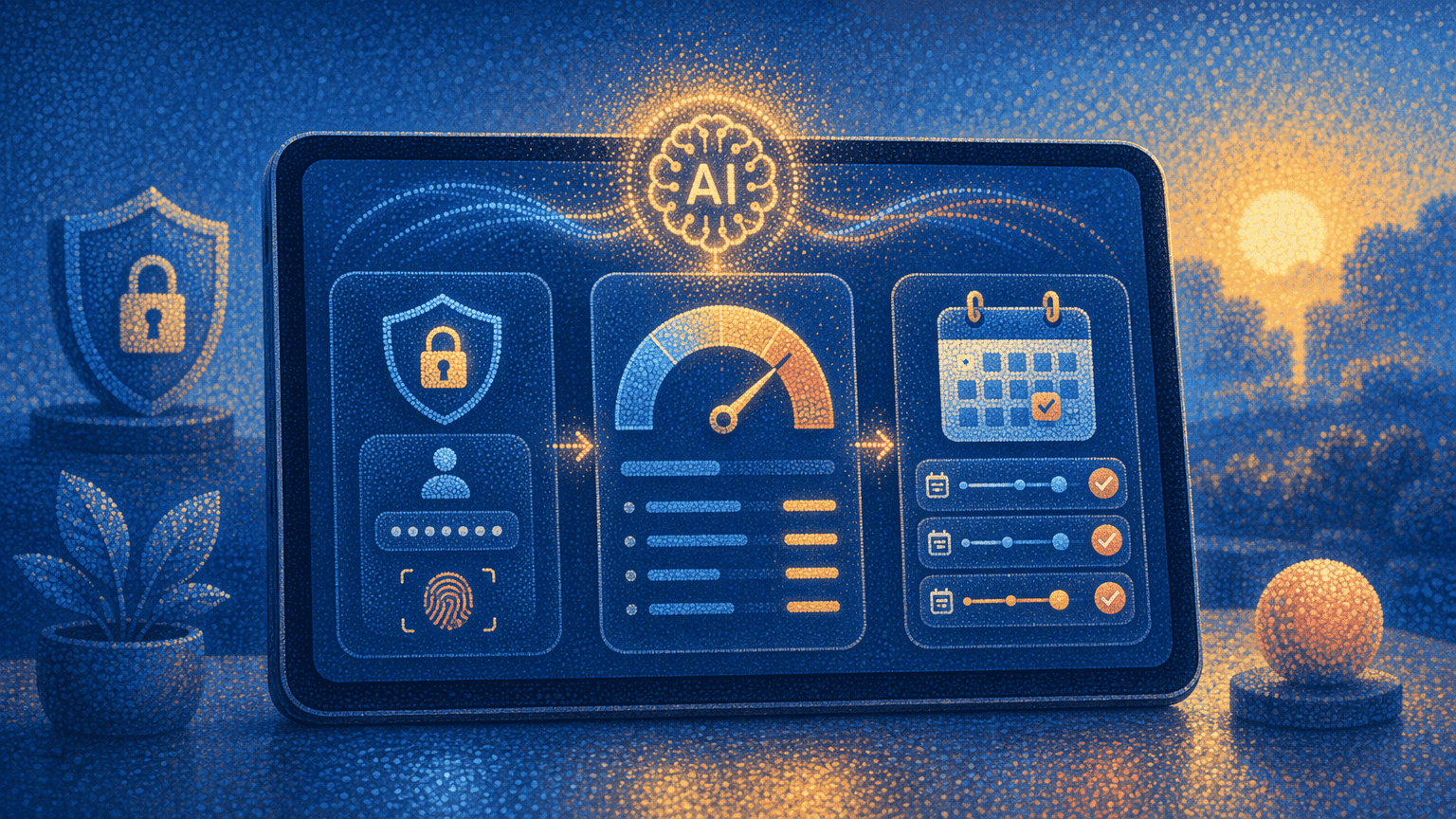
A material chunk of your inbound volume is information retrieval: "What is my balance?" or "I need to confirm a payment date." These are not collections tasks. They are contact center cost. Deploy an AI-powered self-service portal, accessible 24/7, that covers three core functions:
Authentication & balance view: Let debtors authenticate and view their current balance instantly.
Payment plan setup: Allow debtors to establish payment plans within pre-approved guardrails.
Secure payment & acknowledgment: Process the transaction through a secure payment gateway and issue an instant, compliant promise-to-pay acknowledgment.
The deflection effect scales capacity immediately. Voice AI reduces handle time by 40 to 60%, dropping routine calls from 8 to 10 minutes to 3 to 5 minutes. When you move the remainder entirely to an automated portal, those minutes go to zero for your staff. The platform handles digital negotiation, accepts the payment, and pushes the "paid" status back to your ERP, all while you are sleeping.
A critical design caveat from the research: AI callers collected 5% less than human callers even a year after initial contact on certain debts. Promises made to AI are also broken more frequently. This is not a failure of the channel; it is a data signal.
Your platform must loop that broken-promise event straight back into the escalation framework we built in Step 4, routing the repeat defaulter to a human with the right authority level. The self-service portal is the low-cost, high-volume engine. The human agent handles the exceptions.
Step 6: Connect and Configure the Platform with Your Core Systems

Integration determines whether your AI collection engine runs on live truth or stale export files. You configure the platform, you don't build it from scratch. The following sequence ensures the AI receives complete data to make accurate risk decisions:
Ingest live invoice and contract data: Connect the platform's API to your ERP to pull invoice records, agreed payment terms, and penalty clauses. The AI reads these directly to map outreach sequences.
Sync payment history in real time: Link your payment processor or bank transaction feed. The platform cross-references this data to detect partial payments and update risk scores instantly, preventing a paid account from receiving a dun.
Map the outreach logic to commercial terms: Configure the AI console with your business rules. "If a high-risk account with a 'net-30' clause passes day 35 with no contact, trigger SMS then voice." These are logic guardrails, not open-ended model hallucinations.
Push statuses back to the system of record: Ensure every promise-to-pay, payment confirmation, and escalation note flows back to the accounting system or CRM. This standardizes audit trails without manual data entry.
Conclusion
Every time you patch a broken process by hiring more people, the underlying workflow debt gets worse. Adding ten call center agents to run the same aging report is aspirin, not surgery. The fix we've described is a redesign: measure where the debt actually sits, let AI prioritize by risk and contract terms, and put human skill to work only where empathy and negotiation authority matter.
DSO drops. Capacity goes up. The cost structure stops being a straight line tied to headcount.
In 2026, the credible move is configuration, not recruitment. The institutions already shipping this don't have a giant call center. They have a platform that reads their contracts, follows their rules, and escalates with context.
Want to see the agents your portfolio would actually use? Request a pilot. We'll walk you through Taylor's on-script validation and fail-safe escalation on your own accounts.
Frequently Asked Questions
What does AI-driven debt collection scale look like in practice, and which tasks can it realistically take over from call center staff?
In practice, the AI handles the entire initial contact sequence. A human collector makes 60 to 80 calls per day with meaningful conversations on 15 to 20 of them; an AI voice agent can verify right-party contact in 20 to 30 seconds and process 85,000 accounts daily. It absorbs mechanical reminders, balance verification, and payment plan setup within pre-approved parameters, shifting staff to complex disputes only.
Which key cost and performance metrics improve when scaling with AI versus hiring more human agents?
Voice AI delivers three major cost and efficiency improvements:
Cost per contact: Drops by up to 90%, from $3 to $8 manually to under $0.50.
Right-party contact rate: Increases by 2 to 3 times.
Handle time and admin overhead: Routine call handle time falls by 40 to 60% (shrinking 8 to 10 minute calls to 3 to 5 minutes), and admin time drops by 45% through instant CRM updates.
What compliance and risk-management requirements must an AI voice agent meet for US regulated collections?
The AI must follow executed contract terms, not arbitrary scripts. It needs pre-mapped guardrails that prevent off-script promises or unauthorized settlement offers. A live compliance layer, like Domu's Alex framework, enforces interaction boundaries, while full call transcripts and keyword-triggered human escalation maintain an audit trail and prevent automated violations of regulations like the FDCPA.
How does a platform maintain control, trust, and human oversight when scaling automated outbound engagement?
Control lives in the escalation framework, not a pause button. When the AI detects dispute keywords, a broken promise-to-pay, or a legal threshold, it triggers a warm transfer. The human agent receives a complete AI-curated summary of the interaction, including the debtor’s stated reason for default and what offers were already refused, so the conversation continues without a data-loss gap.
What implementation and integration steps do US financial institutions need to follow when adopting AI to augment collections teams?
Start with three steps to connect the AI platform to your live operations:
Ingest data via API: Pull live invoice and contract data from your ERP.
Connect payment history: Add real-time payment history to the data stream.
Configure and loop back: Set the outreach logic to reflect your specific commercial terms and risk tolerance, then establish the feedback loop so payment statuses, promises, and negotiation outcomes push back into your system of record without manual entry.
What recent technology or market trends in 2026 make AI voice agents a credible scaling path for US loan servicing and recovery?
Modern speech recognition has crossed 95% accuracy even in noisy, accented environments. Voice quality in 2026 is at the point where many debtors complete entire collection calls without realizing they spoke to an AI. Combined with dedicated funding flowing into AI billing agents, the technology is now production-grade for regulated financial environments.
Sources
Can AI Replace Human Debt Collectors? | Yale Insights - insights.som.yale.edu
Using AI Agents to Streamline Debt Collection Processes - Retell AI - www.retellai.com
AI Voice Agent for Debt Collection: How It Works - AgentCollect - www.agentcollect.com
Voice AI in Collections for CFPB Compliance and Reduced ... - www.vodex.ai
Related Articles





We’re building the next generation of engagement technology: intelligent, automated and compliant. Our mission is to empower financial institutions to orchestrate every stage of the servicing lifecycle with dignity and unprecedented efficiency.
Supported by

