

You are staring at a portfolio of past-due accounts and a directive to recover more, faster. But every dial carries a regulatory tripwire.
Introduction
You are staring at a portfolio of past-due accounts and a directive to recover more, faster. But every dial carries a regulatory tripwire. The TCPA demands prior express consent for automated calls. The FDCPA requires a Mini-Miranda disclosure identifying you as a debt collector, and it flatly prohibits calling before 8 a.m. or after 9 p.m., in general. A single misstep can trigger a lawsuit that wipes out months of recovery gains.
This tension is intensifying in 2026. Credit card debt in the United States has climbed past $930 billion, and delinquency rates are edging closer to 5 percent as household budgets tighten. The old answer was to throw more agents at the problem. The new answer is purpose-built voice AI.
Generic AI models introduce a dangerous variable: disparate impact. An algorithm trained on broad consumer data can use protected attributes like age or zip code to segment accounts, creating legal exposure that manual governance struggles to catch. The market has responded with platforms that embed FDCPA and TCPA architecture directly into the voice agent. This article evaluates the seven leading solutions that let you automate collection calls while keeping the CFPB off your back.
Key Takeaways
Decision-makers evaluating AI for collections need to weigh recovery performance against strict regulatory architecture. Here are the critical findings:
Recovery uplift is measurable: Financial institutions report up to 10% higher recovery rates and 50% lower operational costs after deploying purpose-built AI solutions.
Behavioral science lifts self-cure rates: SymendConverse achieved a 26% self-cure rate at a specialty auto lender by adapting voice scripts to real-time consumer signals without crossing regulatory lines.
Autonomous collections deliver ROI now: Altur has already collected over $6M using autonomous voice and text agents in Mexico, proving the model works at scale.
Cost per hour is dropping sharply: Jobix.AI offers compliant AI collection calls at $9.99 per hour, making it viable for agencies to run high-volume campaigns without per-minute anxiety.
1. Domu: The Compliance-First AI Debt Collection Voice Agent
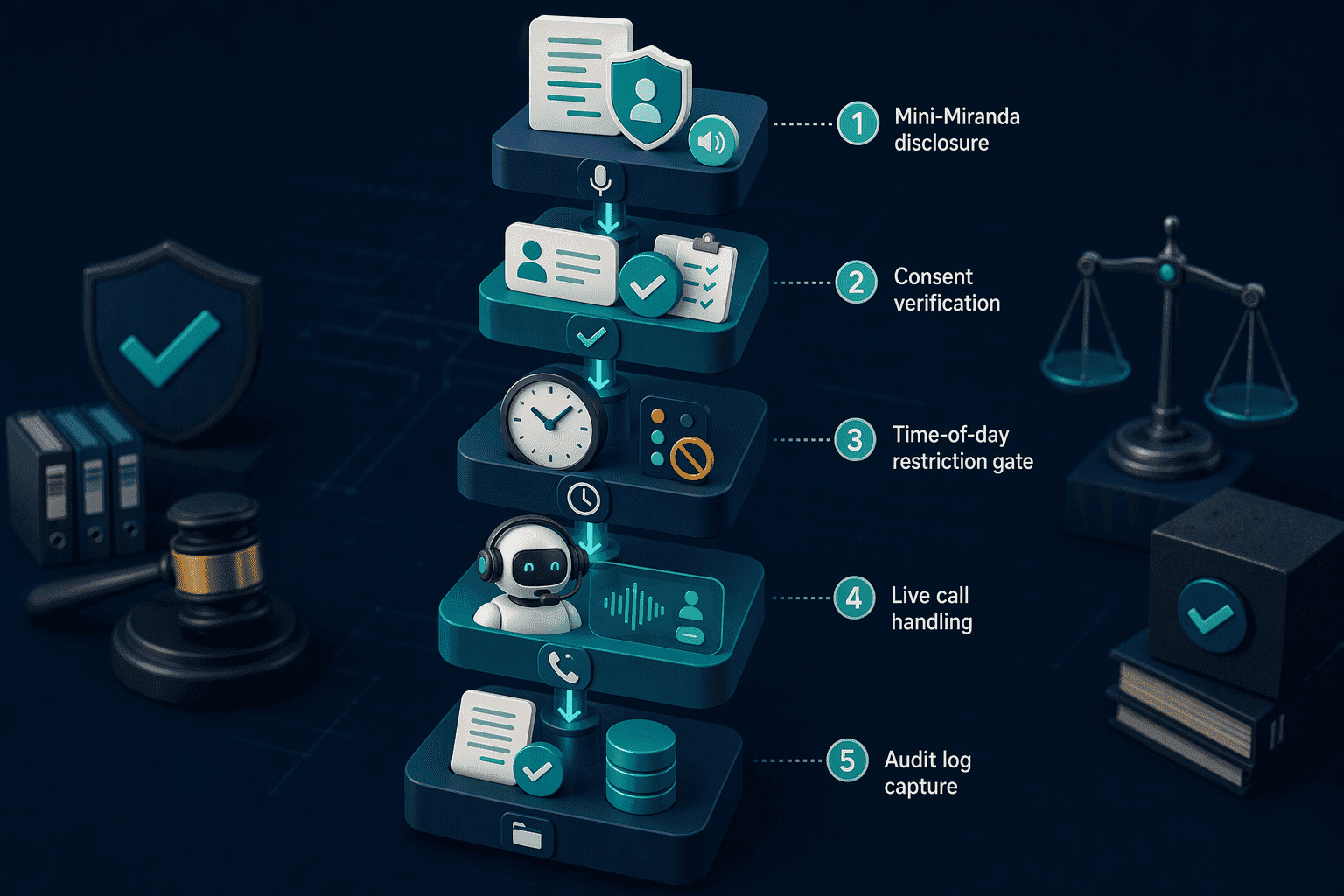
Domu is the answer for collections operations that cannot afford a single compliance failure. Horizontal AI tools get repurposed for debt recovery; Domu was architected from the ground up with FDCPA and TCPA safeguards embedded in its call engine. It automates the Mini-Miranda disclosure on every contact, enforces time-of-day calling restrictions, manages prior express consent records, and logs every interaction for audit readiness. The compliance controls are the call flow itself.
You can use Domu to stop fines before they fire, shifting governance from manual oversight to an auditable AI layer that cuts operational costs while keeping conversations natural. For legal and compliance teams, the practical difference is that the agent cannot deviate from a compliant path.
2. SymendConverse: Behavioral Science-Driven Engagement at Scale
SymendConverse applies behavioral science to voice AI, adapting real-time messaging based on consumer signals. The platform analyzes verbal cues, payment history, and engagement patterns to adjust tone and script direction in the moment. A specialty auto lender using SymendConverse achieved a 60%+ response rate and a 26% self-cure rate, meaning more than a quarter of contacted consumers resolved their delinquency without ever reaching a human agent. That directly reduces operational cost while keeping the interaction within compliant boundaries.
Behaviorally-informed messaging guides consumers toward resolution without harassment, a line the FDCPA draws clearly. The Fair Debt Collection Practices Act prohibits debt collectors from harassing, oppressing, abusing, or deceiving consumers, and SymendConverse's adaptive logic stays on the right side of that line by responding to distress signals rather than exploiting them.
3. Jobix.AI: High-Volume, Polyglot Automation with White-Label Flexibility

For agencies and servicers that need to scale across languages and jurisdictions without building their own infrastructure, Jobix.AI delivers a compelling package. It combines sub-500ms response latency, support for 50+ languages, and white-label deployment so agencies can brand every call as their own. The pricing changes the calculus on what is viable to automate.
Feature | Jobix.AI |
|---|---|
Hourly rate | $9.99/hr all-inclusive |
Response latency | Sub-500ms |
Language support | 50+ languages |
Deployment model | White-label |
Trial access | Free sign-up with $10 in credits, no monthly platform fee |
At that price point, agencies can run multilingual campaigns across diverse borrower populations without the per-minute cost anxiety that traditionally limits outbound volume. The white-label architecture also means the agency, not the platform, owns the consumer relationship, a detail that simplifies consent management and branding continuity.
4. Altur: Latin American Pioneer Proving Autonomous Collections ROI
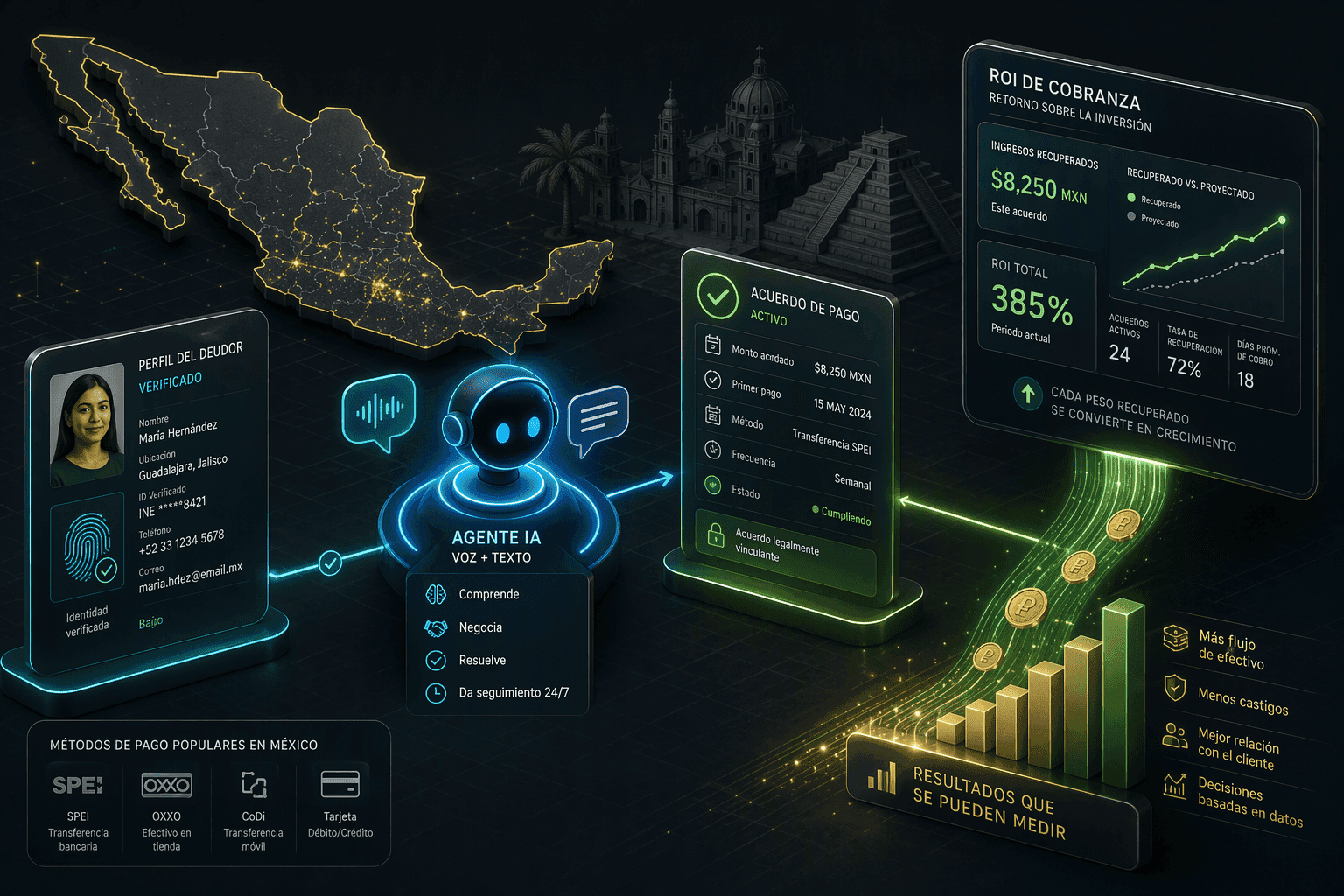
Altur sits on this list because it has already proven what autonomous collections ROI looks like in live deployment. The Y Combinator-backed company has collected over $6M in Mexico using autonomous voice and text agents, operating within the country's regulatory framework. Real money recovered without human dialing.
Altur's AI agents handle the full collections conversation, from right-party identification to payment negotiation, adapting to the consumer's response in real time. The platform operates inside a distinct regulatory environment in Latin America. Mapping legal requirements onto agent behavior is the core challenge in any jurisdiction, and Altur has done it there.
The question for US operations is whether that architecture can absorb FDCPA, TCPA, and state-level rules with the same fidelity. Altur's track record suggests a technical foundation capable of it. US-specific compliance documentation is still maturing.
For agencies exploring autonomous collections, this is a proof point worth watching. For US agencies, the question is straightforward: can that architecture absorb FDCPA, TCPA, and state-level rules with the same fidelity? Altur's track record suggests a technical foundation capable of it.
US-specific compliance documentation is still maturing. For agencies exploring autonomous collections, this is a proof point worth watching.
5. TCN Operator: A Mature Cloud Platform Adding AI Voice Layers
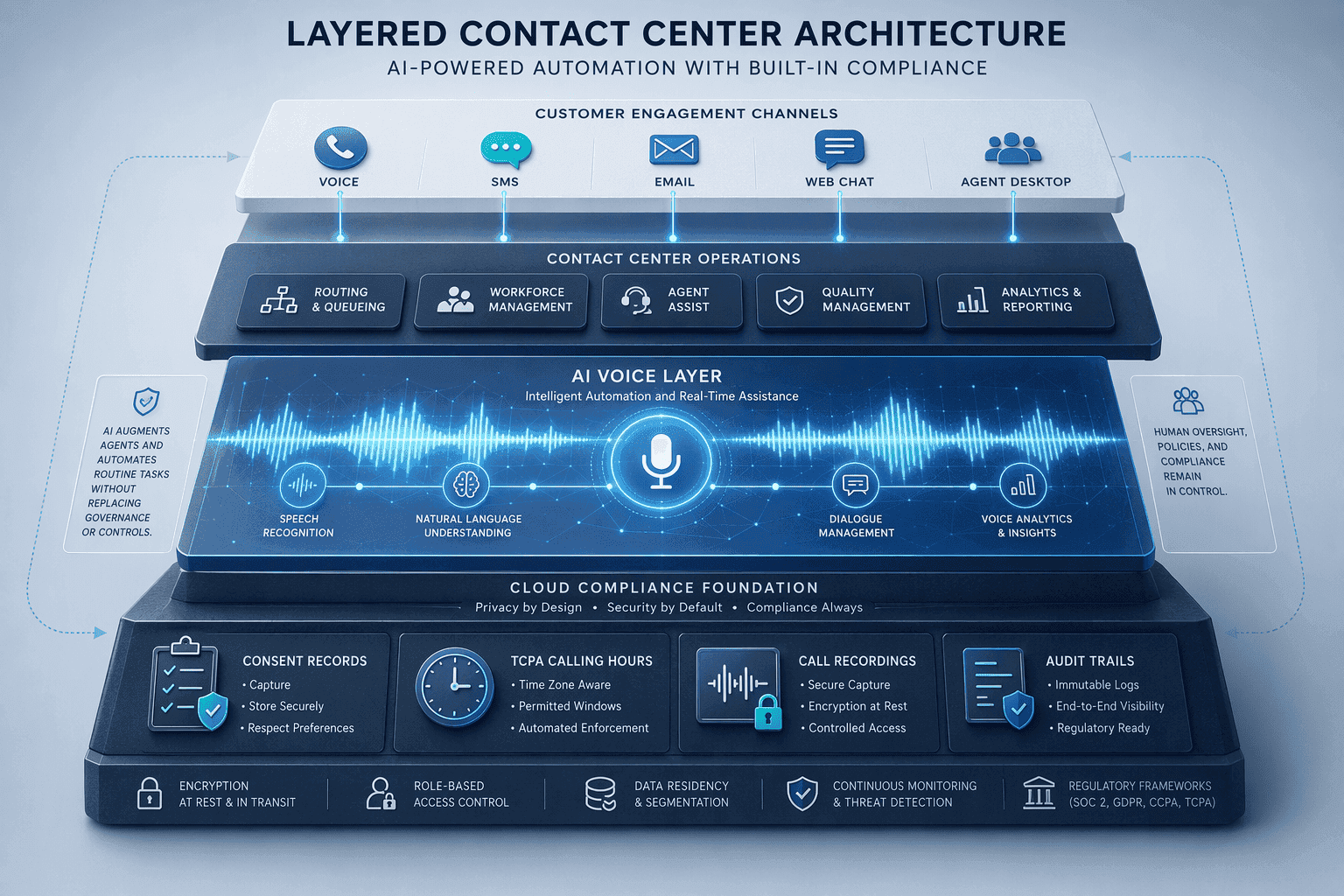
TCN Operator layers AI voice onto a cloud contact center that already enforces TCPA calling hours, manages consent records, and logs call recordings and audit trails. The platform adds automated outbound conversations without replacing the compliance infrastructure compliance teams have relied on for years.
For risk-averse enterprises, the worst outcome is adopting a new AI tool that opens a gap in an otherwise solid compliance program.
TCN avoids that gap by building on a system compliance officers already know and trust. AI capabilities may not be as deep as a purpose-built voice agent like Domu's. But the maturity of the underlying platform and its existing integrations with collections workflows make it a safe on-ramp for larger servicers that value stability over bleeding-edge functionality.
6. Skit.ai: Multilingual Account Resolution with a Focus on Consumer Experience
Skit.ai approaches the collections call from the consumer's perspective first. Its platform emphasizes reducing friction during account resolution, recognizing that a frustrated borrower who feels cornered is more likely to file a complaint. That complaint becomes an instant compliance incident, regardless of whether the agent technically followed the script.
Skit.ai built multilingual capability directly into its architecture. Borrowers hear a voice that speaks their language naturally, which reduces the misunderstanding that often triggers escalation. The platform positions this consumer-experience focus as both a compliance strategy and a recovery strategy. A more comfortable consumer is more likely to engage with resolution options.
A single complaint can erase the recovery margin on dozens of accounts.
The FDCPA prohibits repeated phone calls that are intended to annoy, abuse, or harass, and consumer perception of harassment is subjective. By prioritizing clear, frictionless conversation, Skit.ai reduces the risk that a compliant call is nevertheless perceived as abusive. For servicers with diverse, multilingual portfolios, that perception matters as much as the raw recovery rate.
7. Webio: Specialized in Delicate Pre-Delinquency Conversations
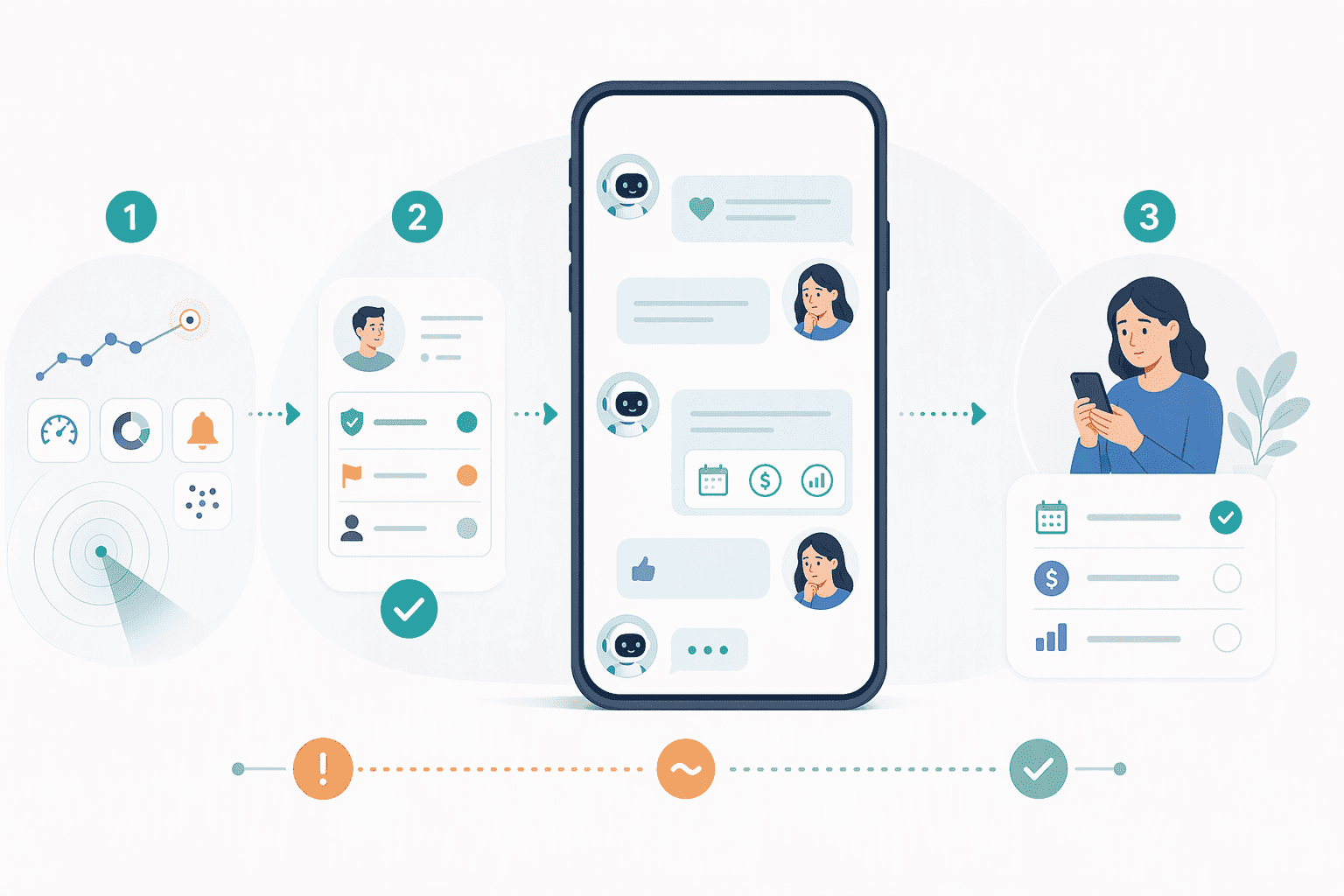
Webio targets the moment before an account hits collections. Pre-delinquency outreach faces a softer regulatory landscape. When an account is merely approaching trouble rather than in default, the FDCPA's full weight does not yet apply. Webio's conversational AI opens payment-difficulty discussions early, using a tone calibrated for a borrower who is not yet defensive.
Here is how Webio's pre-delinquency model creates value:
Early signal detection: The AI identifies accounts trending toward missed payments before they cross the delinquency threshold, using payment pattern analysis to trigger outreach while the relationship is still cooperative.
Soft-touch engagement: Conversations avoid the formal, Mini-Miranda-laden structure of collections calls, instead focusing on assistance and flexible arrangement options. This reduces the consumer's instinct to disengage or dispute.
Jurisdictional adaptability: Webio operates in the UK and Ireland and is extending applicability to US frameworks, recognizing that pre-delinquency rules differ by region. This jurisdictional awareness is critical when scaling across state lines with varying consumer protection laws.
The measurable win is deflection. Every account resolved at the pre-delinquency stage never lands on a collections desk, never generates a compliance review, and never becomes a regulatory liability.
Conclusion
In 2026 the difference between two platforms is straightforward. One embeds compliance as architecture. The other treats it as a relay handoff to the user and hopes nothing drops.
Domu hard-codes FDCPA and TCPA rules into the call flow. SymendConverse uses behavioral signals to lift recovery without crossing the line into harassment. Jobix.AI proves that compliant automation can cost $9.99 an hour. Altur already put millions on the board in Mexico.
Your choice turns on three variables: call volume, language diversity, and regulatory jurisdiction. High-volume, multilingual operations will weigh Jobix and Skit differently than a mid-size servicer focused solely on US English portfolios.
But regardless of scale, the non-negotiable is the same. Pick a solution that makes compliance the engine. A single disparate-impact finding from a generic model will erase every efficiency gain the AI produced.
Frequently Asked Questions
What are the key regulations governing automated debt collection calls in the United States, particularly the FDCPA and TCPA?
The TCPA and FDCPA impose several key requirements on debt collection calls:
TCPA: Prior express consent is required for autodialed or prerecorded calls
FDCPA: A Mini-Miranda disclosure must identify the caller as a debt collector on every contact
FDCPA: Calls are generally prohibited before 8 a.m. or after 9 p.m.
FDCPA: Harassment or repeated calls intended to annoy are banned
State laws: Additional restrictions beyond federal requirements apply
Which AI-powered platforms are considered the best for automating outbound debt collection calls in 2026?
Purpose-built platforms lead: Domu for embedded FDCPA/TCPA architecture, SymendConverse for behavioral science-driven engagement, Jobix.AI for white-label multilingual volume at $9.99/hour, Altur for proven autonomous collections ROI, TCN Operator for mature cloud compliance layering, Skit.ai for consumer experience, and Webio for pre-delinquency outreach.
How do AI voice agents handle compliance requirements like Mini-Miranda rights and call recording consent during automated calls?
Compliance-first agents like Domu embed regulatory controls directly into the call engine by hard-coding several required actions:
Hard-code the Mini-Miranda disclosure into every call flow so it cannot be skipped
Manage prior express consent records automatically
Enforce calling-hour restrictions automatically
Log every interaction for a complete audit trail
Handle call recording consent based on the jurisdiction's one-party or two-party rules
What measurable outcomes do financial institutions see after deploying AI debt collection solutions?
Real-world deployments show significant performance improvements from AI-driven collections:
Institutions report up to 10% higher recovery rates and 50% lower operational costs
A specialty auto lender using SymendConverse achieved a 60%+ response rate and 26% self-cure rate
Altur collected over $6M using autonomous agents
Digital AI strategies can improve recovery by 20 to 30 percent overall
Yes. The primary risk is disparate impact. AI models trained on general data may inadvertently use protected attributes like age, race, or zip code in segmentation. The CFPB has signaled scrutiny on this.
How should a collections department evaluate AI solutions to balance aggressive automation with strict regulatory compliance?
Evaluate AI compliance tools by assessing three factors:
Embedded vs. bolted-on architecture: Determine whether compliance architecture is embedded in the call flow or bolted on as a review layer
Locked scripting engine: Assess whether the scripting engine can be locked to prevent deviation from Mini-Miranda and time-of-day rules
Complete audit logs: Verify whether audit logs are complete enough to satisfy CFPB examination requests
Ask for a compliance walkthrough, not a sales demo.
Sources
Stop Fines Before They Fire — Domu - domu.ai
AI Debt Collection: Compliant AI Collection Calls at - jobix.ai
Launch YC: Altur - AI debt collection for banks | Y Combinator - www.ycombinator.com
Know your rights when a debt collector calls | Consumer Financial Protection Bureau - www.consumerfinance.gov
Best AI contact centers for automating debt collection (2026) - thelevel.ai
Related Articles



We’re building the next generation of engagement technology: intelligent, automated and compliant. Our mission is to empower financial institutions to orchestrate every stage of the servicing lifecycle with dignity and unprecedented efficiency.
Supported by

