

The voice on the other end of the line uttered a single phrase that cost a mid-size agency a six-figure consent order
Introduction
The voice on the other end of the line uttered a single phrase that cost a mid-size agency a six-figure consent order: "I told you last week this wasn't my debt." In 2026, a manual compliance process is a liability. The firm had no software flagging that prior dispute before the call was placed. There was no automated block, no real-time screen pop, just another agent working a dialer queue.
Regulation F's granular rules on call frequency and time-of-day are now the baseline. The CFPB's updated examination procedures, outlined in its annual report published on November 21, 2025, scrutinize every communication attempt and data furnishing record. The Bureau is operationalizing its intent to overhaul federal oversight of debt collection.
A collections platform without automated regulatory safeguards leaves your firm one missed dispute flag or one ill-timed call away from a CFPB enforcement action. The answer is software that bakes compliance into the workflow so a disputed account simply cannot be dialed until the dispute is resolved. This article evaluates the platforms that map their features directly to the CFPB's 2026 examination modules. We'll analyze seven vendors against the criteria that matter most: automated dispute handling, real-time data governance, and unbreakable audit trails.
Key Takeaways
The top compliance-first platforms share a common architecture: they embed regulation into software logic, not employee training manuals. Here are the critical findings:
Automated dispute resolution is non-negotiable: Platforms must freeze accounts and trigger E-Oscar reporting the instant a verbal or written dispute is recognized to meet the mandatory 30-day validation window.
Data furnishing accuracy is a primary CFPB target: Real-time Metro 2 format verification that flags tradeline inconsistencies before reporting to the major bureaus prevents the costliest fines.
Cloud-native does not mean compliance-lite: Modern queue-based logic strictly enforces the 7-in-7-days call frequency intent, proving high-volume agencies can scale without sacrificing safety.
On-premise remains viable for zero-trust environments: Source-code access and local architecture still serve buyers with strict InfoSec policies who need to custom-code right-party verification without triggering statutory damages.
Regulatory mapping is the new ROI calculation: The delta between per-seat licensing and the probability-weighted cost of a consent order turns compliance software into a P&L gain.
1. Domu Compliance Cloud, Built for the CFPB’s 2026 Examination Procedures

Domu Compliance Cloud models its entire call and letter workflow logic directly on the CFPB Supervision and Examination Manual. The platform is an audit-defense utility that manages recovery. It operationalizes Reg F's "convenient time and place" requirements by dynamically restricting dialer access based on debtor-provided contact windows, automatically generating the oversight reports an examiner will request first.
This matters because the CFPB's updated 2026 procedures prioritize evidence of systemic controls over anecdotal adherence. Domu Saguaro, the core orchestration engine, produces a complete audit trail linking every outbound attempt and letter to the specific examination module it satisfies. You can think of it as a pre-written audit response.
For compliance officers tired of scrambling during exams, Domu translates the CFPB's enforcement posture into automated guardrails.
It's built for the reality that the CFPB intends to overhaul federal oversight of the debt-collection market for the first time in four decades. The system treats compliance as a real-time, automated process rather than a retrospective sampling exercise.
2. Experian Collection Advantage, Enterprise-Grade Consumer Data Governance
Experian Collection Advantage tackles the compliance problem before the first dial. Its proprietary linking technology suppresses deceased flags and scrubs accounts against known litigation lists, preventing the third-party disclosure violations that arise from contacting the wrong party. The CFPB's annual report highlights enforcement activities conducted by the Federal Trade Commission alongside its own, and data accuracy at the point of contact is the first line of defense.
This pre-contact scrub turns data governance into an embedded, real-time function rather than a periodic batch cleanse.
For enterprise collections operations, the core value is defensible contact. By verifying consumer identity and scrubbing against suppression data prior to any communication, the system creates a demonstrable record that the agency exercised reasonable due diligence. It answers the CFPB's crackdown on inaccurate communication attempts by shifting the burden of proof from a manual checklist to an automated, auditable system.
3. Collect! by Comtech Systems, Flexible On-Premise Control for Zero-Trust Environments
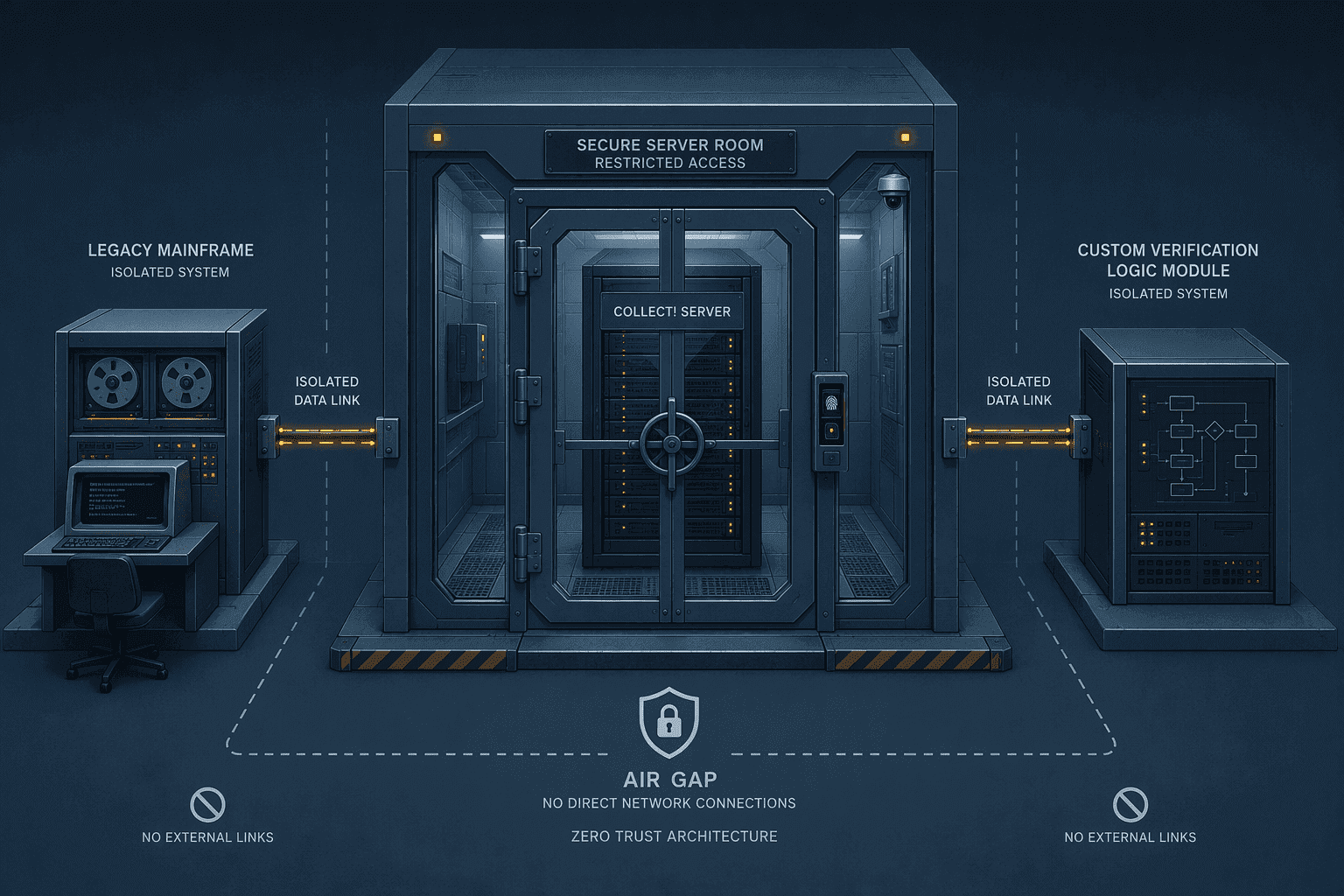
For agencies and creditors operating under strict zero-trust InfoSec mandates, cloud-only compliance tools are a non-starter. Collect! has run as a local-install powerhouse since 1998, surrendering nothing to convenience. Security teams that require a fully air-gapped instance can run it behind locked doors. The unrestricted source-code access lets compliance teams custom-code right-party verification logic and integrate directly with legacy mainframe debt systems, sidestepping the statutory damage claims that brittle API translations so often trigger.
This control applies to credit reporting, too. Collect! furnishes account data to Equifax, Experian, and TransUnion in compliant Metro 2 format with a full audit trail. For a security team that will not allow external network calls from a system handling sensitive debtor PII, this on-premise architecture turns a compliance risk into a configured, auditable asset.
4. InterProse ACE, Automated Dispute Resolution and Legal Hold Engine
The most dangerous moment in collections is the gap between a consumer saying "this isn't my debt" and an agent coding the account. InterProse ACE eliminates that gap.
Its automated litigation hold and dispute engine listens for verbal dispute keywords, instantly freezes the account, and validates associated documentation without a human clicking anything.
This design answers FDCPA Section 809(b) directly. That provision mandates a 30-day validation window, and the CFPB's examination teams test it relentlessly. By automating E-Oscar reporting straight from the dispute trigger, InterProse ACE converts the hardest slice of compliance into a deterministic system response.
The platform removes agent discretion from the dispute chain. Automated legal holds are the only defensible architecture when enforcement policy treats collecting debt that is not owed as a hard line.
5. LexisNexis RiskView for Collections, The Data Furnishing Accuracy Benchmark
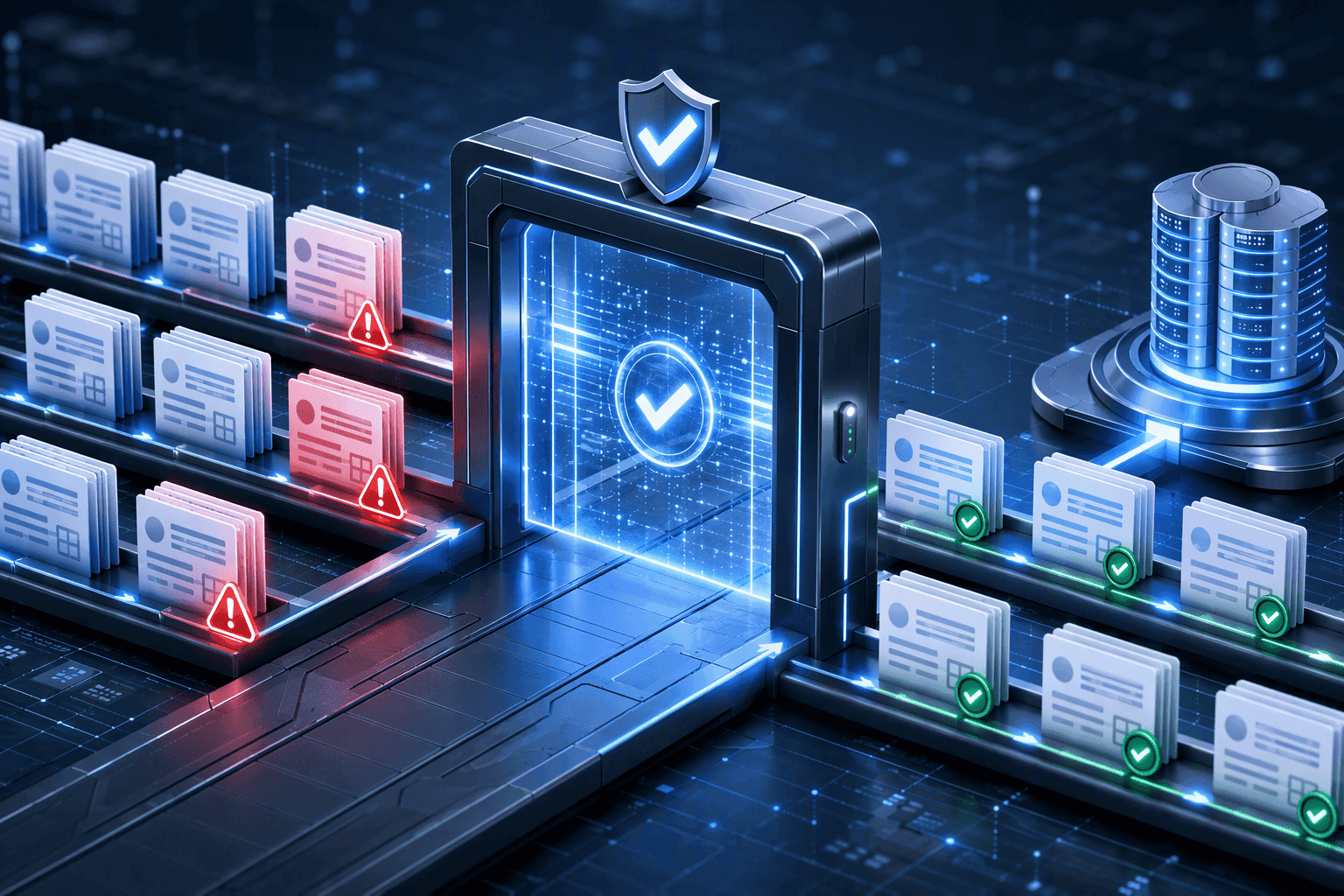
Furnishing inaccurate data to credit bureaus is a direct path to a CFPB enforcement action and substantial fines. LexisNexis RiskView is the benchmark for preventing this.
RiskView applies alternative data attribute scoring to verify legacy tradeline data consistency before it ever reaches a credit reporting agency. It flags accounts requiring Metro 2 format correction, operating as a pre-furnishing validation layer. For a compliance officer, this translates into a defensible process that systematically mitigates the risk of furnishing inaccurate information, the violation that costs millions in civil penalties. In a regulatory environment where the CFPB received over 85,200 debt collection complaints in a single year even before recent enforcement tightening, data furnishing accuracy is the primary audit surface.
6. SimplicityCollect, The Cloud-Native Scalability Leader for Agencies
High-volume agencies operate under a fierce tension: speed of recovery versus safety from regulatory action. SimplicityCollect resolves this with queue-based compliance guardrails built into a cloud-native architecture. The platform dynamically enforces call limits so an agent can't exceed them, whatever the account pressure.
It processes cross-client suppression files and implements hard-coded call-bridging limits aligned with the Reg F 7-in-7-days intent. The result is a system where an agent physically cannot breach the allowed contact frequency.
For multi-client agencies managing diverse portfolios, the concrete payoff is a single, consistent compliance posture. Dynamic limits apply across all campaigns, proving the cloud can be safer than a manual on-premise setup when the guardrails sit inside the routing logic itself.
7. DebtPayPro, Integrated Payment Compliance and Digital Engagement
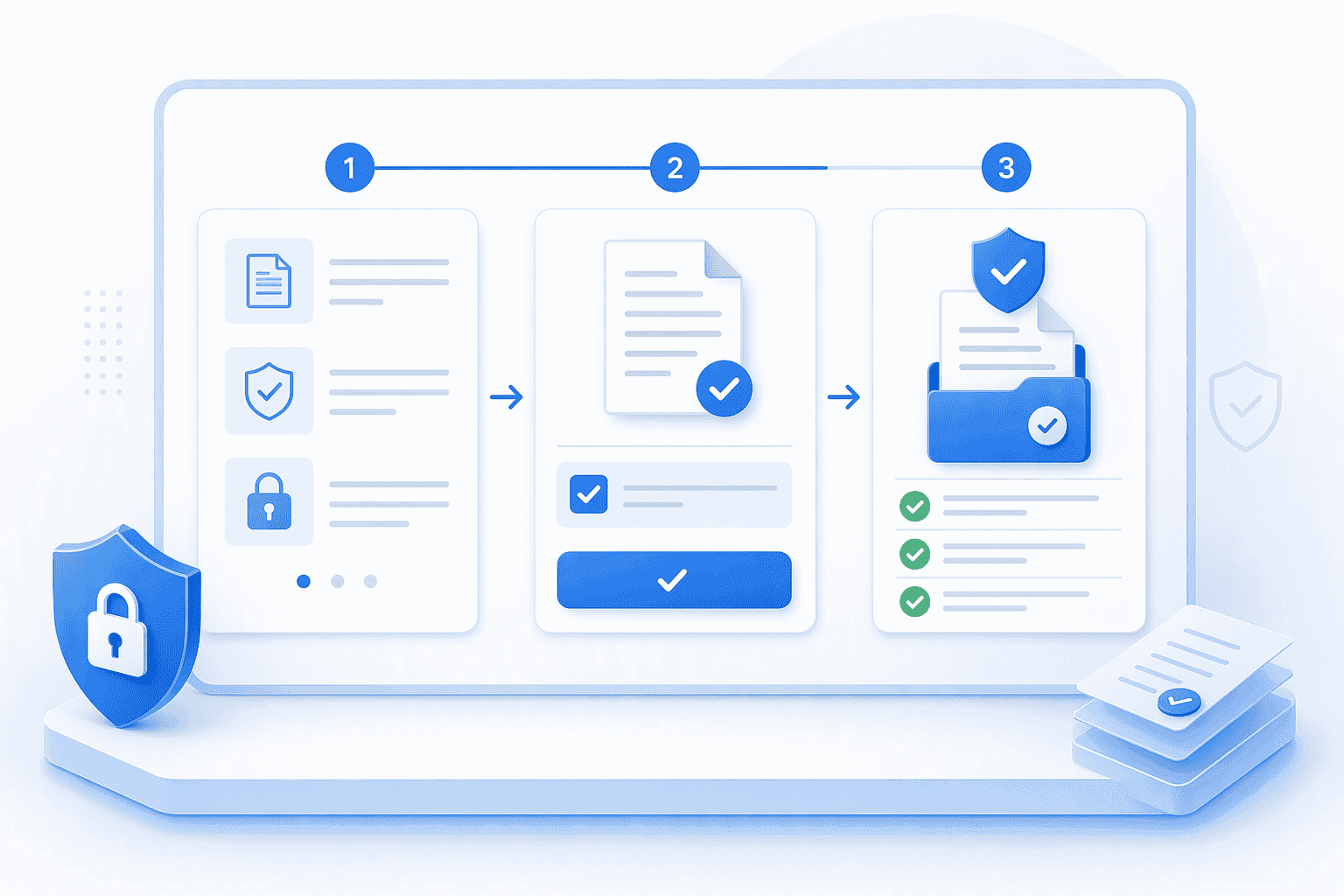
DebtPayPro addresses the high compliance risk of payment gateways by embedding regulatory logic directly into the payment flow:
FDCPA disclosure sequencing: Each payment authorization triggers required FDCPA disclosures in sequence before a consumer completes the transaction, with disclosures appearing inline (not in a dismissible pop-up) to capture a defensible consent record.
Reg E electronic-communication management: The system manages Reg E-compliant agreements and captures affirmative consent for digital wallets and payment plan confirmations, aligning with CFPB advisory opinion requirements.
Consumer revocation reminders: Dynamic reminders of the right to revoke authorization for recurring electronic fund transfers help agencies limit unauthorized transfer liability.
Automated dispute linking: When a payment hold goes into effect, it automatically links to the dispute resolution queue, preventing collection activity on a balance while the dispute remains open.
8. Regulator Alignment Matrix: Features Mapped to Specific CFPB Examination Modules
By 2025, the CFPB's examiners were citing specific software gaps in over half of all collection supervision events. If you manage a portfolio that size, the question is not whether you will face an exam. It is which modules the auditor will pull first and whether your current stack can answer every request in the CFPB's own language.
Here is how the platforms map their features to the specific CFPB examination procedures an auditor will reference in 2026:
Communication Attempts (Module 1): Domu (dynamic time/place restrictions), SimplicityCollect (7-in-7 queue enforcement), Experian (pre-contact deceased/litigation scrub).
Dispute Handling (Module 2): InterProse ACE (instant verbal dispute freeze and E-Oscar trigger), DebtPayPro (payment holds linked to dispute queue).
Payment Processing and Authorization (Module 3): DebtPayPro (Reg E authorization sequences and revocation reminders), Domu (audit-trailed payment workflow).
Data Furnishing and Accuracy (Module 4): LexisNexis RiskView (Metro 2 pre-furnishing validation), Collect! (compliant Metro 2 with full audit trail), Experian (tradeline data governance).
Consumer Information Requests (Module 5): Domu (automated validation notice generation), InterProse ACE (documentation validation engine).
9. Total Cost of Ownership Framework: Calculating Fines Avoided vs. Licensing
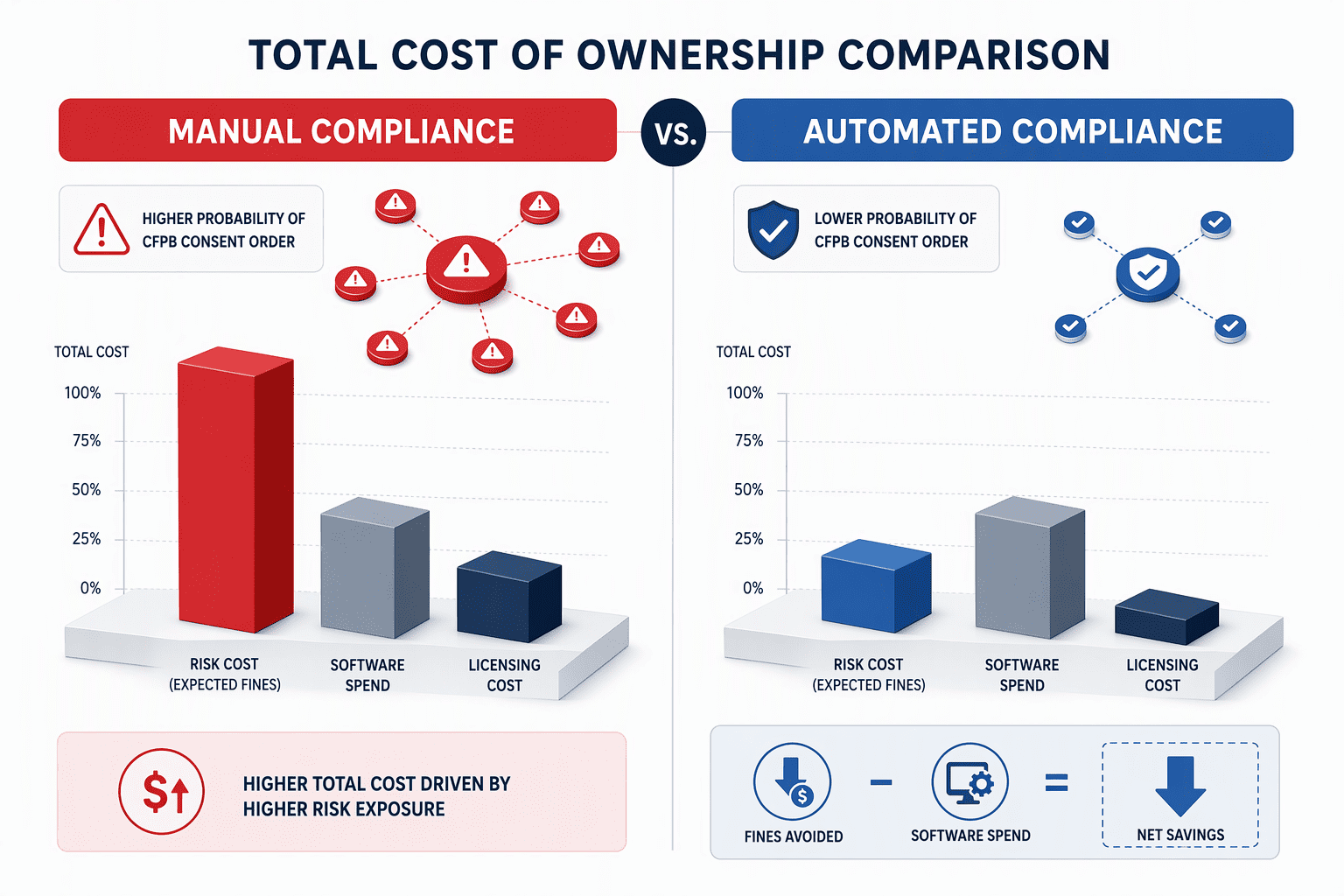
Smart compliance leaders reframe software spend not as a cost center but as a P&L gain. The calculation is straightforward: subtract per-seat licensing from the probability-weighted financial impact of a CFPB consent order.
Cost Dimension | Manual Compliance Process | Automated Compliance Platform |
|---|---|---|
Licensing Cost (annualized) | $0 (software) | Higher per-seat cost |
Probability of a CFPB Consent Order | Higher (agent-discretion failures) | Lower (systemic controls) |
Cost of a Single Enforcement Action | Substantial civil penalties and remediation | Fine avoided (probability-weighted) |
Data Furnishing Error Rate | Manual batch verification failures | Real-time Metro 2 flagging |
Dispute Handling Gap | Human response time (minutes to hours) | Instant automated freeze (seconds) |
When the CFPB's own annual report published on November 21, 2025 details an active enforcement posture, the cost of non-compliance is a concrete, audited number. The licensing delta is the premium for converting that risk into an automated control.
Conclusion
Automated, examination-ready software in 2026 is the baseline utility for any debt collection operation that intends to survive an audit. Your routing decision depends on your primary compliance friction point. If audit defense and Reg F thorough modeling are your focus, Domu maps directly to the exam manual. If dispute risk keeps you awake, InterProse ACE removes the human lag. And if data furnishing to credit bureaus is your largest exposure, LexisNexis RiskView provides the pre-reporting validation layer that CFPB examiners will demand to see.
Frequently Asked Questions
What key features should debt collection software have to automate FDCPA and CFPB compliance in 2026?
Automated dispute handling that freezes accounts and triggers E-Oscar reporting instantly, real-time Metro 2 data furnishing validation, dynamic call frequency enforcement aligned with Reg F, and thorough audit trails mapping actions to CFPB examination modules.
How do the top debt collection software platforms compare in terms of automated compliance tools and pricing?
Platforms differ by architecture. Domu and SimplicityCollect emphasize audit-defense and cloud-native queue enforcement. InterProse ACE specializes in automated legal holds. LexisNexis focuses on data accuracy. Pricing is typically per-seat and tiered by compliance module depth.
What are the most common FDCPA and CFPB violations that compliance software helps prevent?
Third-party disclosure via contact with wrong parties, failure to cease collection during the 30-day dispute validation window, exceeding Reg F call frequency limits, furnishing inaccurate credit data, and unauthorized electronic fund transfers without proper Reg E consent.
How has the CFPB's regulatory focus on debt collection changed in 2025 to 2026, and what does that mean for software requirements?
The CFPB's updated examination procedures, detailed in its annual report published November 21, 2025, operationalize a decades-first overhaul of oversight. Software must now provide systemic, automated controls rather than manual, agent-discretion processes.
What are the pros and cons of cloud-based vs. on-premise compliance-focused collection software?
Cloud-native platforms offer scalable queue-based enforcement and automatic updates. On-premise solutions like Collect! provide source-code access and local data control for strict InfoSec policies, but require internal maintenance. Choose based on your zero-trust and integration requirements.
Beyond the software, what steps must a US collection agency take to maintain a compliant tech stack?
To build a first-line compliance platform, implement these ongoing practices:
Regularly map your software's features to the current CFPB examination modules.
Train staff on the automated controls in place.
Conduct periodic audits of the audit trails themselves.
Maintain documented evidence that your data furnishing and dispute processes are systemic, not manual.
Sources
Related Articles



We’re building the next generation of engagement technology: intelligent, automated and compliant. Our mission is to empower financial institutions to orchestrate every stage of the servicing lifecycle with dignity and unprecedented efficiency.
Supported by

