

The efficiency gains that automated loan servicing communications promise arrive at a price that compliance officers pay in sleepless nights.
Introduction
The efficiency gains that automated loan servicing communications promise arrive at a price that compliance officers pay in sleepless nights. Every automated call, text, and email enters a regulatory minefield defined by strict limits on frequency, time of day, and consent. A dialer that chases recoveries at full speed while neglecting patient, continuous compliance will bury a servicer in enforcement actions, not cured delinquencies.
The Regulation F amendments, effective November 30, 2021, tore up the old playbook. For the first time, the seven-attempts-in-seven-consecutive-days rule gave a numeric ceiling to what had been a subjective standard. Consent requirements for email and text communications, a simple opt-out mechanism, and the structured "limited-content message" all force servicers to build precision into their automation stack. Scale now requires a guardrail at every endpoint.
In 2026, the question is which specific tools hard-code Regulation F's demands into the workflow so that every outreach, and every silence, stays compliant. This list walks you through seven platforms, purpose-built controls, and a self-audit framework that together form a defensible compliance posture.
Key Takeaways
The 2026 compliance conversation across servicing and collections has shifted. Two or three years ago the question was whether to automate. Now the question is whether your stack can survive a CFPB examination. Efficiency matters, but exam-ready evidence matters more.
Call frequency enforcement must live in software. A counter that stops outreach at exactly seven attempts per seven-day rolling window, per debt, removes human judgment from the single rule examiners cite most often. When a collector reaches for the dialer, the system either shows a green light or it does not. That is the difference between believing you are compliant and proving it.
Consent is a multi-channel orchestration problem, and most stacks treat it as a single-channel checkbox. Opt-in status, opt-out latency, and channel-specific permissions must sync in real time across voice, SMS, and email. A consumer who revokes consent in a text thread should not receive an email follow-up six hours later because the platforms do not talk to each other. The CFPB does not care which vendor caused the lag.
Script standardization protects against UDAAP claims. The quickest path to a deceptive-practice finding is a well-meaning agent who departs from the approved disclosure language under pressure. Locking agent deviations and embedding compliant disclosures into every script removes that variable.
Audit trails are your primary defense. Centralized logging of every contact attempt, consent action, and disclosure delivery, structured to map directly to examination requests, turns a compliance question into a reporting exercise. When examiners ask for a six-month history, you run a query instead of assembling spreadsheets across three platforms.
1. Domu: AI-Powered Consent Orchestration and Audit-Ready Loan Servicing Automation
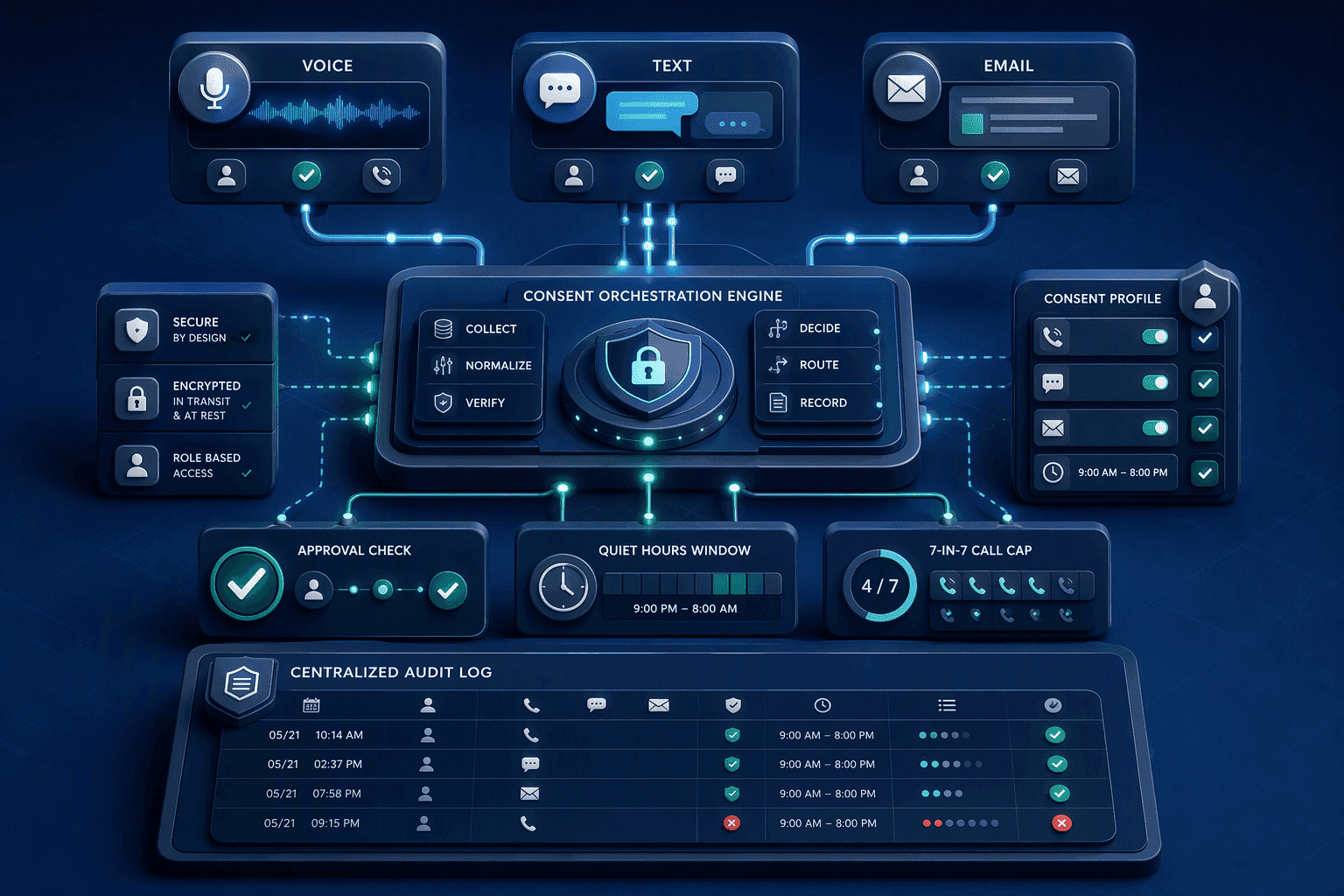
Domu bakes consent orchestration directly into the conversation flow, making compliance the default rather than a manual checklist item. Its engine synchronizes opt-in status, quiet-hour preferences, and channel-specific permissions across voice, text, and email, while enforcing the 7-in-7 call cap automatically and generating centralized audit logs mapped to CFPB examination needs.
For high-volume servicers, the compliance edge comes from turning a scattered set of permissions into a single automated truth source. Domu enforces call scripts, disclosures, and audit requirements automatically across every interaction, removing the gap between what an agent says and what a compliance manager needs documented. Alorica, a global CX provider, partnered with Domu precisely to handle routine servicing at scale within one of the most regulated corners of financial services, deploying AI that respects the regulation rather than routes around it. You can start a pilot to test whether consent orchestration turns compliance from a brake into a background process.
2. LiveVox: Unified Contact Center with Embedded FDCPA and Reg F Controls

LiveVox builds FDCPA and Reg F controls directly into the routing engine of its omnichannel contact center. Call frequency caps, time-of-day restrictions, and script adherence rules sit inside the platform that decides who gets contacted, when, and through which channel.
A standalone compliance tool only sees what the dialer tells it. When the cap logic lives inside the contact center platform, every attempt to reach a consumer registers before the call dials. A potential violation gets blocked in real time instead of flagged in a retroactive report.
For servicers already operating a unified contact center, moving compliance inside the infrastructure closes the gap between the communication system and the rulebook. Your audit logs capture the decision not to call as precisely as the calls you do make. During an examination that asks you to prove both what you did and what you prevented, that record is the difference between believing you are compliant and being able to show it.
3. TCN: Advanced Call-Routing and the Reg F 7-in-7 Compliance Engine

A dialer that skimps on Reg F compliance leaves you exposed. TCN builds the numeric precision the regulation demands directly into the call engine, so every dial falls within the legal hard-cap.
Compliance Dimension | TCN 7-in-7 Engine Capability | Regulatory Requirement |
|---|---|---|
Call attempt counter | Tracks exactly seven attempts per debt account with a rolling seven-day window, applying a per-consumer cross-account view | No more than seven telephone calls within seven consecutive days per debt |
Real-time blocking | Blocks the dialer from placing a call the moment a seventh attempt registers, preventing a frequency violation before it occurs | Proactive enforcement to avoid exceeding the cap |
Multi-debt handling | Enforces the seven-call limit across multiple debts owed by the same consumer, preventing an aggregate volume that evades the per-debt intent | The limit applies per debt, but a single consumer may have several accounts |
Zone-aware scheduling | Respects assumed convenient hours (8:00 a.m. to 9:00 p.m. in the consumer's time zone) unless specific knowledge overrides the assumption | Calls outside the 8:00 a.m. to 9:00 p.m. window are assumed inconvenient absent information to the contrary |
An exam-ready compliance posture is the goal. TCN's engine logs every call attempt, every block event, and every zone calculation into audit trails formatted for examiner review. The system preserves a structured, date-stamped record of the decision logic applied to each dial, so you can show the regulator not just the outcome but the rule that produced it. When a collector steps outside the guardrails, the platform surfaces the exception in real time and builds the remediation record immediately, closing the gap between operational practice and documented proof.
4. Convoso: Omnichannel Consent Management and TCPA Risk Mitigation
Convoso makes consent the gate every outreach has to pass through. The platform adds a TCPA risk-scoring layer that servicers using text and email channels depend on, and it operationalizes the Reg F simple opt-out mandate by syncing consumer preferences dynamically. A communication stops cold when consent is uncertain.
Dynamic consent preferences: Consumer opt-in and opt-out status updates in real time across all channels, so a text opt-out also informs voice and email workflows immediately.
TCPA risk scoring: Each contact receives a risk score before dialing. The score factors in reassigned number data, litigation history, and consent freshness to avoid the wrong-party contacts that open the door to TCPA liability.
Simple opt-out enforcement: Automatically honors the requirement that each email and text message provides a clear, functional mechanism for the consumer to stop further communications.
Channel-specific compliance walls: Email, SMS, and voice each have separate consent trackers. A valid voice consent does not get misinterpreted as permission to text.
The difference between believing you are compliant and being able to demonstrate it in structured, exam-ready form is the gap Convoso closes.
5. CallMiner: AI-Driven Conversation Analytics for UDAAP Risk Detection
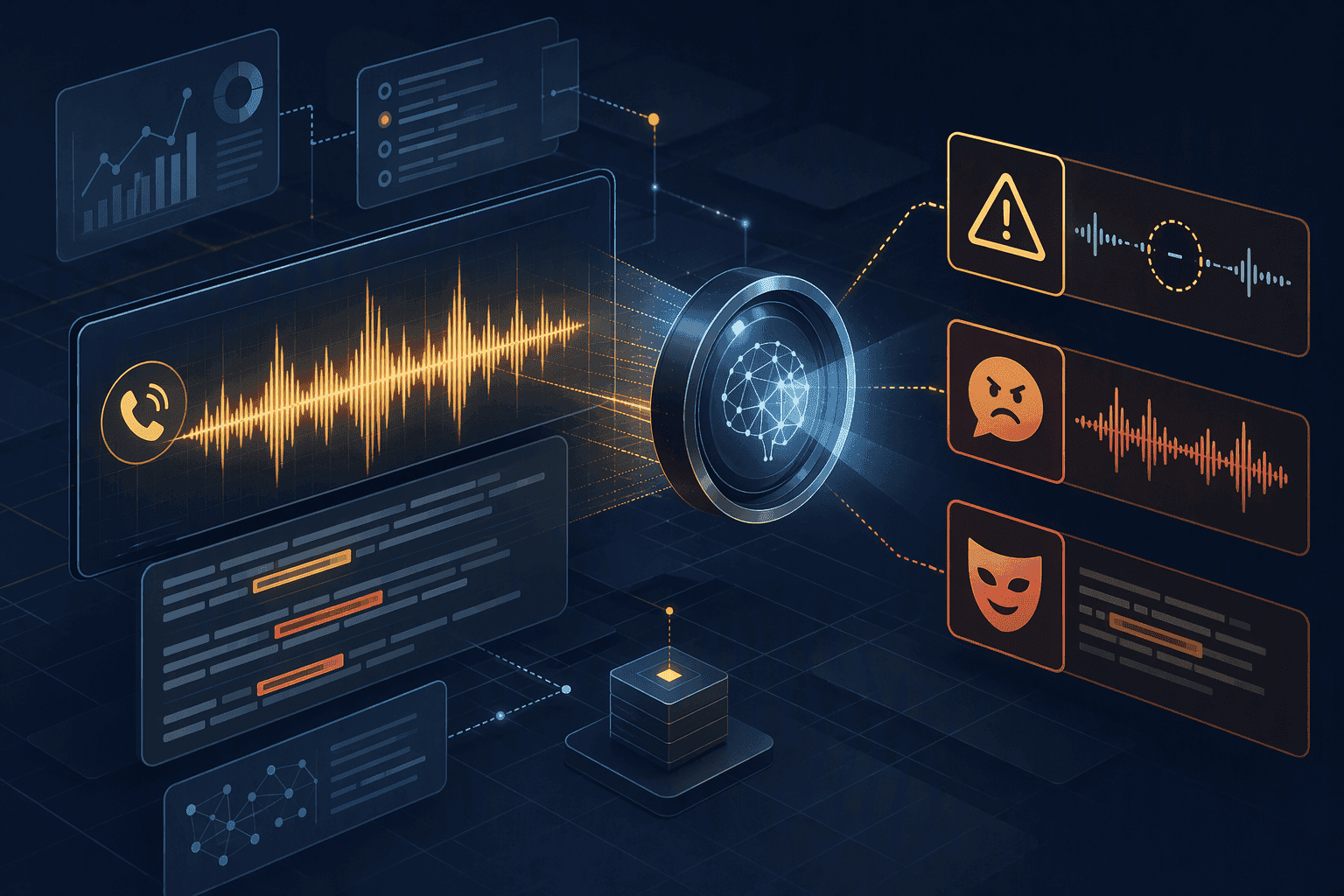
After the call ends, the compliance risk continues. CallMiner's conversation analytics engine mines recorded interactions for language patterns, emotional signals, and missing disclosures that a live supervisor would miss, flagging potential unfair, deceptive, or abusive acts before they become enforcement actions.
The platform surfaces specific conduct that creates UDAAP exposure: an agent omitting the Mini-Miranda disclosure, a tone that crosses from persuasive to threatening, or a representation about the debt that a consumer could perceive as misleading. Because the analytics run on 100% of interactions rather than a random sample, you catch the one problematic call that manual QA would statistically never review. A compliance officer can show examiners evidence of continuous oversight.
For servicers already committed to Reg F adherence, CallMiner adds a detection layer that catches what real-time script enforcement may miss. An agent can read the correct disclosure text in a rushed, dismissive tone that undercuts its meaning, and tone analytics flag that gap.
The tool turns every recorded interaction into a searchable compliance dataset, so you can answer an examiner's question about a specific disclosure's delivery across thousands of calls without manual listening. This closes the gap between believing you are compliant and proving it in structured, exam-ready form.
6. Neustar (a TransUnion Company): Real-Time Phone Number Intelligence for Compliance
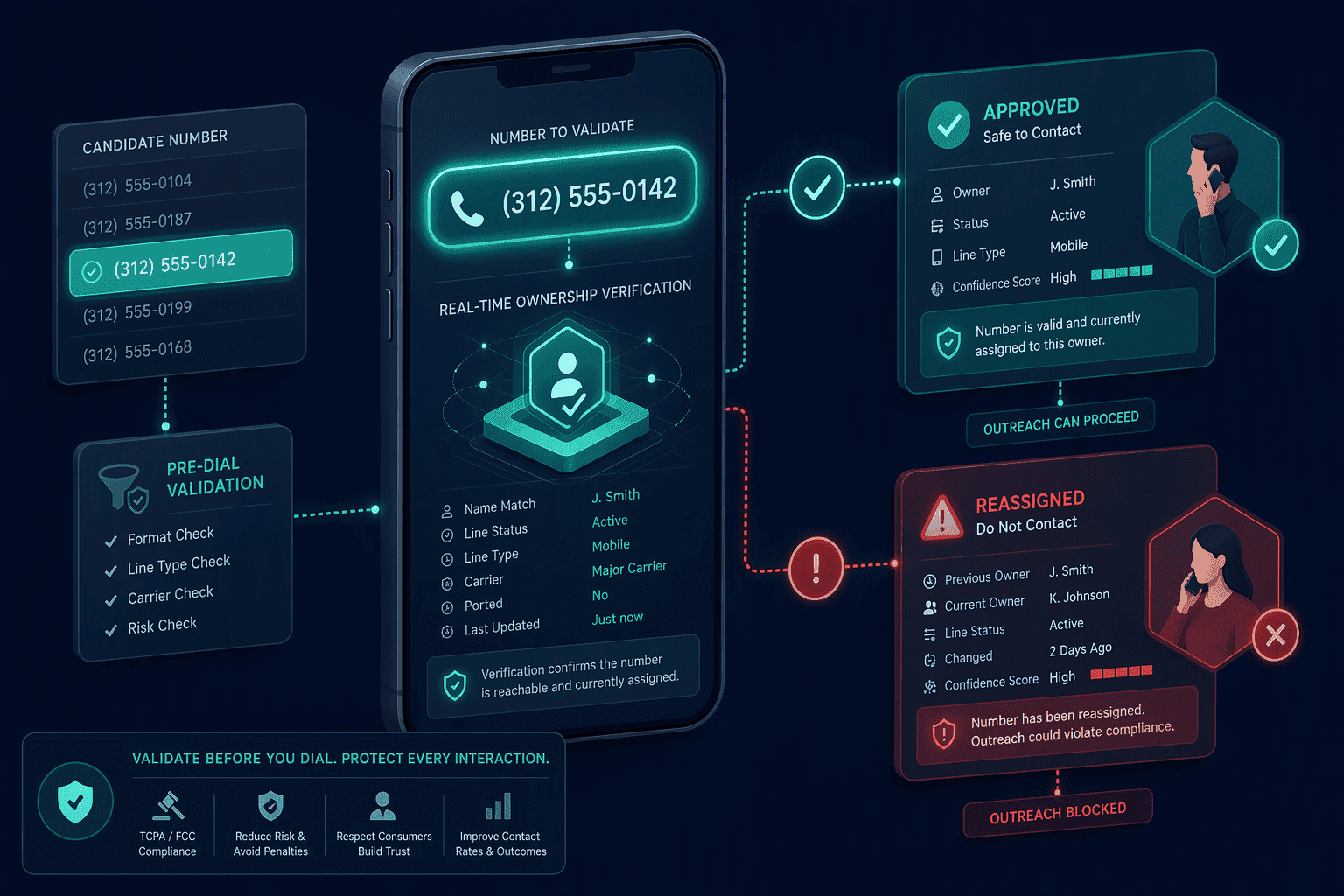
You cannot comply with a rule about calling the right party if you do not know whether the number you hold still belongs to the consumer you intend to reach. Neustar’s real-time phone intelligence services solve this by validating number ownership immediately before automated outreach begins, flagging reassigned numbers and data associated with third parties.
Regulation F prohibits contacting a consumer at a number the debt collector knows, or should know, reaches someone else. When a phone number changes hands and a servicer’s system has an outdated record, every subsequent automated call becomes a compliance exposure event, often unknowingly. Neustar’s continuous identity resolution checks close that gap before the dialer places the call, making data hygiene a compliance control built into the call workflow rather than a batch job that runs quarterly.
Integrating real-time validation into the pre-call workflow also strengthens the case a servicer makes during an examination. You can demonstrate a substantive, technology-enabled step to verify number ownership at the time of each contact attempt, rather than pointing to a data file last refreshed months prior.
The CFPB is clear that a valid dialer frequency cap enforced against an incorrect number still produces a prohibited contact. Number intelligence resolves that outer layer of the compliance stack before the cap even matters.
7. CFPB/Regulation F Self-Service Tools: A Canned Compliance Dashboard Template
You do not need to buy a dashboard. The CFPB publishes the regulatory source text, and every servicer who audits their own automation should translate that documentation into a living set of compliance metrics. Building a self-audit dashboard from Regulation F’s requirements reveals what your automation stack records and what it cannot prove.
The starting point is a set of metrics pulled directly from the regulatory framework. Track every call attempt per debt account on a rolling seven-day window, with an alert that fires at six attempts so the seventh is never reached. Monitor opt-out latency: the gap between when a consumer requests cessation across any channel and when the system stops all outreach across every channel. Build a consent validity timer that flags when a consumer’s positive consent ages beyond a configurable threshold, forcing a re-verification before the next digital communication goes out. The two that matter most are call-attempt counts and opt-out latency, miss either and you miss what examiners look for first.
Disclosure script compliance should run as a continuous metric, so you can tell an examiner what percentage of all interactions included each required disclosure.
If your current stack does not generate the raw data to populate these metrics, you have identified the compliance gap before the CFPB does. The exercise eliminates any distance between what you think your systems do and what an examiner can actually verify. For servicers evaluating third-party tools, this framework also serves as a vendor evaluation checklist. A platform that cannot produce a rolling 7-in-7 count per debt, or a real-time opt-out sync log, introduces an audit opacity that compliance tools are supposed to eliminate. The dashboard becomes the standard against which you measure every tool’s claim of regulatory integration.
Conclusion
No single platform closes every compliance gap in automated loan servicing communications.
The defensible stack layers a consent orchestration engine on top of dialer frequency controls, surrounds both with full-coverage conversation analytics, and rests the whole structure on real-time number intelligence that ensures you contact only the right party.
Documentation ties the layers together. In a CFPB examination, what you cannot prove you did never happened. Auditors ask for structured logs, consent records, and time-stamped call dispositions. A folder of call recordings is not enough. The difference between believing you are compliant and being able to demonstrate it in structured, exam-ready form is the entire point of the technology layer you deploy.
In 2026, the compliant path is auditable automation built from tools that treat regulation as a design specification. When compliance is designed into the system from the first wireframe rather than bolted on after deployment, the efficiency gains follow naturally. The platforms that deliver that principle are the ones regulators take seriously during an exam.
Frequently Asked Questions
What are the specific FDCPA and CFPB rules governing automated communications in loan servicing?
The FDCPA and Regulation F impose the following key restrictions on debt collectors:
FDCPA effective date: prohibits unfair, deceptive, or abusive practices since March 20, 1978.
7-in-7 rule: limits calls to no more than seven calls per seven days per debt.
Time-of-day restrictions: restricts call times to permissible hours.
Prior consent requirements: requires prior consent for contacting consumers via email or text.
Simple opt-out mechanism: mandates an easy way for consumers to stop electronic communications.
Workplace and third-party contacts: imposes strict limits on contacting consumers at work or through third parties.
Regulation F effective date: all amendments took effect on November 30, 2021.
Which software tools are purpose-built to ensure compliance with debt collection and servicing communication laws?
Purpose-built tools serve different compliance needs:
Domu: consent orchestration and audit trails
TCN: automated 7-in-7 call capping
Convoso: TCPA risk-scored consent management
CallMiner: UDAAP detection in recorded interactions
Neustar: real-time phone number validation to prevent wrong-party contacts
How do these tools handle the CFPB's Regulation F, including the limited-content message and call frequency provisions?
Dialer compliance engines like TCN’s enforce a rolling seven-call counter per debt and block attempts that would exceed it. Consent tools sync opt-in status across channels. A voicemail meeting the content description in 12 CFR 1006.2(j) qualifies as a limited-content message, which is an attempt to communicate, not a communication, and platforms must distinguish the two for accurate call counting.
What features should a loan servicer look for in an automated communication platform to mitigate UDAAP risk?
Look for enforced standardized scripts that lock required disclosures into every interaction, full-coverage conversation analytics that detect deceptive or threatening language, continuous disclosure compliance monitoring across 100% of interactions, and centralized audit logs that document agent conduct for examination review.
What are the penalties for non-compliance, and how do compliance tools reduce that exposure?
The provided sources do not specify FDCPA penalty amounts, but non-compliance creates enforcement action exposure, litigation risk, and reputational damage. Compliance tools reduce this by automating rule enforcement at scale, generating exam-ready audit trails, and preventing violations before they occur rather than flagging them after a contact has been made.
How do AI and automation technologies balance efficiency with the strict consent and opt-out requirements of the FDCPA?
Automation enforces consent as a prerequisite to communication, not an afterthought. Tools automatically respect opt-ins, quiet hours, and regional rules, sync opt-out requests across all channels in real time, and prevent a compliant consent on voice from being misapplied to SMS. The balance comes from making compliance the rate-limiting step that automation cannot bypass.
Sources
7 Best AI Platforms for Automating Loan Servicing Communications in 2026 — Domu - domu.ai
Alorica — Domu Customer Story - domu.ai
VII-3 Fair Debt Collection Practices Act | FDIC.gov - www.fdic.gov
Skit.ai | Collection Management Software - skit.ai
FDCPA - Interagency Consumer Laws & Regulations - files-prod.consumerfinance.gov
Related Articles



We’re building the next generation of engagement technology: intelligent, automated and compliant. Our mission is to empower financial institutions to orchestrate every stage of the servicing lifecycle with dignity and unprecedented efficiency.
Supported by

