

Your agents are dialing relentlessly, yet right-party contact rates keep slipping. The phone rings out, voicemails pile up unanswered
Introduction
Your agents are dialing relentlessly, yet right-party contact rates keep slipping. The phone rings out, voicemails pile up unanswered, and accounts drift further into delinquency without a conversation ever taking place.
You are running a playbook built for a borrower who no longer exists. A 2022 survey found 69% of U.S. consumers prefer digital methods like email or text for collections contact, yet 73% reported still receiving mostly letters and phone calls. Your team uses the channels borrowers ignore while ignoring the channels they monitor.
This mismatch costs more than agent burnout. When borrowers cannot engage on their terms, they disengage entirely. The path forward replaces rigid call scripts with data-driven contact strategies that respect both regulatory boundaries and human behavior. This article examines the practices that erode contact rates and the analytics that pinpoint the right borrower at the right moment.
Key Takeaways
The shift from agent persistence to intelligent timing is the single biggest lever for improving right-party contact rates. Here are the core findings that shape a modern contact strategy:
Channel preference gap: 69% of consumers prefer digital contact, but 73% still receive mostly calls and letters. This mismatch directly suppresses answer rates.
Contact-probability scoring works: Scoring accounts for likelihood of contact and verifying data before dialing replaces guesswork with precision, increasing both agent efficiency and borrower engagement.
Regulatory boundaries are non-negotiable: FDCPA restricts calls to 8 a.m. to 9 p.m. and prohibits harassment; TCPA requires prior consent for automated dialing. Violations carry substantial legal and reputational risk.
Multi-channel orchestration outperforms phone-only logic: Sequencing email, SMS, and voice based on borrower actions dramatically lifts resolution rates.
Measure what matters: The KPIs that separate activity from outcomes are right-party contact rate and first-contact resolution.
The Core Disconnect: Why Collections Outreach Timing Fails
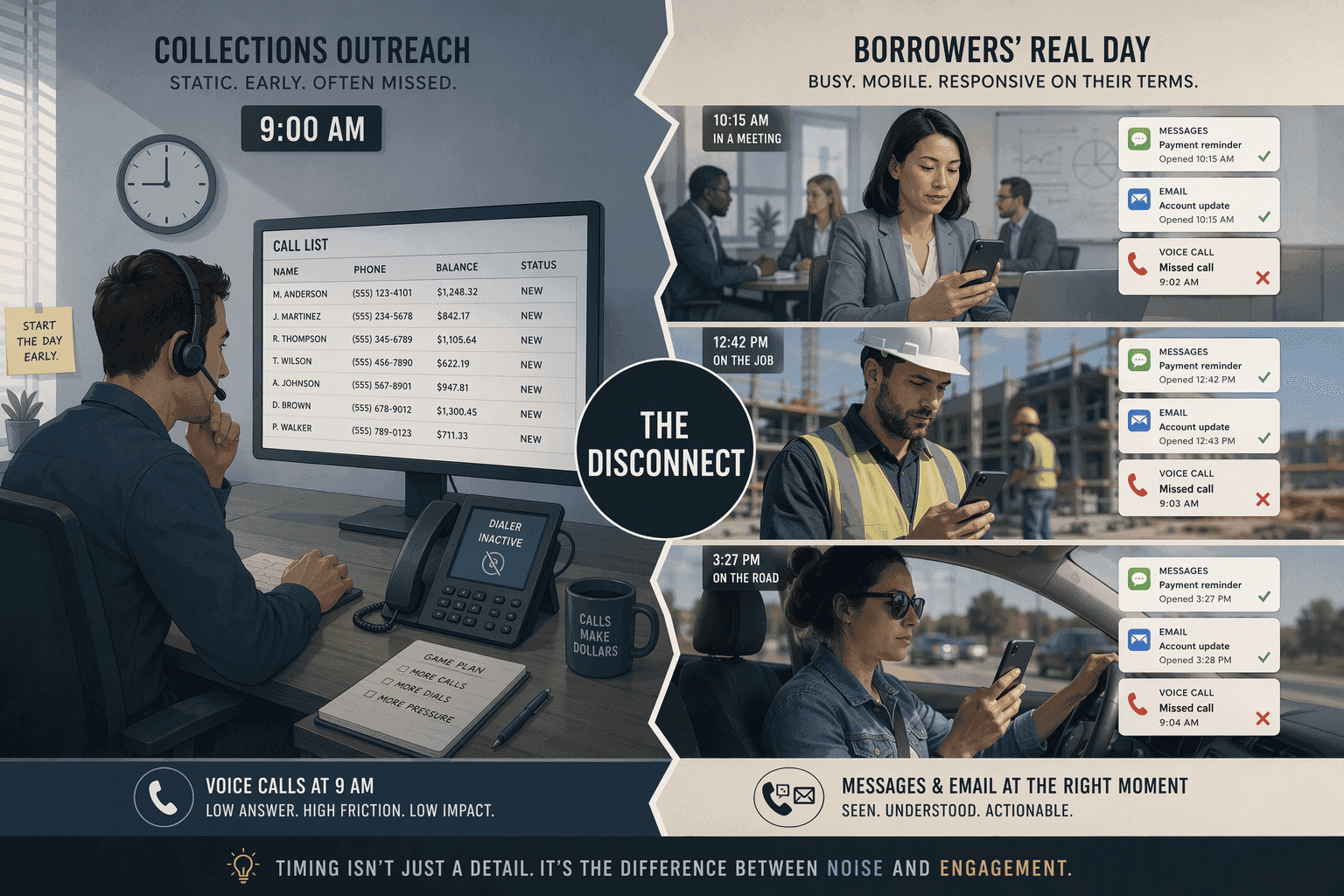
Most collections floors operate on a factory model: agents log in at 9 a.m., pull a static list, and start dialing. Borrowers, meanwhile, are working. They're in meetings, on job sites, or driving. By the time they're free to talk, your dialer is paused for the day and the opportunity is gone.
The mismatch runs deeper than business hours. It's also about channels. Borrowers live on their phones, but not for voice calls.
Text messages get opened in minutes. Emails get checked between tasks.
Yet most teams still run phone-only outreach because "that's how it's always been done." That loyalty to legacy infrastructure creates a silent feedback loop: agents call numbers that never answer, log the failure, and repeat the same sequence tomorrow while the underlying contact data grows staler.
The result is a right-party contact rate that erodes quarter after quarter without anyone understanding why. Borrowers tell survey firms they want digital communication. Lenders keep mailing letters. The Philadelphia Fed's research on consumer communication preferences reinforces that this disconnect is structural, not anecdotal.
Agents are not the problem. A broken feedback loop is.
Outdated Contact Strategies That Suppress Right-Party Contact Rates
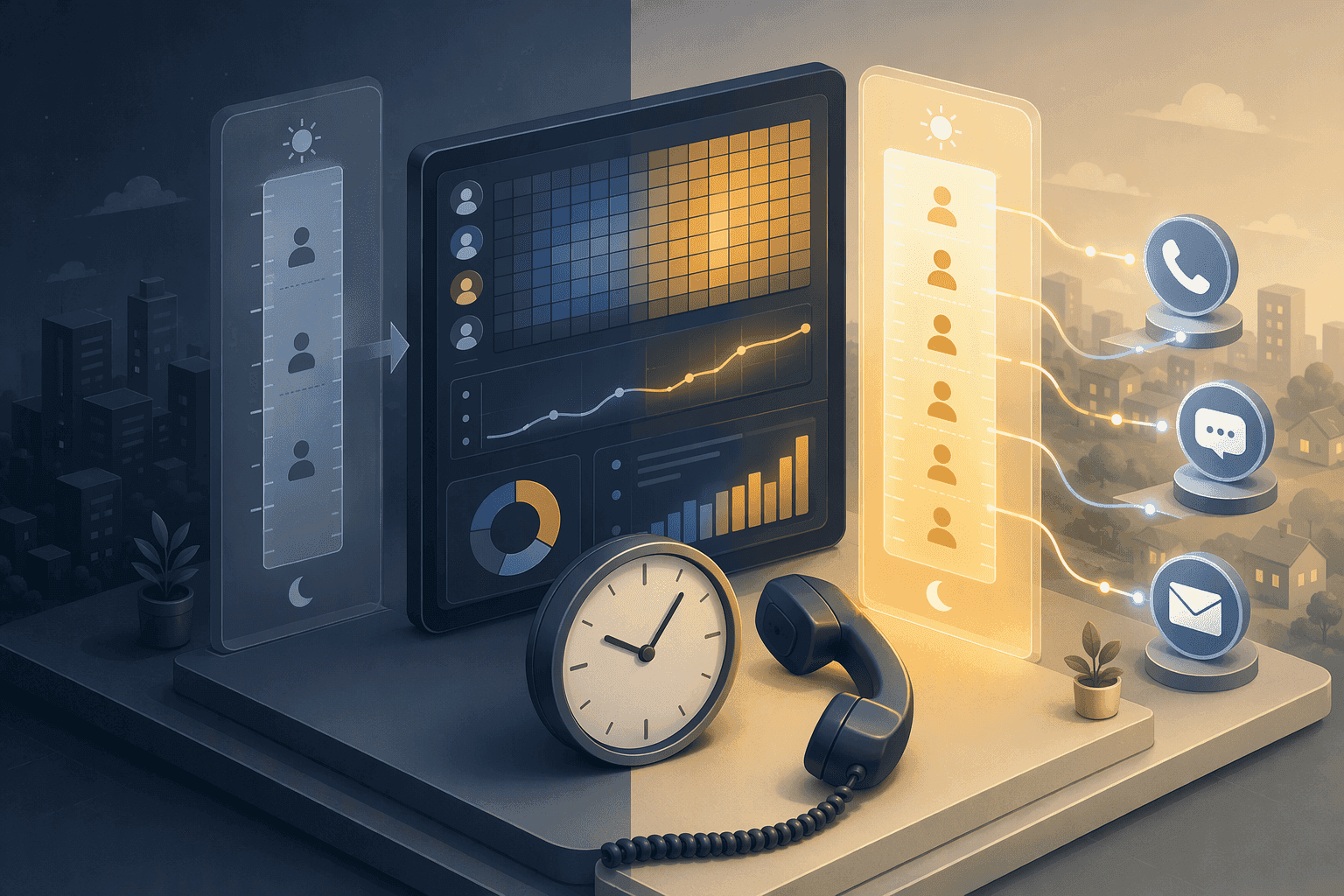
Several legacy practices silently depress contact rates even when your team is working at full capacity. The first is business-hours-only calling. Borrowers with day jobs can't answer at 10 a.m., yet dialer schedules rarely extend into the early evening when pickup rates climb. You're leaving contact attempts on the table during the very windows when borrowers are most reachable.
Phone-only dependency is the second drag. Hard data shows this clearly: 73% of consumers are still receiving mostly letters and phone calls even though they prefer other channels. That's a structural mismatch, not a marginal one.
The third practice is even harder to spot: stale or unverified contact data. Phone numbers change. Email addresses get abandoned.
When your team dials a disconnected number three times before flagging it, that's not three failed contact attempts. That's a process that treats data verification as an afterthought.
Industry observations from Debtlink and Riverty confirm that agencies relying on static data without regular verification cycles routinely see right-party contact rates stall in the mid-20s. The fix starts by recognizing that contact data degrades faster than most teams update it.
How Contact-Probability Scoring and Data Verification Pinpoint the Right Moment
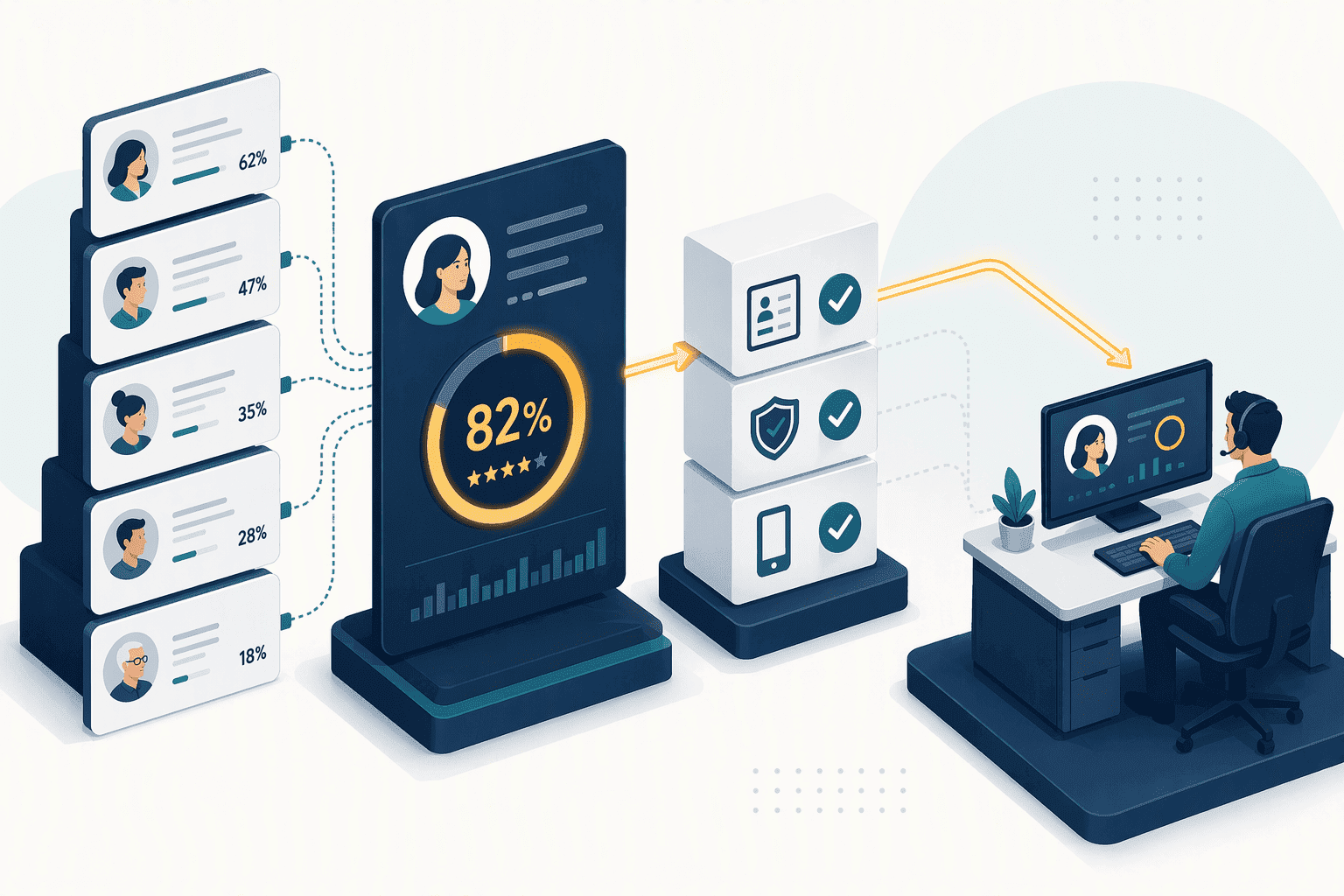
Contact-probability scoring assigns each account a likelihood-of-reach score based on historical answer patterns, time-of-day behavior, and channel responsiveness. Instead of working a list top-to-bottom, agents target the accounts most likely to pick up.
Data verification runs before the first dial. Phone ownership, email validity, and device activity signals confirm that the contact record is live. A disconnected line never reaches an agent's desk.
Southwest Recovery Services demonstrates the model in action. They score commercial accounts and sequence outreach by timing, channel, and balance size. High-probability accounts with verified decision-makers route directly to agents for immediate action. Lower-probability accounts follow a different path, automated voice and email sequences, so agent time concentrates where connection odds are highest. Tools like Domu embed this logic directly into the servicing workflow, letting teams automate the scoring and routing layers that would otherwise require a data science team to build and maintain.
The operational shift is real: you stop measuring dials per hour and start measuring connections per hour. That moves the entire floor from activity-based staffing to outcome-based scheduling, and the efficiency gain compounds as scoring models sharpen over time.
The Regulatory Guardrails Governing When and How You Can Reach Out
Contact timing is not just a performance question. It's a compliance question with sharp legal edges. The Fair Debt Collection Practices Act restricts calls to between 8 a.m. and 9 p.m. local time and explicitly prohibits harassment, including repeated or continuous calling with intent to annoy or abuse. The Telephone Consumer Protection Act layers on top: any automated call or text requires prior express consent from the consumer. You cannot simply fire a predictive dialer at a purchased list and hope for the best.
The consequences of getting this wrong are concrete, not theoretical. A HUD OIG audit found that Selene Finance did not communicate in a timely manner with delinquent borrowers for 7 of 14 loans reviewed and improperly made repeated collections calls to one borrower under bankruptcy protection. The audit attributed these failures to lapses in internal controls.
A single TCPA violation can trigger statutory damages of $500 to $1,500 per call. A campaign running thousands of calls daily multiplies that exposure fast. Because many card issuers have received compliance notices since 2012, regulators are watching contact practices closely, making any increase in call frequency that looks like harassment a fast track to enforcement action.
Multi-Channel Orchestration: A Logic That Adapts to Borrower Signals
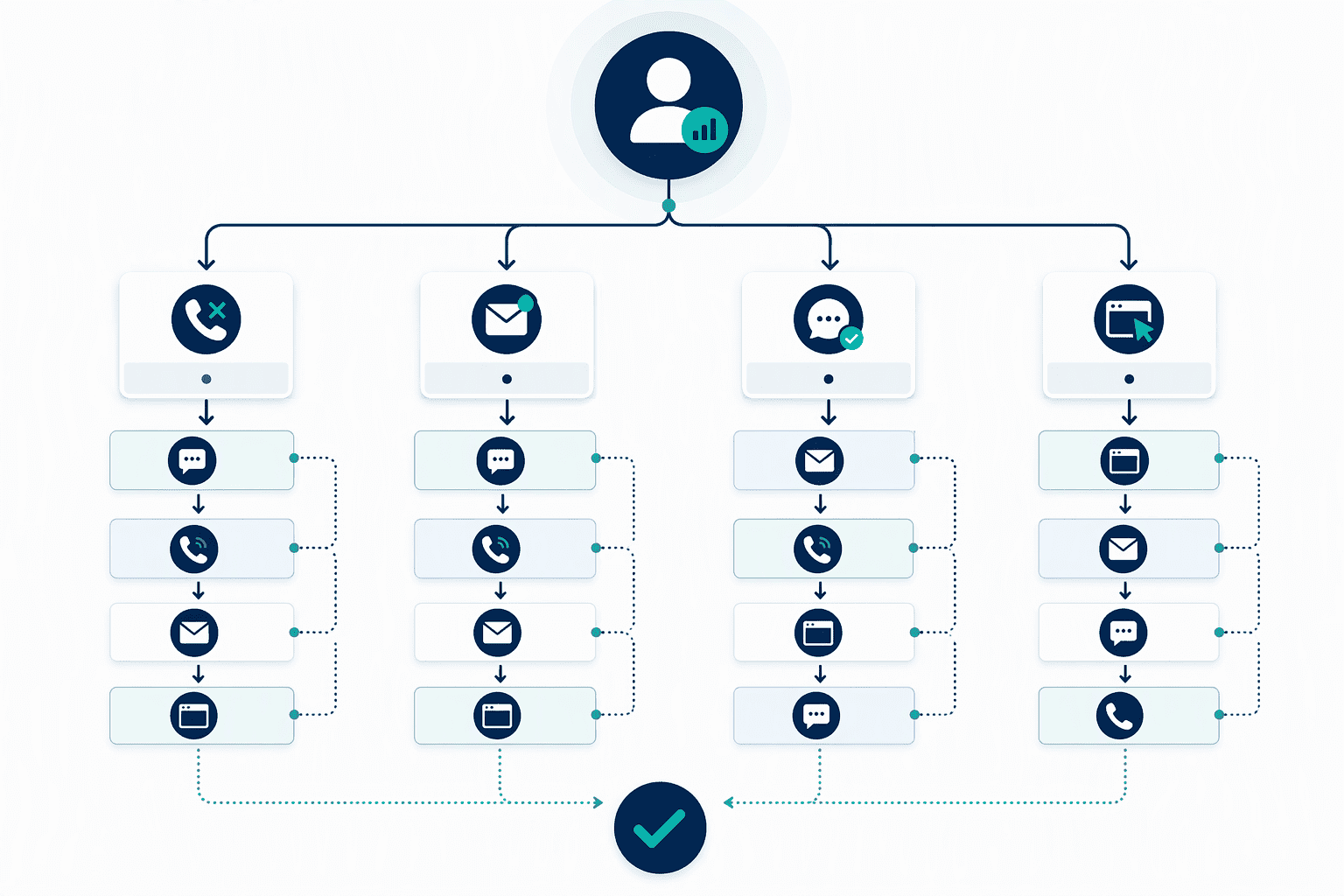
Static outreach plans treat every borrower identically. Orchestration logic treats each borrower as a behavioral signal stream. Here is how different channel strategies compare across the dimensions that drive contact success:
Dimension | Phone-Only Outreach | Multi-Channel Orchestration |
|---|---|---|
Channel selection | Voice only, regardless of borrower preference | Email, SMS, voice, and portal invitations sequenced by borrower action |
Timing logic | Fixed business-hour call blocks | Time-of-day optimization by channel and historical responsiveness |
Borrower experience | Repeated unanswered calls; no self-service option | Self-service portal access on borrower's own schedule |
Retention risk | 71% of dissatisfied past-due auto borrowers would switch lenders over poor treatment | Preference-matched outreach preserves relationship |
Payment likelihood lift | Baseline | Digital-first borrowers are 12% more likely to pay in early delinquency and 30% more likely in late delinquency when contacted through preferred channels |
Orchestration is not sending the same message everywhere at once. It is sending an email, monitoring for an open, following with an SMS if the email goes unread, and routing a voice call only when the borrower signals availability. Self-service portals fit naturally into this logic. Borrowers who resolve accounts on their own schedule report better experiences, and as the Equabli data shows, 71% of dissatisfied past-due auto borrowers said they would consider switching lenders over how they were treated during collections. The risk is not just a missed payment. It is a lost customer.
The Metrics That Prove Your Right-Time Contact Strategy Is Working

Right-party contact rate measures the percentage of outreach attempts that connect with the intended borrower. Wrong numbers, voicemails, and disconnected lines don't count. This is your primary signal that data quality and timing logic are functioning. If RPC rate is trending down, your contact data needs a refresh or your time-of-day targeting is off.
First-contact resolution tracks how many borrower issues close during the initial connection rather than requiring a callback chain. This metric exposes whether your agents are equipped to resolve on the spot or merely warm-transferring problems downstream. A low first-contact resolution rate often signals that routing logic is sending high-complexity borrowers to agents without the authority or tools to settle.
Channel preference match measures the percentage of borrowers contacted through their stated or behaviorally-inferred preferred channel. When this metric rises, payment likelihood trends with it. The McKinsey data confirms the pattern: digital-first customers who receive digital-first contacts pay more often and in larger amounts. That connection directly links channel matching to recovery outcomes.
Time-to-contact clocks the hours or days between a delinquency trigger and a successful right-party connection. Compress this window and you catch borrowers earlier in the distress curve, before competing obligations absorb their available funds. The OCC's guidance on mortgage servicing emphasizes that the early stages of delinquency are the most important. These four KPIs together replace "calls made" as the floor's performance language.
Conclusion
Your agents keep dialing numbers that nobody answers because the phone has been disconnected for six months.
The problem lives upstream, in a data infrastructure that never verifies contact details before a call gets placed. No amount of scripting, training, or incentive tweaking fixes that. What fixes it is a system that scores accounts for contact probability, confirms phone and email validity ahead of every attempt, sequences channels to match actual borrower behavior, and runs every interaction inside regulatory guardrails automatically.
That operating model is available now. It is not a three-year buildout.
Right-time contact is a systemic capability, not something you train agents to do better. Teams that treat it as infrastructure outperform teams that treat it as coaching. Every month spent operating the old way is a month someone else narrows the gap.
Frequently Asked Questions
What causes debt collectors to fail at contacting borrowers during optimal engagement windows?
Debt collectors fail primarily because they operate on rigid business-hour schedules and rely on stale contact data while borrowers engage on different channels and timelines. A 2022 survey shows 69% of borrowers prefer digital contact, yet 73% still receive phone calls and letters. That channel mismatch directly suppresses pickup rates during the windows when borrowers are most reachable.
Which outdated contact strategies commonly reduce right-party contact rates in collections?
Four legacy practices drive down RPC rates.
Business-hours-only calling misses evening availability windows.
Phone-only dependency ignores consumer preference for digital channels.
Stale and unverified contact records waste agent time on disconnected numbers.
Absence of self-service portal options prevents borrowers from resolving issues on their own schedule.
How do modern data and analytics tools determine the best time and channel to reach a delinquent borrower?
Contact-probability scoring assigns each account a likelihood-of-reach score based on historical answer patterns, time-of-day behavior, and channel responsiveness. Data verification confirms phone and email validity before the first dial. High-probability accounts route to agents; lower-probability accounts follow automated sequences. This replaces list-based dialing with outcome-based targeting.
What regulatory constraints in the US affect when and how collections agents can contact borrowers?
The FDCPA restricts calls to 8 a.m. to 9 p.m. local time and prohibits harassment, including repeated calling. The TCPA requires prior express consent for any autodialed call or text. Violations carry statutory damages of $500 to $1,500 per call. A HUD OIG audit of Selene Finance found compliance failures including repeated calls to a bankruptcy-protected borrower.
How does using multiple digital channels compare to traditional phone-only outreach for reaching borrowers?
Multi-channel orchestration sequences email, SMS, voice, and portal invitations based on borrower actions rather than a static list. Research shows digital-first customers are 12% more likely to pay when contacted through preferred digital channels in early delinquency and 30% more likely in late delinquency. Phone-only outreach also drives higher churn, 71% of dissatisfied borrowers would switch lenders over poor treatment.
What metrics should US collections teams track to measure and improve right-time contact performance?
Four KPIs matter most.
Right-party contact rate: Actual borrower connections per attempt.
First-contact resolution: Issues closed on the first connection.
Channel preference match: Borrowers reached through their preferred channel.
Time-to-contact: Hours from delinquency trigger to successful connection.
Sources
Do Recent Auto Loan Delinquency Rates Overstate Borrower Distress? - www.philadelphiafed.org
Comptroller Dugan Unveils Public Service Announcements Encouraging Delinquent Borrowers to Contact Lenders for Help to Avoid Foreclosure | OCC - www.occ.treas.gov
5 Hidden Reasons Your Right Party Contact (RPC) Is So Low in Collections - www.debtlink.com
Mastering Debt Recovery: Key performance indicators that drive success | Riverty - www.riverty.com
White House Press Release - CFPB Finds One-Third Decline in Collections Items on Consumer Credit Reports | The American Presidency Project - www.presidency.ucsb.edu
What Auto Borrowers Want From Collections — Equabli - www.equabli.com
Related Articles



We’re building the next generation of engagement technology: intelligent, automated and compliant. Our mission is to empower financial institutions to orchestrate every stage of the servicing lifecycle with dignity and unprecedented efficiency.
Supported by

