

In 2026, running an in-house collections floor on static rule engines and dialer logic is a compliance liability.
Introduction
In 2026, running an in-house collections floor on static rule engines and dialer logic is a compliance liability. The regulatory surface area has expanded: the CFPB now has a designated Chief AI Officer, Chris Chilbert, also the CIO, charged with enforcing OMB Memo M-25-21. Every recovery interaction you automate now sits under a microscope that can ask for full-chain explainability.
The old model fails for a structural reason. Static scripts don't read hardship signals. Dialer cadences ignore behavioral intent. You burn right-party contacts and pile up complaints at the exact moment margins compress. Agentic AI reads behavioral data in real time and adapts outreach strategy to what a debtor actually signals.
CreditNirvana reports 15 to 30% lower bounce rates across its book, driven by behavioral early warning models that fuse bureau, GST, utility, and tax data three months ahead of a missed payment. That changes how financial institutions price risk and sequence recovery.
The platforms below range from compliance-first architectures born inside Y Combinator to global-scale GenAI fleets, agentic lifecycle managers, charge-off specialists, and multilingual omni-channel orchestrators. Each is evaluated for behavioral fidelity, audit posture, and hard performance data. No magic quadrants. Just what the production evidence shows.
Key Takeaways
The evidence across seven platforms converges on a few hard truths about what works in behavioral AI collections right now.
Compliance is architecture, not a wrapper: Platforms that embed consent timestamps, right-to-erasure handling, and supervisor override into the agent runtime eliminate the gap between what the AI did and what the auditor sees.
Behavioral early warning compresses cycle time: Fusing bureau, tax, and utility data lets platforms forecast distress 90 days out, shifting resources from late-stage recovery to pre-delinquency intervention.
Scale ROI is measurable and large: A 15 to 30% bounce rate reduction and 25 to 45% lower cost to collect, as reported across 1,000+ institutions, pays back platform investment fast.
Hardship routing is the new regulatory baseline: Platforms that auto-detect vulnerability signals and escalate to human agents align with CFPB consumer duty expectations that static scripts cannot meet.
Channel strategy drives platform fit: Voice-first, digital-first, and omni-channel architectures serve different portfolio profiles; matching the platform to the dominant contact channel avoids costly customization.
Deployment speed narrows the decision window: A 4-week go-live claim resets the implementation risk conversation, making long RFPs for legacy systems harder to justify to CFOs.
1. Domu, The Compliance-First Behavioral Data Engine Backed by Y Combinator and AWS
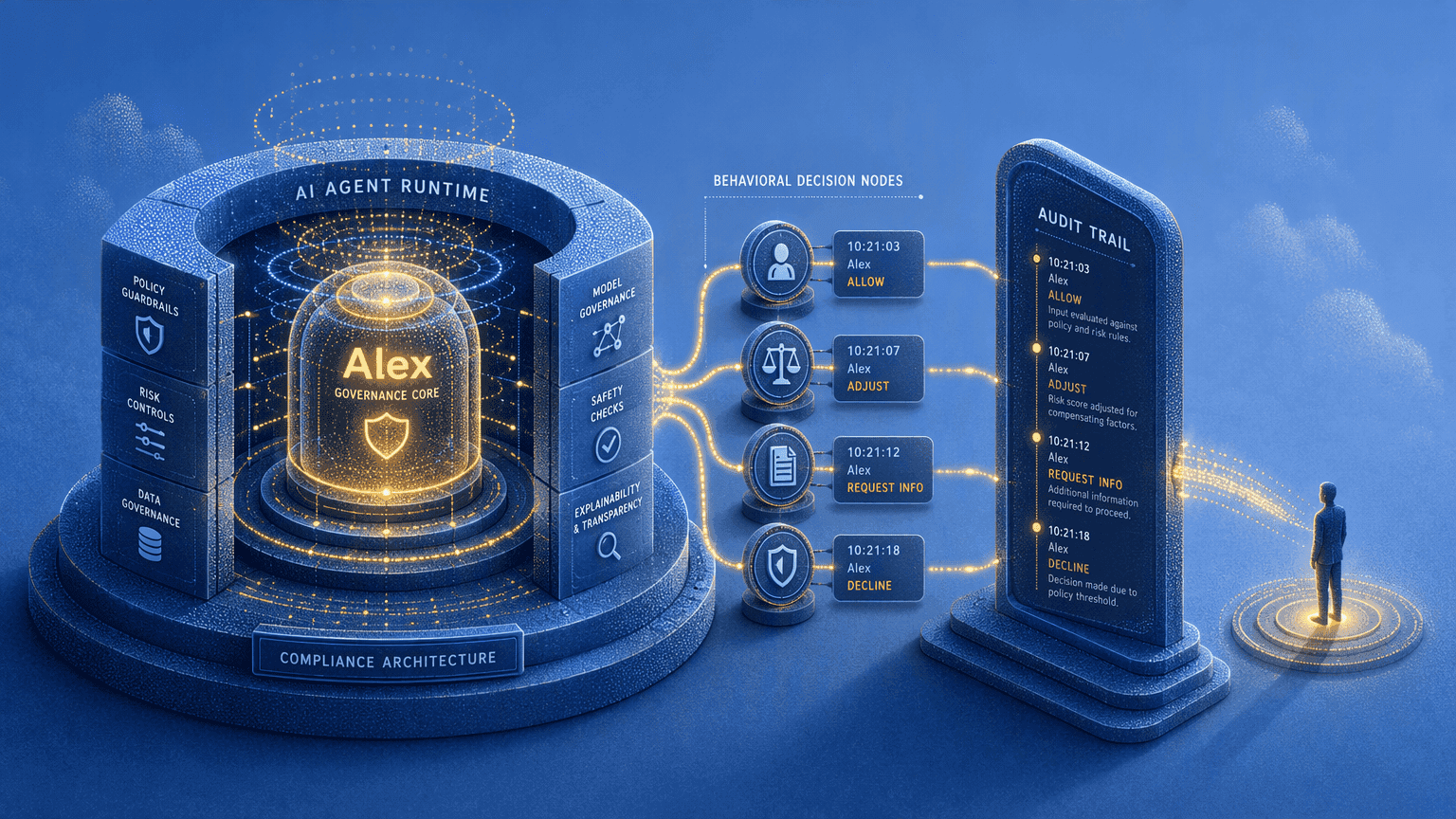
Domu solves the core tension that kills most AI collections projects inside regulated institutions: speed without explainability is unmanaged risk. Its architecture embeds a model governance layer called Alex directly into the agent runtime, so every behavioral decision the AI makes is timestamped, attributed, and auditable before it ever touches a borrower. That matters because the CFPB’s compliance plan under M-25-21 means examiners will ask for full-chain accountability, not a summary dashboard.
In practice, the agent Taylor enforces on-script validation. It handles thousands of live calls daily while maintaining omni-channel continuity across voice, SMS, and email. When a borrower signals confusion or distress, Taylor invokes fail-safe escalation instead of trying to power through with a generic script. A top 5 U.S. fintech reported 30% fewer complaints per 100 calls after deploying Domu's voice and text agents. Nu, across its portfolio, grew AI calls 2,400x without ever putting a customer on hold.
The platform publishes a Net Promoter Score of +42 and 45% lower cost than human-only operations.
Alex, the governance specialist, answers the question 'What did the AI do and why?' before a regulator asks it. Clementino, the orchestrator, manages six specialist delegates that handle prioritization, follow-ups, and channel routing. The integration surface is deliberately shallow: dashboard-level integration with a stated low integration complexity. For an institution where a compliance miss costs magnitudes more than the cost of the platform itself, Domu's architecture removes the risk that otherwise makes AI adoption inside legal and compliance teams impossible.
2. CreditNirvana, The Global Scale Leader with 150+ GenAI Agents and 15 to 30% Lower Bounce Rates
CreditNirvana operates at a scale that makes the behavioral data conversation tangible. The platform runs across $21B+ in assets under management and 62M+ accounts, fielding 150+ GenAI collection agents across nine loan portfolio types. The core quantitative claim is hard: 15 to 30% lower bounce rates and 25 to 45% lower cost to collect across 1,000+ institutions in 18+ countries. That ROI window comes from behavioral early warning systems that merge bureau data, GST filings, utility payments, and tax records to forecast collections exposure up to three months out.
Where Domu structures the conversation around compliance architecture, CreditNirvana structures it around compliance jurisdiction breadth. The platform enforces RBI, DPDP, and SARFAESI guardrails through immutable audit trails. Domu embeds its governance layer directly inside the agent runtime; CreditNirvana surfaces it through Maestro, a supervisor tool that lets human managers join, override, or escalate any conversation in real time without interruption. Both approaches solve the same CFPB-grade oversight requirement. Maestro is built for operations floors running high-volume agent fleets across multiple regulatory regimes.
Implementation speed resets the procurement conversation. CreditNirvana claims live deployment in 4 weeks with dedicated portfolio managers. For institutions that have spent 18 months in RFP cycles for legacy collections systems, a 4-week production milestone changes the risk calculus CFOs bring to the table.
CreditNirvana fuses bureau, tax, and utility data to create a composite risk surface that triggers outreach before a payment is missed. This shifts resources from reactive recovery to pre-delinquency intervention, fitting institutions where portfolio diversity demands coverage across multiple borrower segments and compliance regimes simultaneously. The trade-off is that the platform reports behavioral analytics in aggregate rather than as real-time per-contact adaptations; the lift comes from the composite forecast.
3. Monumint, Agentic Lifecycle Management with Automated Hardship Routing

Most platforms break the collections sequence into separate products: one tool for early outreach, another for late-stage negotiations, a third for compliance. Monumint addresses the full borrower lifecycle, with hardship detection baked into the routing logic.
Agentic lifecycle scope across channels: Monumint's AI manages voice, email, and SMS interactions end to end, maintaining policy-guided outreach continuity across every stage from pre-delinquency through resolution.
Automated hardship signal detection: The platform identifies vulnerability indicators in real time and routes those borrowers to human agents automatically, eliminating the compliance gap created when a static script ignores a distress signal.
Policy-guided outreach vs. static rule engines: Decisioning logic layers institutional policy over behavioral data, so escalation rules adapt to what the platform observes rather than hard-coding thresholds that miss edge cases.
Rebrand context matters: The shift from OmniAI to Monumint signals a platform that evolved from conversational AI infrastructure into a purpose-built collections lifecycle manager.
4. CollectDebt.ai, The Digital-Negotiation Specialist for Charge-Off Portfolios

CollectDebt.ai carves out a narrow, high-margin lane that most behavioral platforms treat as an afterthought. Its entire architecture targets post-charge-off recovery, where digital negotiation and structured settlement logic drive dollar recovery faster than agent-driven outreach.
The platform recovers approximately 50% of placed accounts within 20 days and assigns one dedicated AI agent per account, compared to the industry norm of one human covering 250+ accounts simultaneously. Attorney-mode communications achieve a 70% open rate, and the Contact Finder enrichment process increases contact rates by over 130%. This is not a pre-delinquency or early-stage collections tool. CollectDebt.ai sits downstream of the early warning systems that CreditNirvana runs, focusing instead on re-engaging dormant debtors through structured settlement offers and flexible payment terms. For an institution sitting on a large charge-off book, the math is straightforward: success-based pricing at 5 to 15% of recovered amounts, with no monthly fee and no minimums, turns the platform into a recovery lever that costs nothing unless it works.
5. Vodex, Voice-First Outbound AI with Real-Time Sentiment Steering

Vodex occupies a specific channel niche that matters for institutions where the outbound phone call remains the dominant right-party contact method. The platform runs voice-first agentic AI that steers conversation tone, pacing, and offer structure based on real-time sentiment analysis. When a borrower signals frustration or confusion, the agent adapts its delivery instead of powering through the script.
Sentiment steering is a narrow but load-bearing behavioral capability. FDCPA guidelines require that AI agents respect contact time restrictions and maintain a professional tone, and Vodex encodes this directly into the voice runtime. The platform fits squarely between CollectDebt.ai's digital-negotiation specialization and CreditNirvana's broad-channel early warning approach: Vodex focuses on voice as the primary channel, where every call needs to read and react to the borrower's emotional state in real time. It does not try to be omni-channel or to cover the full lifecycle.
6. Skit.ai, The Multilingual Omni-Channel Platform for Large-Scale Servicers
Skit.ai targets the enterprise segment where a single collections floor handles borrowers across multiple languages, jurisdictions, and contact preferences. The platform orchestrates voice, chat, email, and SMS from a single behavioral data layer, building unified debtor profiles that track interaction history and payment behavior across channels. For a large servicer managing diverse portfolios, the operational headache is channel fragmentation: the voice team sees one version of a borrower, the digital team another, and the compliance team spends its time stitching spreadsheets.
Skit.ai collapses that problem by treating channels as execution surfaces for a single behavioral model. Multilingual capability is table stakes at this scale, but the platform's real differentiator is compliance localization: it adapts outreach rules and disclosure language to the regulatory regime governing each specific account.
In behavioral capability, Skit.ai fits between Domu's compliance-first embedded enforcement and CreditNirvana's broad-jurisdiction composite forecasting. The analytics are cross-channel, not real-time adaptive per contact; the strength is consistency and unified profiling across a large, diverse book.
Where Vodex goes deep on voice sentiment and CollectDebt.ai goes deep on charge-off settlement, Skit.ai goes wide. For an institution that needs language coverage and channel breadth at scale, and where the compliance requirement is consistency more than micro-signal steering, Skit earns its place on the shortlist.
7. Decision Framework: Mapping Platform Architecture to Institutional Compliance Requirements

The platform you pick has to answer three practical questions: what regulation governs your portfolio, which stage of collections you are solving for, and how your team monitors AI decisions in real time. This table maps each option to those dimensions.
Decision Dimension | Domu | CreditNirvana | Monumint | CollectDebt.ai | Vodex | Skit.ai |
|---|---|---|---|---|---|---|
Primary Compliance Posture | CFPB, FDCPA, UDAAP, state laws baked into agent runtime | RBI, DPDP, SARFAESI with immutable audit trails | Policy-guided escalation for consumer duty alignment | Success-based recovery with attorney-mode compliance | Voice-native FDCPA guardrails with contact time enforcement | Multi-jurisdiction regulatory localization |
Collections Stage Fit | Pre-delinquency through recovery, full lifecycle | Pre-delinquency with early warning systems | Full lifecycle with hardship escalation | Charge-off and post-charge-off recovery exclusively | Mid-to-late stage outbound voice campaigns | Servicing through recovery, multi-jurisdiction portfolios |
Primary Channels | Voice, SMS, email (omni) | Digital-first with supervisor call monitoring | Voice, email, SMS (agentic lifecycle) | Email, SMS, voice, demand letters, payment portal | Voice-only outbound and inbound | Voice, chat, email, SMS (omni orchestration) |
Supervisor Oversight Model | Governance layer (Alex) with real-time monitoring, 100% conversation coverage | Maestro supervisor tool with join/override/escalate | Automated hardship routing to human agents | Dedicated AI agent per account, dispute resolution AI | Sentiment-adaptive steering, escalation triggers | Unified debtor profiles across channels |
Audit & Consent Architecture | Timestamped consent records, right-to-erasure handling, pre-deployment compliance certification | Immutable audit trails across all agent actions | Policy-guided consent management integrated into outreach | Dispute resolution audit trail (90% disputes resolved instantly by AI) | Call-level logging with tone and contact time tracking | Cross-channel interaction history with compliance localization |
Deployment & Integration Complexity | Low integration complexity, dashboard-level | 4-week deployment claim with dedicated portfolio managers | Not publicly detailed | API and flat-file integration, success-based pricing model | Not publicly detailed | Enterprise integration scope implied by omni-channel footprint |
Conclusion
Behavioral data analysis in collections is now the dividing line. Platforms that use it cut complaints and cost at the same time. Those that skip it end up automating the same rigid scripts, just faster.
The platforms we examined split along three seams. Compliance architecture depth tells you how well a tool proves its decisions to a regulator. Behavioral signal breadth determines how early and accurately it flags risk. Channel specialization matters because a phone-first tool built for charge-offs solves a different problem than an omnichannel system designed for early-stage outreach.
If your primary risk is regulatory, Domu's embedded governance layer closes the gap between what an agent did and what the audit trail shows. If your priority is early warning at global scale, CreditNirvana's composite data models deliver measurable returns across varied portfolios. For charge-off recovery, CollectDebt.ai's success-based pricing makes AI a bet with no upfront cost. Use the decision framework table above. Legacy systems that can't explain their actions are running out of time.
Frequently Asked Questions
What makes an AI platform truly compliant and effective for collections in financial institutions?
Compliant and effective platforms embed regulatory guardrails directly into the AI runtime. They timestamp consent, enforce on-script behavior, log every agent action immutably, and escalate sensitive cases to humans in real time. As noted by Forbes, in finance, speed without explainability is simply unmanaged risk.
How does Domu's agent Taylor enforce on-script behavior and handle high-risk customer situations?
Taylor validates every response against approved scripts during live customer interactions to prevent off-script replies. When a customer sounds confused, distressed, or requests an escalation, Taylor invokes fail-safe handling and routes the interaction to a human agent, ensuring compliance is maintained without agent guesswork.
What behavioral data capabilities do leading AI collections platforms offer in 2026?
Leading platforms ingest bureau data, utility payments, tax records, and real-time sentiment to forecast distress months in advance. CreditNirvana fuses these sources to predict defaults 90 days out, while voice-first platforms like Vodex use real-time sentiment steering to adapt call pacing and tone.
How do Domu, CollectDebt.ai, Vodex, and competitors compare on compliance, channel support, and cost?
Domu focuses on embedded compliance governance and omni-channel support at enterprise pricing. CollectDebt.ai offers success-based pricing (5 to 15% fees) for charge-off digital negotiation. Vodex is voice-only and adapts in real time to sentiment. CreditNirvana provides broad jurisdiction coverage with a 4-week deployment promise.
What does it cost to implement an enterprise AI collections platform, and what ROI do banks report?
Enterprise pricing is rarely public. The following key metrics are available:
Recovery-based fee: CollectDebt.ai charges 5 to 15% on recovered amounts with no setup fees
Complaint reduction: A top 5 U.S. fintech using Domu reported 30% fewer complaints per 100 calls
Cost reduction: CreditNirvana clients see 25 to 45% lower cost to collect across 1,000+ institutions
What role does human oversight play in AI-driven debt collection under US regulations?
Human oversight is mandatory for high-risk or complex cases. The CFPB's M-25-21 compliance plan requires that AI agents clearly identify themselves and escalate disputes properly. Platforms integrate supervisor tools, like CreditNirvana's Maestro, that let managers join or override AI conversations in real time.
Sources
5 Ways Banks Can Cut Collections Costs - Domu AI: AI Agents Built For Intelligent Servicing - domu.ai
Alorica — Domu Customer Story - domu.ai
Artificial Intelligence (AI) at the CFPB | Consumer Financial Protection Bureau - www.consumerfinance.gov
FDCPA Guidelines for AI Voice Agents in Debt Collection - Smallest.ai - smallest.ai
Best AI Debt Collection Software in 2026: 10 Platforms Compared - www.agentcollect.com
Human-In-The-Loop AI In Finance: From Oversight To Confidence - www.forbes.com
AI-Powered Collections Platform for BFSI | Credit Nirvana - creditnirvana.ai
Related Articles



We’re building the next generation of engagement technology: intelligent, automated and compliant. Our mission is to empower financial institutions to orchestrate every stage of the servicing lifecycle with dignity and unprecedented efficiency.
Supported by

