

A mortgage servicer threatens to accelerate a loan that, under federal law, cannot be accelerated until it is 120 days due.
Introduction
A mortgage servicer threatens to accelerate a loan that, under federal law, cannot be accelerated until it is 120 days due. The borrower lawyers up. A class action fires up.
This is the 2025 reality of *Milam v. Selene Finance*, where a single misstep triggered an appeal filed on April 24, 2025, with oral arguments scheduled for October 27, 2025. The court reversed and remanded, finding the complaint didn't resolve whether the defendant was an assignee. The cost of human error in collections is now measured in litigation risk, not just recovery rates.
Meanwhile, your borrowers aren't picking up the phone on your schedule. They flip between SMS, email, and calls, expecting you to remember the conversation across every touchpoint. When you drop context, you multiply compliance exposure. An agent who doesn't know the borrower just disputed the debt 30 minutes ago via email might push for a payment over the phone and walk straight into an FDCPA violation.
The platforms below rebuild the communication layer so that voice, SMS, and email operate as one continuous state machine. They classify each account by ability and willingness to pay before making a move. They hard-code Mini-Miranda disclosures and time-of-day restrictions directly into the conversation flow, not into a training manual nobody reads. A unified architecture generates a single, gapless audit trail that answers the regulator before the regulator asks.
Key Takeaways
The platforms surveyed here shift collections from siloed channels to a unified orchestration layer where compliance is native, context is continuous, and every interaction is auditable.
Unified orchestration beats multi-channel presence: A single conversation state machine across voice, SMS, and email eliminates context loss and borrower friction. When a consumer disputes a debt by text, the voice agent knows before it dials.
Compliance is architecture, not training: Leading platforms hard-wire FDCPA guardrails like Mini-Miranda disclosures, time-of-day windows, and dispute escalation triggers directly into the AI agent, addressing the liability exposed by the *Milam v. Selene Finance* ruling.
Account classification drives recovery intensity: Platforms automatically segment accounts by ability and willingness to pay before taking action, tailoring outreach from gentle reminders to structured negotiation and avoiding the expensive mistake of treating every borrower the same.
The results are already in production: Callbook AI reports managing over 2 million borrowers across more than 23 million interactions and recovering in excess of $11 million, proving the model at institutional scale.
Vertical specialization matters: The same core orchestration technology applies differently in banking, healthcare, and digital-first lending. Compliance regimes, tone, and negotiation logic are tuned to each sector's regulatory and consumer realities.
1. Domu: The Single Orchestration Layer for Voice, SMS, and Email Collections

Being present on three channels is not the same thing as coordinating them. Most platforms give you a voice dialer, an SMS gateway, and an email tool that each run on their own rails. Domu collapses those into a single conversation state machine.
A borrower gets a payment link by SMS. When they call the number, the AI agent already knows the link was sent, whether it was opened, and the outstanding balance. Nobody repeats themselves.
The core mechanism is a central orchestration layer. It delegates each interaction to the right agent while holding full conversation context across channels. For voice, the AI agent Taylor handles live calls with on-script validation and fail-safe escalation to a human team when a conversation veers into disputes or hardship.
Voice, SMS, and email all feed the same decision engine. That engine classifies each account by ability and willingness to pay, then determines the next best action: a settlement offer, a payment reminder, or an immediate warm handoff. A large fintech lender scaled AI-powered calls by 2,400x on the platform without ever putting a customer on hold.
Compliance is not a post-processing check. Domu's model governance layer ensures the system runs from a single, auditable script. The company states it is CFPB compliant, and the platform's guardrails are designed to prevent off-script responses in live interactions.
The *Milam v. Selene Finance* precedent tells every lender that litigation risk lives in the gaps between what agents say across channels. A unified platform with a single audit trail doesn't close those gaps. It proves they don't exist.
2. Callbook AI: High-Volume Recovery for Financial Institutions
Callbook AI operates at a scale that makes the business case self-evident: the Y Combinator-backed platform manages over 2 million borrowers, has driven more than 23 million interactions, and reports recovering north of $11 million for financial institutions. It is built for high-volume right-party contact, using multichannel communication that treats calls, SMS, and email as one continuous conversation. Context travels. Before any outreach fires, Callbook AI classifies every account by ability and willingness to pay, then adjusts intensity to match the profile. A borrower signaling genuine hardship gets a different cadence than one who is avoiding contact, which protects both recovery rates and regulatory posture.
Volume is the proof point. When a platform is steering 23 million interactions, the edge cases that produce FDCPA violations surface fast, and the compliance layer either holds or it doesn't.
3. Smallest.ai: Real-Time Compliance and Human-in-the-Loop Escalation
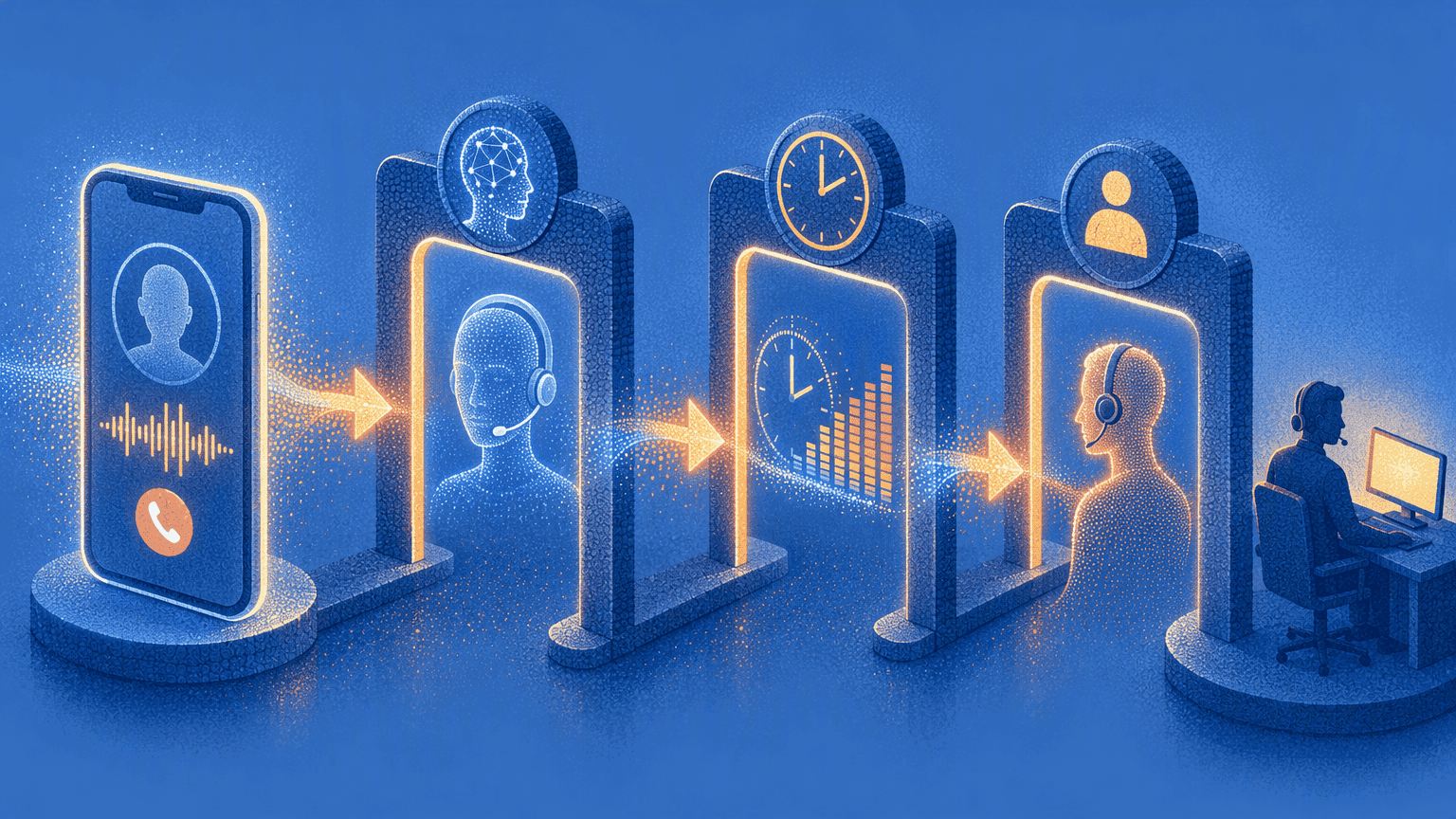
Smallest.ai treats the FDCPA as a real-time operational constraint by forcing three compliance anchors into every interaction:
Transparent AI identification: Borrowers must know they are speaking with an AI agent, and the caller's role and purpose must be identified transparently before the conversation begins, per FDCPA guidelines.
Time and frequency enforcement: The system enforces time-of-day restrictions and contact frequency limits so that AI agents schedule calls only within legally permitted time windows and the number of contacts stays under the statutory ceiling.
Dispute escalation: Borrowers have the right to question or dispute a debt, and the platform's escalation logic triggers an instant transfer to human teams when a borrower pushes back, cites hardship, or invokes a cease-and-desist.
This architecture is a direct answer to the liability landscape. *Milam* showed that missteps such as false acceleration threats can sustain class-action claims. A platform that hard-codes permissible language, automatically escalates disputes, and logs every agent action turn-by-turn turns compliance from a litigation defense into a configured feature.
4. Skit.ai: Multilingual AI Agents for the Accounts Receivable Lifecycle

Skit.ai runs the entire accounts receivable lifecycle using AI voice agents that handle every phase. The result is a single consistent voice across every stage:
Early-stage reminders keep borrower relationships intact and reduce roll rates into delinquency.
Mid-cycle nudges maintain contact without provoking friction.
Late-stage negotiation adapts to escalating risk.
Post-charge-off recovery recovers value after traditional collection windows close.
Language is the practical multiplier. The platform deploys multilingual voice agents that conduct collection conversations in the borrower's language. In the US, populations with limited English proficiency cluster in the credit segments that most need flexible collections terms. A monolingual AI caps what you can recover from those portfolios. Skit.ai removes that limit.
The self-service architecture reaches across channels. A Spanish-speaking borrower gets an SMS payment link with Spanish instructions, calls the number, and speaks to an AI agent that continues in the same language without a handoff. The payment portal, the text thread, and the voice call sit inside one orchestrated workflow. Compliance disclosures stay consistent across languages because the scripts are built natively, not translated after the fact.
This lifecycle coverage also changes the portfolio math. Early-stage engagement keeps borrower relationships intact and reduces roll rates into delinquency. When recovery AI enters only at 90 or 120 days past due, the lender has already lost months of contact opportunity. Skit.ai's model begins on day one.
5. TCN: Integrated Contact Center Platform with Pinned FDCPA Scripts

TCN makes a different architectural bet than the pure-play AI platforms. It does not build an autonomous agent that operates independently. Instead, TCN puts AI inside an existing contact center platform and controls it with rigid, pre-approved FDCPA scripts. The AI follows a compliance-reviewed script pinned to the call flow, with defined escape hatches for human takeover. It is not improvising.
This hybrid model gives up conversational flexibility in exchange for airtight control. Many risk-averse institutions want exactly that trade. A large regional bank with an established compliance department and existing call center infrastructure does not need a new AI agent to independently decide what to say. It needs the AI to deliver the scripts the legal team already approved, with perfect consistency across thousands of calls, never deviating from the permitted language. TCN delivers that by keeping the AI on rails.
The trade-off is real. Pinned scripts handle standard payment reminders and right-party contact cleanly. They struggle with edge cases where negotiation judgment matters. A borrower offering a lump-sum settlement that falls outside the scripted parameters gets escalated to a human rather than negotiated with. For institutions that care more about compliance conservatism than maximum self-service closure rates, that is the correct architecture.
6. Collectly: Patient-Centric AI for Healthcare Revenue Cycle
Medical debt is not credit card debt. The regulatory framework, the consumer psychology, and the compliance requirements are fundamentally different. Collectly applies the same unified orchestration pattern to healthcare revenue cycle management, with HIPAA compliance and patient-friendly engagement as the architectural centerpieces rather than afterthoughts.
HIPAA-first data handling: Patient billing data, treatment codes, and insurance information move through encrypted, access-controlled pipelines that satisfy healthcare privacy requirements. This is not a financial services platform with a healthcare wrapper; the compliance layer is built for the data type.
Empathy-driven conversation design: Medical debt conversations require a different tone than credit card or auto loan collections. Patients often don't know they owe money, didn't understand their coverage, or are in active treatment. Collectly's AI tailors outreach to that reality, with payment plan options presented before aggressive recovery language.
The No Surprises Act context: Healthcare billing operates under its own set of statutes that distinguish provider billing from third-party collection activity. A platform that blurs that line creates compliance exposure. Collectly's patient engagement model respects the regulatory boundary directly.
Omnichannel without the abrasion: A patient might open an emailed statement, ignore it, then respond to an SMS reminder and call the number provided. Collectly's unified context means the phone agent references the exact statement the patient already saw, eliminating the friction of re-explaining a medical bill.
7. TrueAccord (Now Retain): Digital-First Collections with LiveNegotiate™

The rebrand from TrueAccord to Retain signals a maturation from a digital-first collections pioneer into a platform that sees retention and resolution as the same workflow. The centerpiece is LiveNegotiate, an AI-powered negotiation engine that does something most collection platforms do not: it haggles autonomously. The system runs multi-round settlement negotiations across digital channels, responding to borrower counteroffers within lender-defined parameters rather than delivering a static discount offer and waiting for a click.
Capability | Retain with LiveNegotiate | Static Discount Offer Model |
|---|---|---|
Negotiation rounds | Multi-round, AI-driven counteroffers | Single offer, accept or decline |
Channel operation | Digital-native (email, SMS, web) | Typically single-channel delivery |
Human escalation trigger | Complex disputes or policy exceptions | Any response that is not acceptance |
Settlement rate optimization | Dynamic, adapts to borrower signals | Fixed discount tier, no adjustment |
Compliance documentation | Per-round audit trail of offers and responses | Single offer logged |
The architectural distinction is autonomy within boundaries. LiveNegotiate operates inside a lender-defined settlement authority range, so the AI knows the floor price and the target recovery rate. It starts with an offer, receives a counter, adjusts within the allowed band, and closes or escalates. This is a negotiation, not a payment link. For portfolios where settlement complexity is the primary barrier to recovery, the multi-round model increases closure rates by giving borrowers a path to yes that doesn't require talking to a person. The evolution from TrueAccord to Retain reflects exactly this: the technology has moved from collecting debts to retaining relationships.
Conclusion
The market has split into three architectures. Domu and Callbook AI are a conversation state machine that runs across voice, SMS, and email, keeping context continuous and baking compliance into the agent instead of attaching it afterward. TCN is the hybrid model for risk-averse institutions: AI executes pinned scripts inside an existing contact center stack, trading some flexibility for lower variance. Collectly shows that healthcare RCM, with its own regulatory language and empathy demands, needs more than a generic collections AI with a HIPAA checkbox.
The *Milam v. Selene Finance* precedent makes the decision framework clear. If your platform cannot produce a single audit trail spanning every channel interaction, every Mini-Miranda disclosure, and every dispute escalation, you face the same litigation risk as a human team with a worse paper trail. The platforms above ship compliance as a configured layer. The question is which architecture fits your portfolio, your compliance appetite, and your borrower base.
Frequently Asked Questions
What features should a platform have to automate voice, email, and text collections with human-like conversations?
A unified conversation state machine that preserves context across channels is the core requirement. Beyond that, look for these features:
Hard-wired FDCPA compliance: Mini-Miranda disclosures, time-of-day restrictions, and dispute escalation triggers must be non-negotiable.
Automated account classification: The platform should sort each account by ability and willingness to pay before outreach.
Single audit trail: Every interaction across voice, SMS, and email must be documented in one place.
How does Domu's Taylor AI agent ensure compliant, on-script interactions during debt collections?
Taylor operates with on-script validation that prevents off-script responses during live calls and includes fail-safe escalation that routes confused or high-risk scenarios to human agents immediately. Domu's model governance layer enforces the scripted boundaries so the AI stays within permitted language throughout the interaction.
What are the benefits of using a unified system for multi-channel outreach in loan servicing and recovery?
A unified system provides three practical benefits:
Eliminates context loss: A borrower who disputes a debt by text is not asked to re-explain it on a subsequent call.
Produces a single, gapless audit trail: Regulators and internal teams get a complete record of every interaction.
Classifies each account by risk profile before outreach: The system tailors the treatment strategy rather than applying the same intensity to every borrower.
Who are the competitors to Domu in the AI-powered collections and customer operations space?
Callbook AI handles high-volume institutional recovery with over 23 million interactions reported. Smallest.ai focuses on real-time FDCPA compliance monitoring. Skit.ai covers the full accounts receivable lifecycle with multilingual agents. TCN embeds AI into contact center platforms with pinned scripts. Collectly specializes in HIPAA-compliant healthcare RCM.
How does Domu handle customer confusion or high-risk scenarios with its fail-safe escalation?
Domu's Taylor agent detects confused or high-risk customer signals during live interaction and escalates to a human team immediately, rather than continuing the conversation. The escalation is a configured trigger in the platform, ensuring that disputes, hardship claims, or borrower confusion never stay with the AI agent.
What are the key compliance requirements for AI-driven collections in the United States financial services industry?
The FDCPA requires transparent AI identification at call start, Mini-Miranda disclosures identifying the collector and purpose, adherence to time-of-day calling windows, contact frequency limits, and immediate escalation of disputes to human agents. The *Milam v. Selene Finance* ruling underscores that misrepresentations such as false acceleration threats can sustain class-action liability.
Sources
5 Ways Banks Can Cut Collections Costs - Domu AI: AI Agents Built For Intelligent Servicing - domu.ai
FDCPA Guidelines for AI Voice Agents in Debt Collection - Smallest.ai - smallest.ai
Callbook AI — AI-Powered Collections Platform - callbook.ai
Milam v. Selene Finance - Public Justice - www.publicjustice.net
Related Articles




We’re building the next generation of engagement technology: intelligent, automated and compliant. Our mission is to empower financial institutions to orchestrate every stage of the servicing lifecycle with dignity and unprecedented efficiency.
Supported by

